What is a CGM? How They Work, Cost and Programs

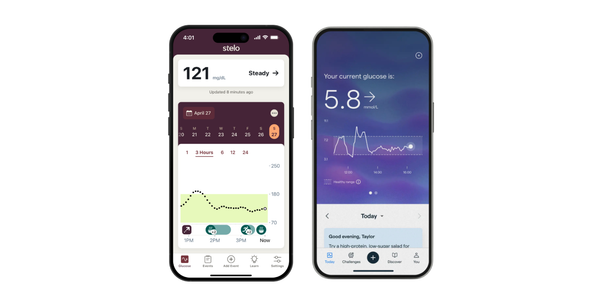
CGM stands for Continuous Glucose Monitor, and it is a small wearable device that tracks your glucose (blood sugar) levels throughout the day and night.
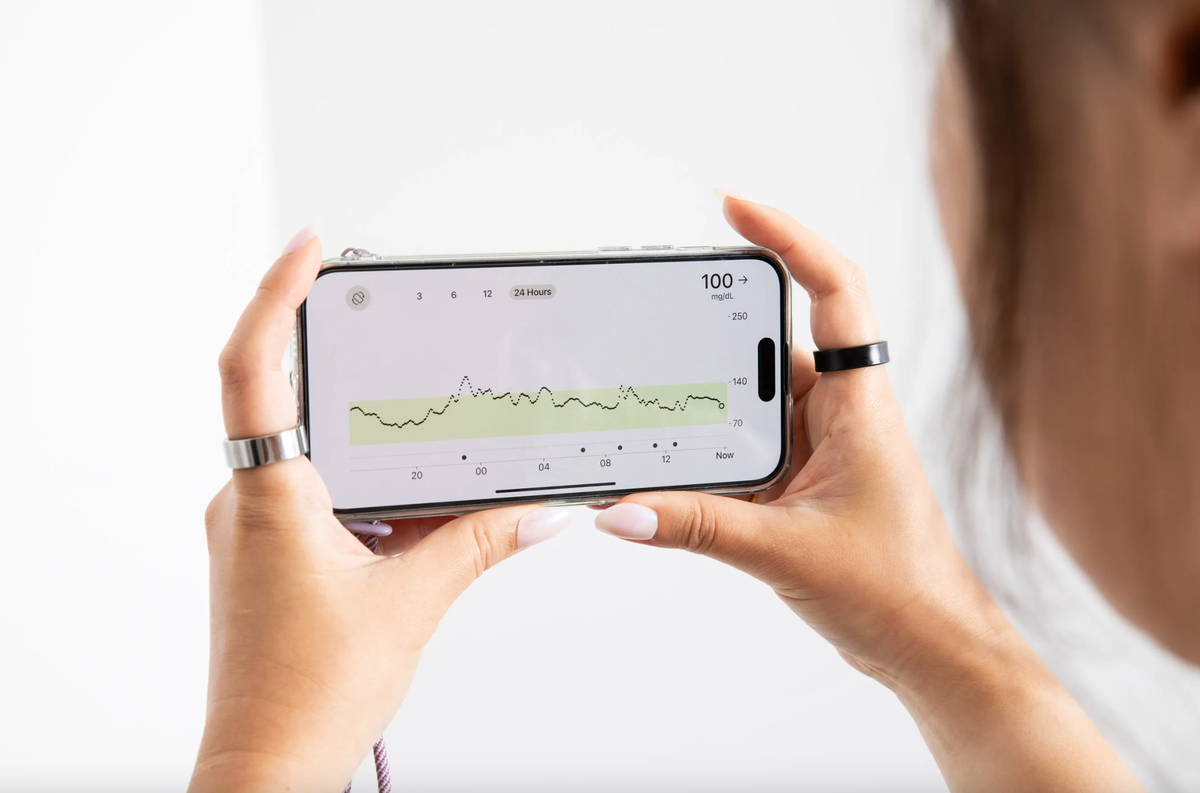
CGMs have a sensor that is usually worn on your arm or stomach, and your blood sugar data is transmitted continuously to an app via Bluetooth. Inside the app, you'll see a graph of your blood sugar trends over time.
While this is the main functionality of most CGMs, different brands and models vary in accuracy, sensor wear time, data-sharing options, app experience, and integration with other health devices.
CGMs were previously available only by prescription to diabetics, though in 2024, the FDA cleared the first OTC CGM for general health and fitness enthusiasts who want to optimize general health or lose weight.
How Does a CGM Work?
Most CGMs consist of three main parts: a sensor, a transmitter, and an app or receiver.
Step 1: Insert the Sensor
A CGM sensor is a tiny filament that sits just under your skin, usually on the back of your arm or on your abdomen. It measures glucose in the interstitial fluid, which is the fluid between your cells.
Unfortunately, the glucose takes a few minutes for glucose to diffuse from the bloodstream into interstitial fluid, so CGM readings naturally lag fingerstick tests by a few minutes.
However, this means CGMs are far less invasive, so the insertion is quick and nearly painless, and adhesive tape holds it in place.
Here’s an example of how the Dexcom Stelo is inserted:
https://www.youtube.com/watch?v=fDm-sOyjhuk
Step 2: Connect the Transmitter
The transmitter is either built into the sensor or attached to the top of the sensor.
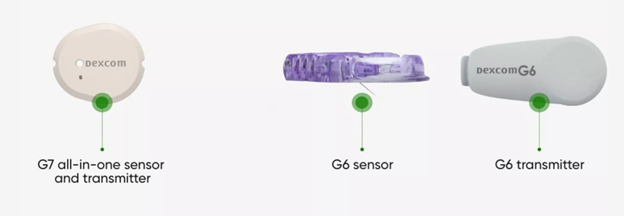
The transmitter is the key element that sends the glucose data to your phone or reader every few minutes.
Step 3: View Your Data
The readings appear on your smartphone app, a dedicated reader, or even an insulin pump (for medical-grade devices).
Most CGMs have a "warm-up" period of about 30 minutes to two hours before the sensor starts sharing data.
Additionally, some require a fingerstick blood glucose calibration before sharing data.
Once the CGM starts sharing data, you'll see an ongoing graph of your glucose levels, allowing you to track trends over time.
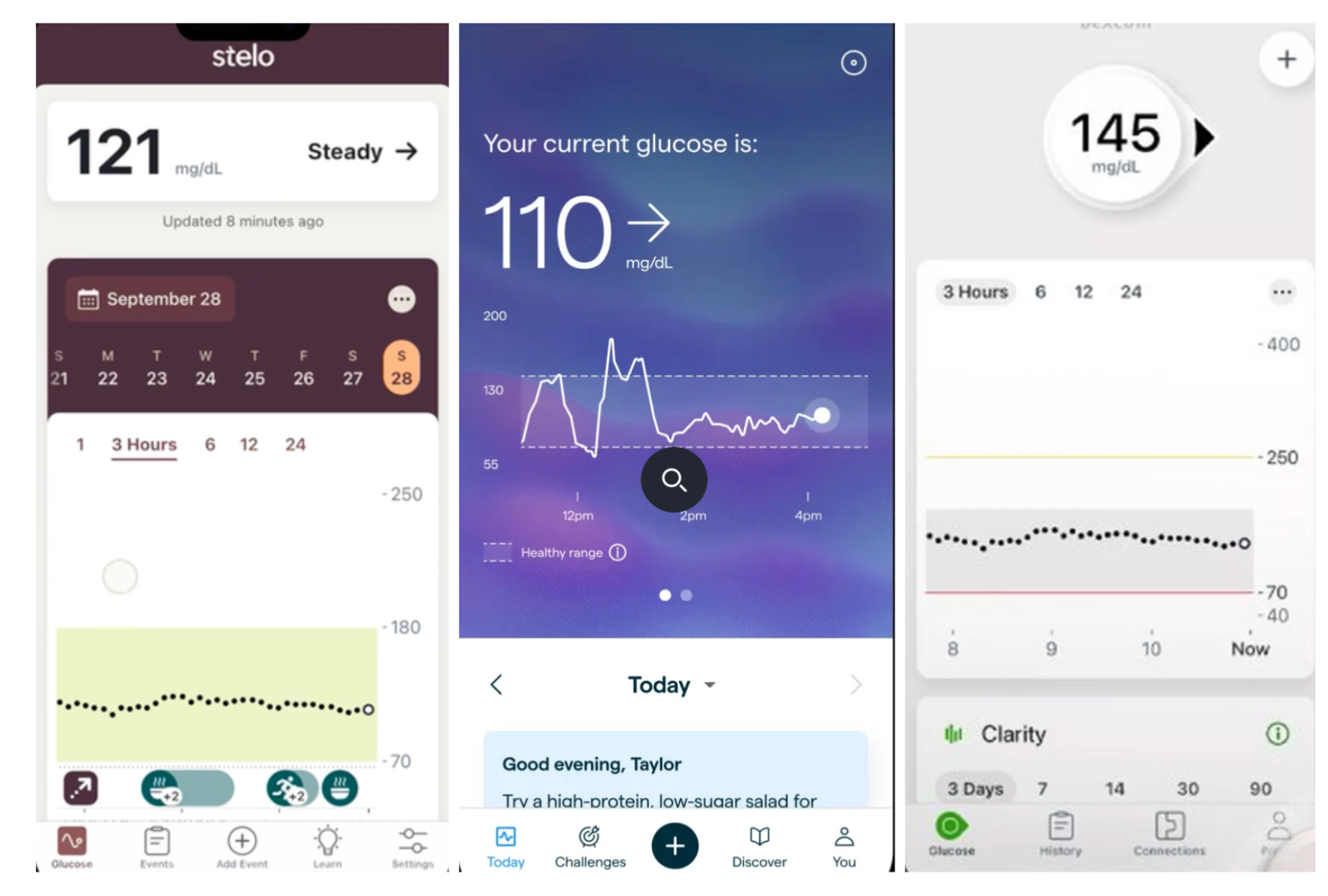
Many apps also let you set alerts when your glucose falls outside your chosen range, and you can log meals and workouts to track how specific actions affect your blood sugar.
Step 4: Replace the Sensor
Most CGM sensors last 7-15 days before you must replace them, though implantable options can last for several months.
The Benefits of CGMs For Non-Diabetics
CGMs were originally developed for people with diabetes, but they're now gaining popularity among non-diabetics.
Here are a few of the benefits of maintaining steady blood sugar:
- Better mental performance, as crashes can cause brain fog.
- Better physical performance, as crashes mean you don’t have sufficient glucose to maximize muscle exertion workouts.
- Reduced cravings, which can prevent overeating.
So why does unstable blood sugar cause negative symptoms, like brain fog, tiredness, and cravings?
It's primarily due to how your body manages blood sugar spikes.
If you ingest a high amount of sugar, your body releases extra insulin to manage it.
Unfortunately, the insulin may work too efficiently, causing your blood glucose levels to plummet below the healthy range and leaving you feeling fatigued, irritable, and tired.
To raise your blood sugar to a reasonable range, you'll therefore feel cravings for more sugary foods that will quickly raise your blood sugar again.
Thus, you may choose more calorically dense, low quality foods that degrade overall health.
If you keep your blood sugar stable, you'll perform better mentally and physically, and you're more likely to make better food choices that lead to weight loss and overall health.
Different Types of CGMs (Medical vs OTC CGMs)
CGMs were previously only available via prescription to individuals with diabetes.
However, the numerous benefits of maintaining steady glucose levels have led to growing consumer interest in CGMs.
To accommodate the growing demand for CGMs among non-diabetics, a couple of OTC CGMs are now available to consumers without a prescription.
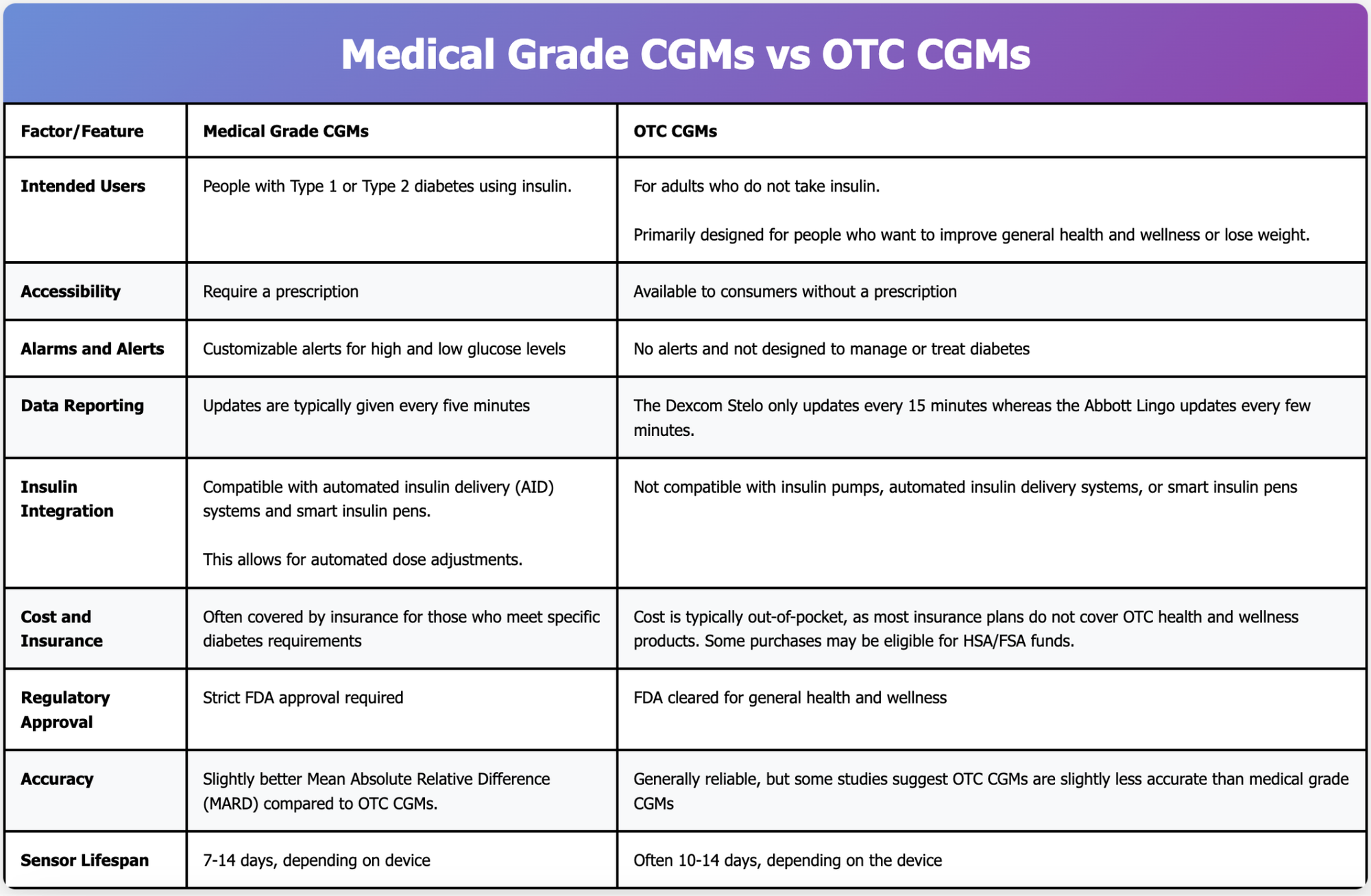
Both OTC CGMs and traditional CGMs are fairly similar, though the OTC CGMs may be slightly less precise and update less frequently, as these devices aren't used to make critical insulin dosing decisions.
Here's a more detailed overview of the key differences between medical-grade CGMs for diabetics and OTC CGMs.
The Best OTC CGMs (The Dexcom Stelo vs Abbott Lingo)
An Over-the-Counter (OTC) Continuous Glucose Monitor (CGM) is similar to a traditional CGM in that it is a wearable device that tracks your blood sugar levels continuously throughout the day and night, though it does not require a prescription and isn't intended for people with diabetes using insulin.
The Dexcom Stelo and Abbott Lingo are the only two OTC CGM options available, so here’s a brief overview of them.
Dexcom Stelo
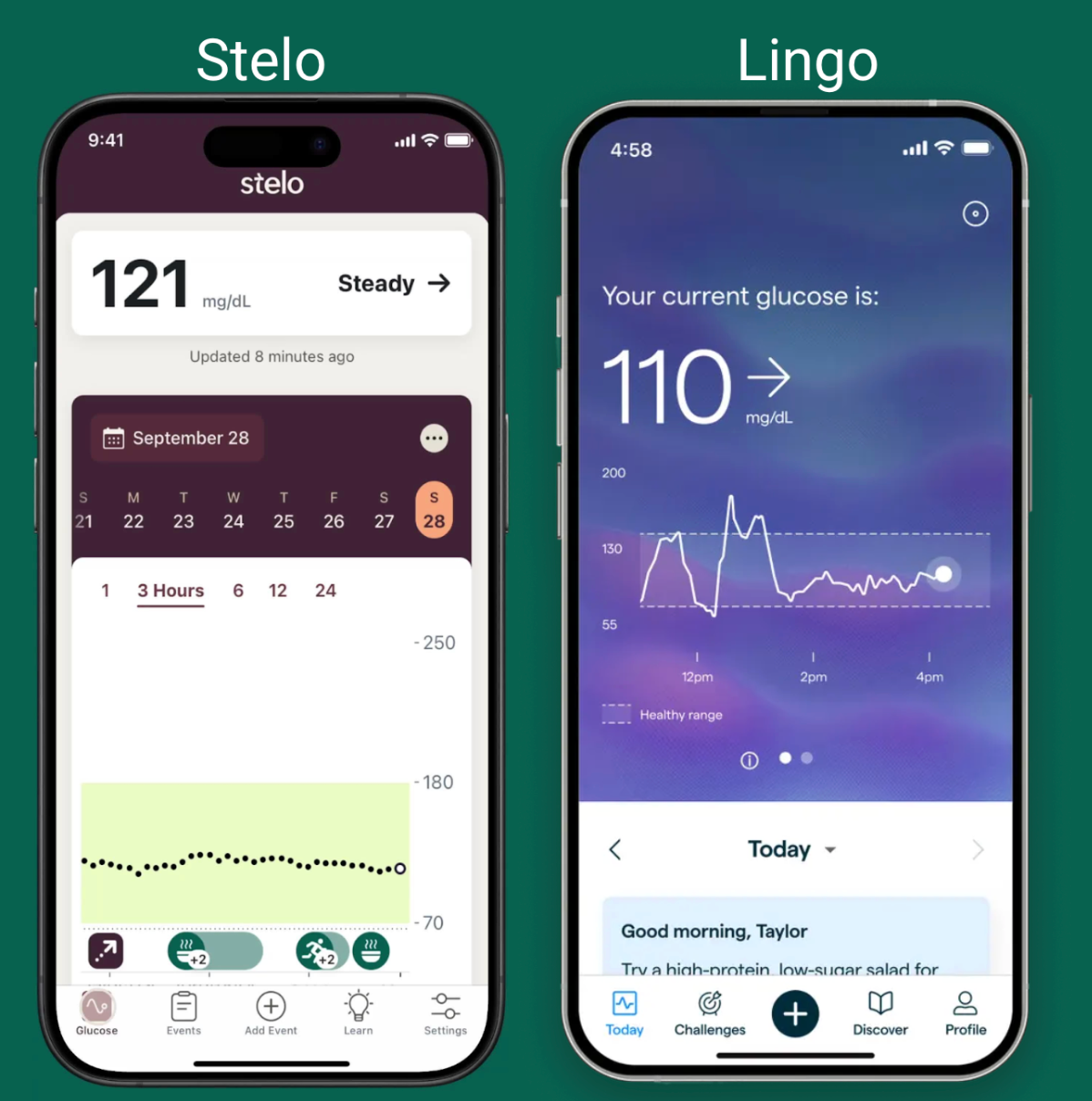
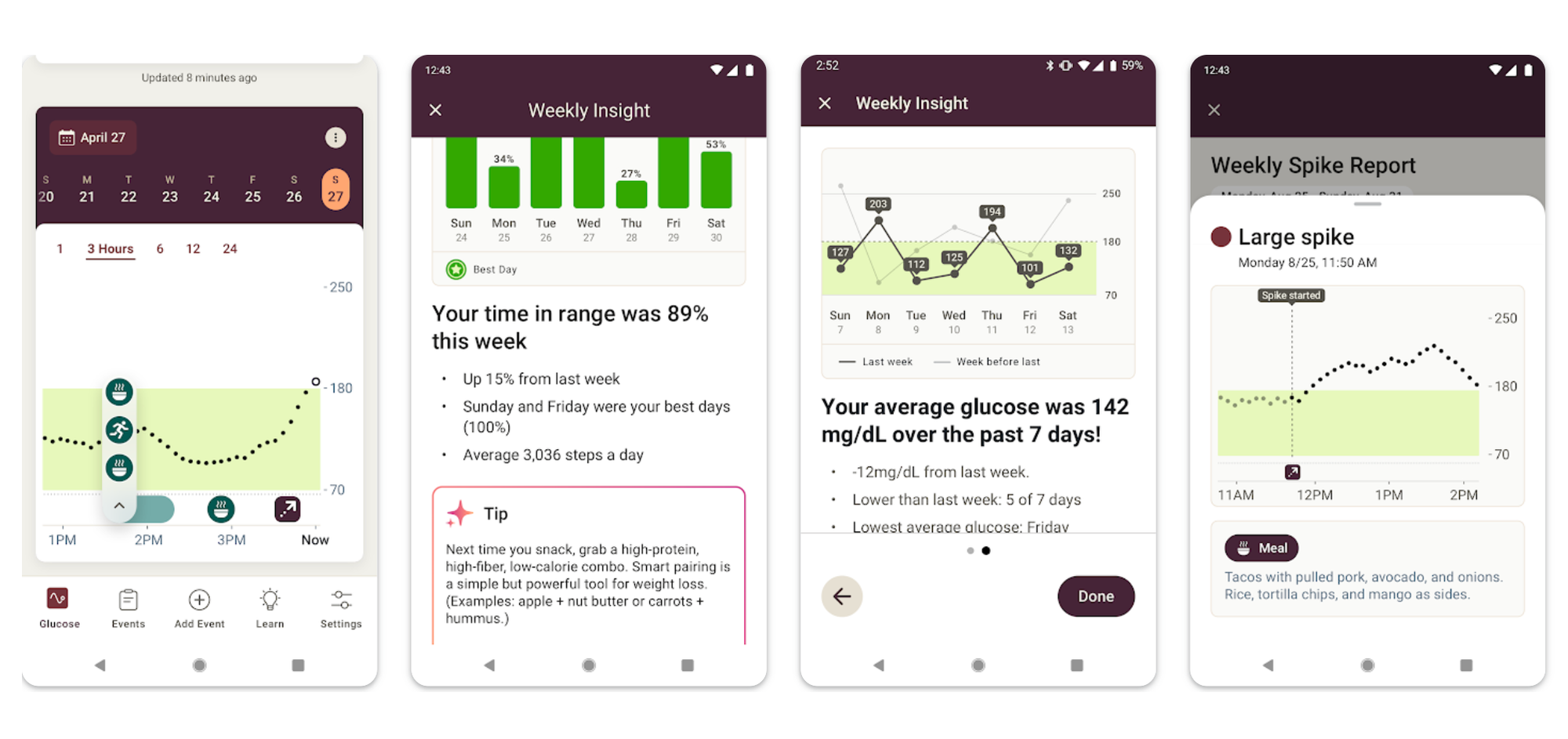
The Dexcom Stelo comes with a very straightforward and easy-to-use app that works on both iPhone and Android and updates every 15 minutes.
Its interface is more simplistic than the Abbott Lingo, which many users appreciate. However, you can still log meals and exercise, and it offers basic user guides explaining how to make the most of the app.
One drawback of the Dexcom Stelo is that you must buy two sensors at a time, each lasting about 15 days.
Additionally, the Dexcom Stelo only updates every 15 minutes, which might be too slow if you need more immediate glucose updates during a workout.
We use the Dexcom Stelo with Wearable Challenge because it's user friendly and simple.
Pricing: $95 for two sensors (15 days each) with a subscription option at $89/month.
Abbott Lingo
The Abbott Lingo is quite similar to the Dexcom Stelo, though it's only available to iPhone users (it's not compatible with Android).
The interface is slightly busier, though it offers more or less the same functionality as the Dexcom Stelo.
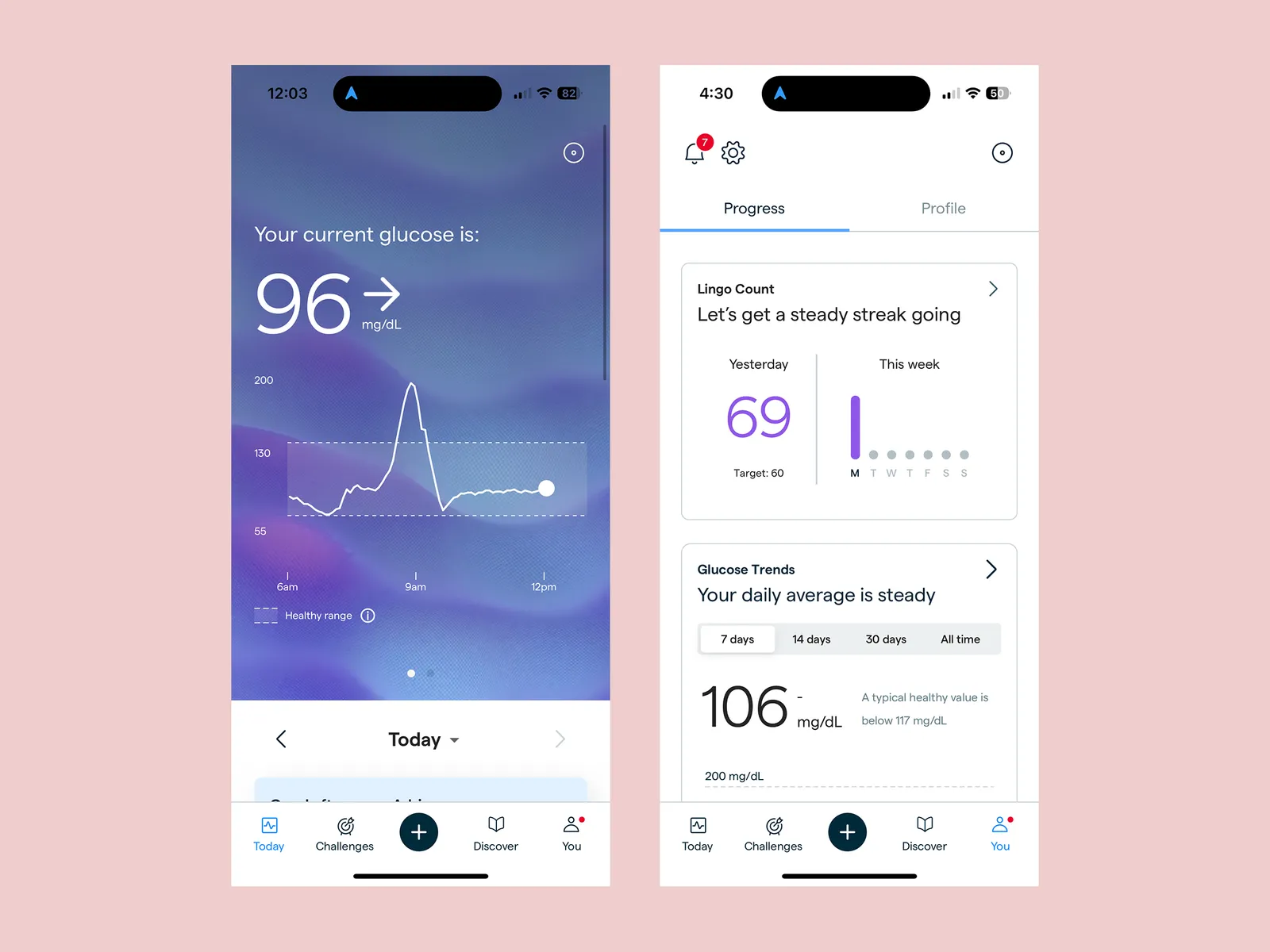
Unlike the Dexcom Stelo, it updates every minute, giving you more current glucose information. You can also buy just one sensor at a time, making it a more affordable option if you want to test out a CGM. The sensor lifespan is 14 days, similar to the Dexcom Stelo.
Pricing: $49 per two-week sensor, no subscription required.
How to Use CGMs for Fitness
Athletes and active people are increasingly turning to CGMs as a performance tool. Since exercise places unique demands on the body, real-time glucose data can help fine-tune both training and recovery.
Avoid Foods That Cause Crashes Before Workouts
A CGM shows how your body responds to pre-workout meals or snacks. For example, let's say you ate a bowl of oatmeal and noticed that your glucose spiked (e.g., rose above 30 mg/dL).
Using this information, you could choose a different pre-workout snack to maximize your gym performance. Otherwise, you’ll experience a crash mid-workout.
Adjust Pre-Workout Meals According to The Workout
High-intensity training can temporarily raise glucose levels due to stress hormones, while endurance workouts may lower them.
For example, during short, high-intensity workouts (like sprints or CrossFit), your body may release stress hormones that cause glucose levels to rise temporarily.
In contrast, longer endurance workouts (like distance running or cycling) often cause glucose to drop as your muscles burn through stored energy.
A CGM helps you track your body's responses to different workouts so you can fuel properly to maximize performance.
Monitor Performance During Your Workout
If your glucose drops significantly during a workout, your performance will decrease. If you’re aware of these drops, you can eat a quick snack high in carbs to raise your glucose and maximize performance.
For example, if you notice your glucose steadily dropping during a long bike ride, you can eat a banana or an energy gel to raise your glucose and avoid crashing during the workout.
Optimizing Recovery
Stable glucose after exercise supports muscle repair. If you notice large spikes or crashes post-workout, you can experiment with recovery meals that keep levels more balanced.
For example, if your CGM shows a large spike in glucose after a post-workout snack, like a protein shake with added sugar, you might try switching to a Comment start recovery meal Comment end with balanced fiber, fat, protein and complex carbs. For example, a smoothie consisting of protein powder, flax seed, strawberries, and peanut butter.
However, if your glucose crashes after training, adding a small snack, like Greek yogurt with berries, can help stabilize levels and support muscle repair.
How to Use CGMs for Weight Loss
Why should I wear a CGM if weight loss is all about calories?
While it’s true that the only way to lose weight is to consume fewer calories than you burn, there are a variety of factors, like hunger and cravings, that impact how many calories you consume.
The good news is that a CGM can help you adjust your habits to help you make better food choices that lead to a caloric deficit, and ultimately, weight loss.
Spot Hidden Sugars (And Calories)
Some foods that are often considered healthy (like smoothies, acai, and granola) are loaded with sugar and are often higher in calories than most people realize.
Therefore, you may not realize that you’re overconsuming calories.
A CGM can make you aware of foods you thought were healthy, but actually contain hidden sugars and ultimately have far more calories than you realized.
For example, in one review of a CGM program, a user discovered that most restaurant sushi has hidden sugars. This person was unaware that the sushi they thought was healthy was actually derailing their progress.
A CGM essentially acts as a tool to help you distinguish between food that's marketed as healthy yet high in sugar, and food that's actually in alignment with your goals.
Reduce Cravings
In theory, you would lose weight if you only ate ice cream but maintained a caloric deficit.
The problem is that eating high sugar foods makes it hard to maintain a caloric deficit for two main reasons.
First, high sugar foods are often calorie dense, meaning you can only eat a small portion of them relative to other foods.
Secondly, high sugar foods cause blood sugar to spike and then crash. When your blood sugar crashes, you feel hungry again, leading you to eat more food.
Additionally, when your blood sugar drops below a stable level, your body responds by craving foods that will quickly raise your blood sugar again.
Therefore, you’ll find yourself once again craving sugary, carb-heavy foods that are often calorically dense and start the cycle all over again.
A CGM can help you break this cycle by showing you which foods lead to steadier glucose levels and ultimately allow you to make food choices that prevent crashes.
Finding Your Personal Triggers
Two people may have completely different reactions to the same food.
For example, some people may find that oatmeal spikes their blood sugar significantly more than others.
Building on the last point, a blood sugar crash can lead to cravings, and you may overeat calorie-dense foods. Learning which foods spike your blood sugar can help you avoid them and replace them with ones you know lead to steadier blood sugar levels for your body.
Accountability
Many people know what they should eat to lose weight, but they need more accountability.
The CGM provides immutable data so you can't "forget" to log little cheat meals.
In fact, while logging is a good habit to understand the impact of different foods on your body, you don't have to log anything at all, as the CGM will show an accountability coach all of your spikes.
Of course, it's certainly possible to overeat without spiking your blood sugar, but it's not as common. If you're overeating, it's due to overconsumption of calorically dense foods high in sugar, which spike blood sugar.
We also realize that data alone doesn't instantly make you accountable. Sure, you might feel a twinge of guilt watching your glucose rise, but it might not be enough to change your behavior.
That's why we created Wearable Challenge.
It's a CGM challenge where participants stake $20/day to stay under 120 mg/dL (a healthy, but low blood sugar level).
If you spike over 120 mg/dL, you lose your $20 for that day. Otherwise, it's free to join.
With $20 at stake each day, it's a meaningful accountability system and has helped many people achieve their weight loss goals.
The Cost of CGMs
For people with diabetes, CGMs are often covered by health insurance, though coverage can vary depending on your plan, diagnosis, and whether insulin therapy is required.
Typically, insurance will cover the sensors, transmitters, and sometimes the reader.
Out-of-pocket costs for patients who qualify can range from $0 to a few hundred dollars per month, depending on deductibles and co-pays.
In addition, many medical CGM programs offer companion services such as telehealth coaching, automated insulin delivery integration, and app-based analytics to help users manage glucose more effectively. These programs are usually included in the device’s coverage or offered as optional paid add-ons.
If you’re not a diabetic and are simply interested in using an OTC CGM for general health and wellness, you’ll likely have to pay out of pocket.
However, some OTC CGMs are eligible for HSA/FSA reimbursement, which can help offset out-of-pocket costs. Some companies also offer starter packs or trial periods, making it easier to test the device before committing to a long-term purchase.
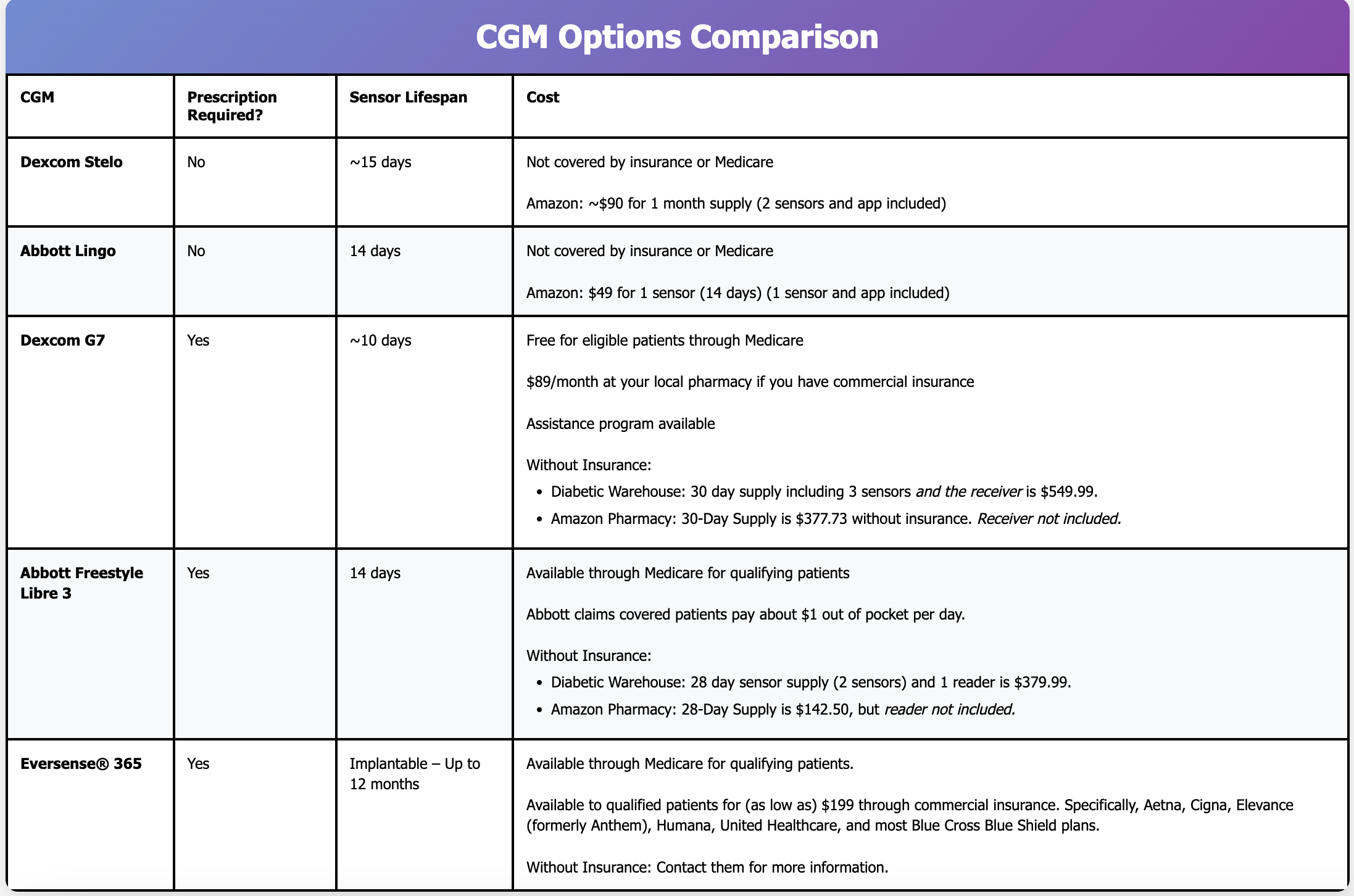
Here’s an overview of pricing for OTC CGMs:
The Best CGM Programs
If you've done some research on OTC CGMs for fitness, weight loss, or general health, you've probably come across brands like Levels, Signos, and Nutrisense.
These are all companion programs that leverage a CGM (often the Dexcom Stelo, Dexcom G6, FreeStyle Libre 3, FreeStyle Libre 2, etc.) and provide their own coaching programs and apps.
We have a separate resource that goes into more detail about the best CGM programs, but here's a brief overview of them:
Levels
Levels is designed for health optimizers who want a detailed view of how food, exercise, and lifestyle impact glucose. It works with Dexcom Stelo, Dexcom G6/G7, and FreeStyle Libre sensors. The app logs meals, assigns stability scores, and generates personalized reports to show how your body responds over time.
Levels also offers optional add-ons, including a metabolic blood panel (28 to 100+ biomarkers) and one-on-one coaching through a partnership with Season Health.
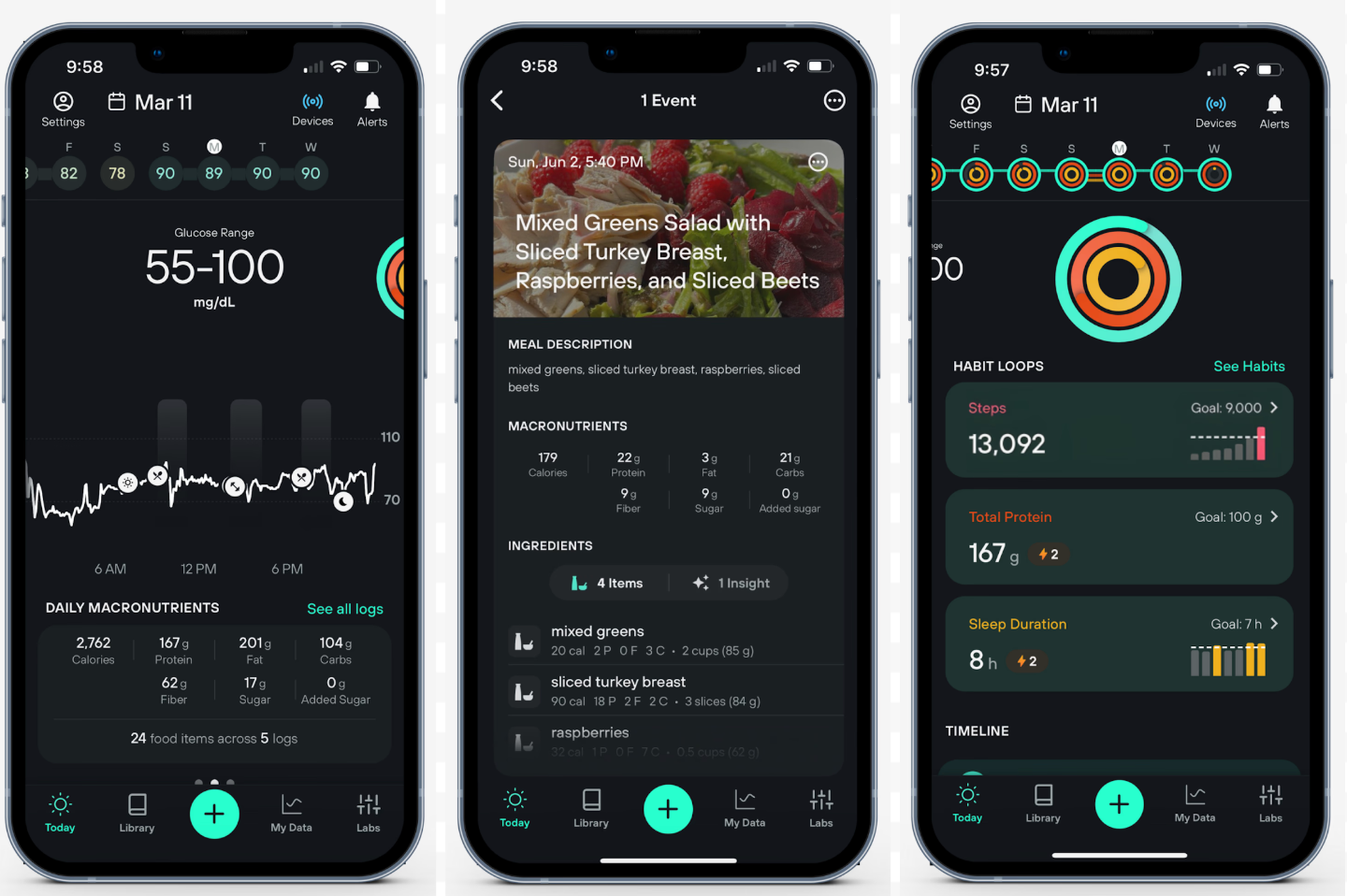
Pricing:
- Membership: $199/year or $40/month
- CGMs: Not included; $89/month subscription or $99 one-time for two Dexcom Stelo sensors (1 month supply)
- Optional Add-ons: $99–$399 for blood panels; coaching often covered by insurance
Nutrisense
Nutrisense offers an app to make sense of your CGM data, but the main offer is its one-on-one coaching service.
During your first 30 days, you wear an OTC CGM and a dietitian monitors your logs and messages you directly with feedback. However, after the first 30 days, the coaching is an additional add-on (though it may be covered by insurance, depending on your scenario and provider).
Nutrisense is compatible with the FreeStyle Libre, Dexcom G6/G7, and Stelo sensors, and integrates with tools like Apple Health, Garmin, Oura, Fitbit, and Keto-Mojo. It also allows you to manually calibrate sensors for greater accuracy (which is not available with some competitors like Levels).
The app also offers all of the additional features you'd expect, like food logging, macronutrient tracking, and trend analysis.
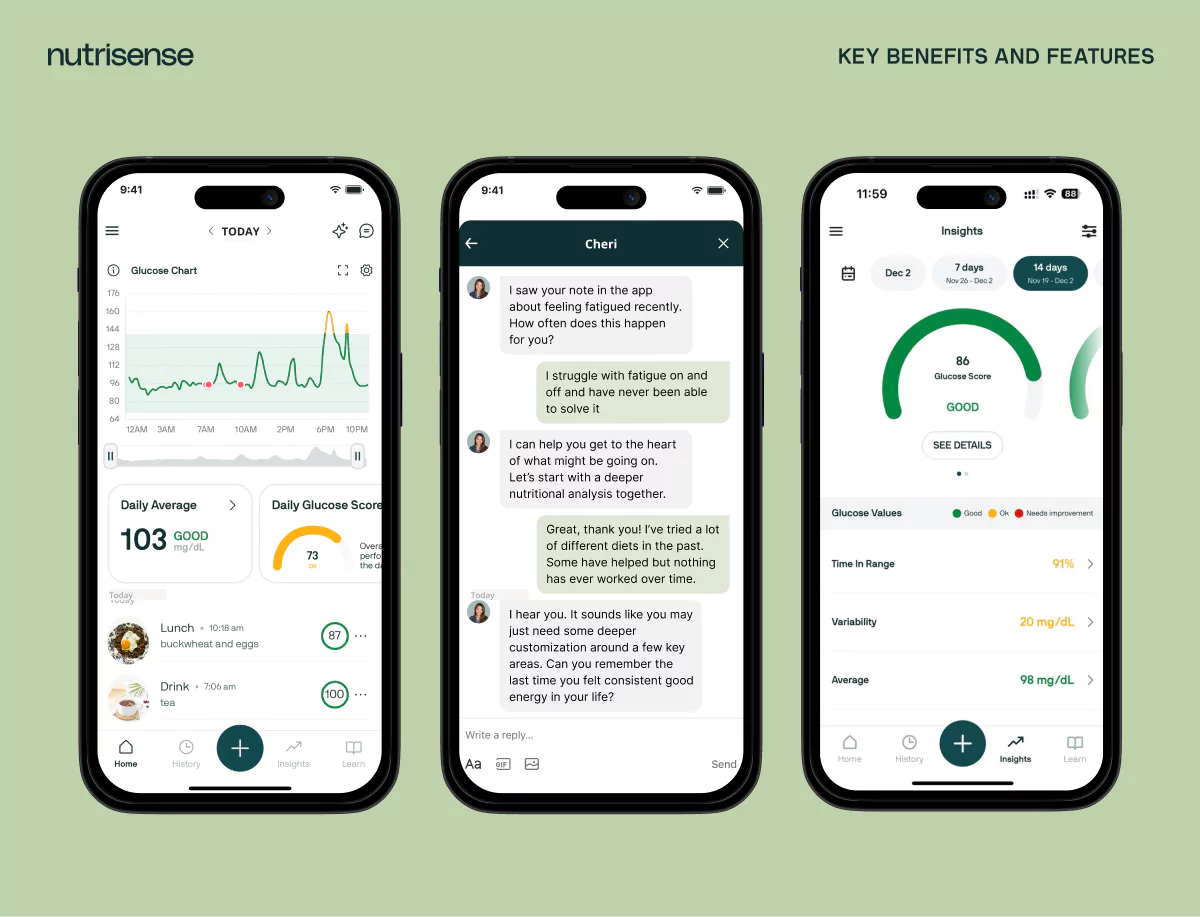
Pricing:
- Monthly: $324/month (cancel anytime)
- 3-Month Commitment: $270/month
- 6-Month Commitment: $225/month
- CGMs: Included in membership
- Coaching: First 30 days included; ongoing coaching often $0 with insurance, otherwise $50/call
Signos
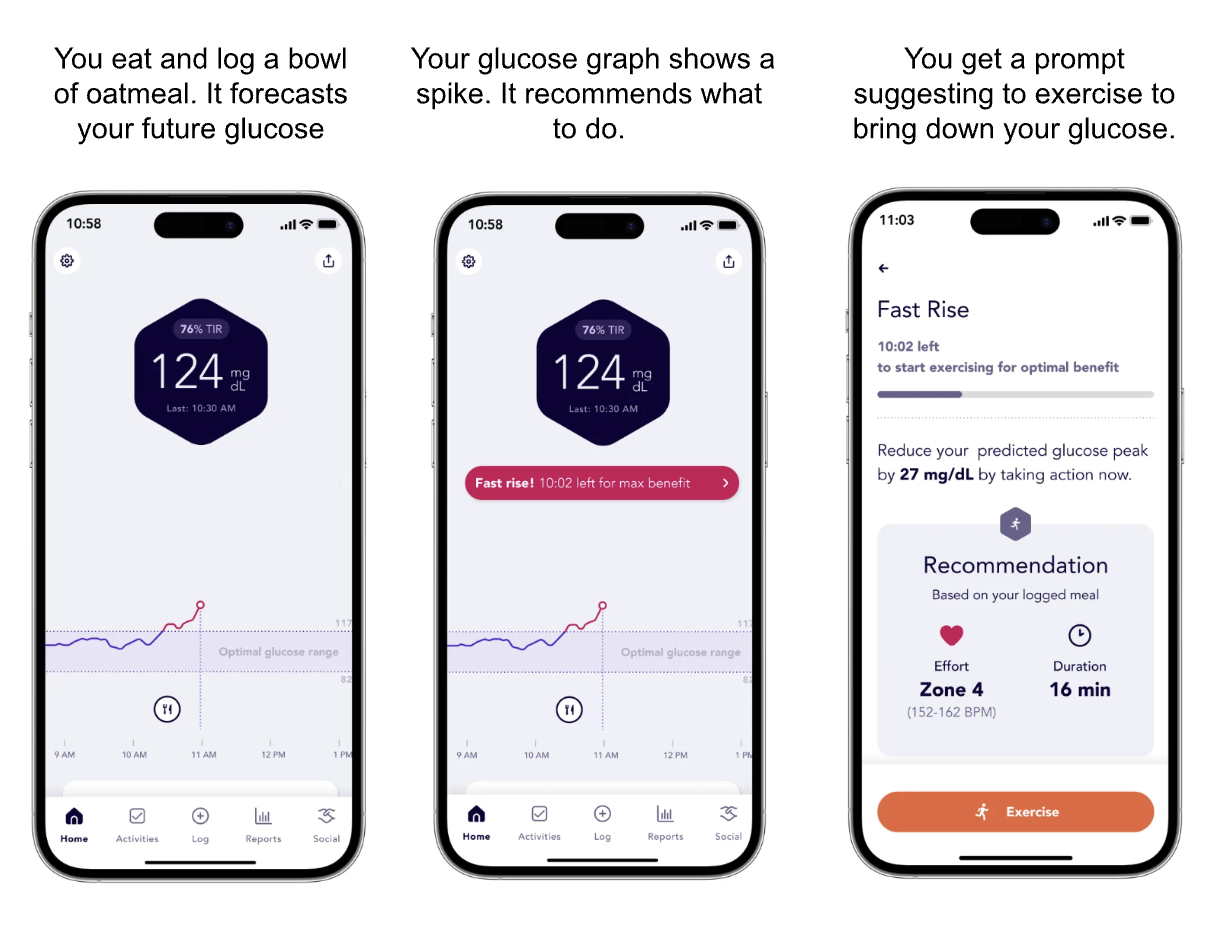
Signos is designed specifically for weight loss. It uses Dexcom Stelo sensors and offers an AI-driven app that not only displays your glucose data but also guides you on how to respond in real time.
For example, if you spike after a meal, the app might recommend a short walk or suggest meal adjustments to stabilize glucose.
This behavior-focused guidance makes Signos especially useful for people who want clear, actionable steps rather than just charts and numbers.
Dietitian support is available through in-app chat, with optional one-on-one calls for an extra fee.
Pricing:
- 3-Month Plan: $139/month
- 6-Month Plan: $129/month
- CGMs: Included in membership
- Coaching: In-app chat included; video calls extra
How to Get The Most Out of Your CGM
CGMs are powerful tools to improve health and wellness, but data alone won’t make you healthier.
We created Wearable Challenge to hold you accountable to your CGM data and ensure you keep your blood sugar stable.
It’s a 14 day challenge where you stake $20 per day to stay under 120 mg/dL (a low yet healthy glucose threshold). This forces you to minimize refined sugar from your diet.
If you go over 120 mg/dL, you’ll lose your $20 stake for that day. Otherwise, it’s free to join.
Join Wearable Challenge today to unlock the best version of yourself.