Weight Loss Challenges: 7 Programs and Apps Compared


There are plenty of different weight loss challenges, but not all of them are equally effective.
In this post, we’ll break down exactly what makes a weight loss challenge effective and provide an overview of several options so that you can select the one that best aligns with your goals.
What makes a weight loss challenge effective?
These are the components that make a weight loss challenge effective.
You can also see why weight loss challenges that omit any of these components will likely fail:
Nutrition Component
To lose weight, you must eat fewer calories than you burn.
Unfortunately, most people overestimate how many calories they burn at the gym and underestimate how many calories they consume in a single meal.
In fact, a Harvard study showed that the average person running for 30 minutes at 6 min/mile only burns 453 to 670 calories.
Yet the National Institute of Health showed that the average restaurant meal contains 1,200 calories.
As you can see, it's unrealistic (and unhealthy) to out-exercise overeating, so nutrition tracking is a critical component for a successful weight loss challenge.
Habit vs Outcome Focus
Many weight loss programs focus on losing a specific number of pounds (an outcome).
Yet this can lead to excessive fasting and extreme dieting.
Instead, a healthy weight loss challenge tracks and rewards people who consistently stick with daily habits that lead to weight loss.
Accountability and Stakes
You probably already know you should eat less and move more, but most people need accountability.
Specifically, the accountability should be:
- Frequent: If the accountability is weekly or monthly, it’s easy to get off track and miss your target. Daily accountability is ideal.
- Meaningful: For many people simple words of encouragement aren’t sufficient motivation to resist cravings. Financial stakes are often more meaningful.
Tracking Effort and Reliability
Tracking workouts and meals seems simple, but most people quit within months, which will cause you to give up on the challenge altogether.
That’s why an effective challenge should make tracking effortless.
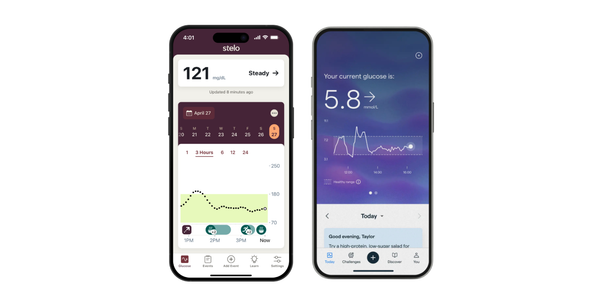
Wearables like CGMs automatically capture data, removing the hassle and temptation to omit cheat meals.
This gives you and your coach a complete, honest view of progress and helps you stay consistent.
Community Support
“You’re the average of the five people you spend the most time with.”
If you spend more time (even if it’s virtual) with people on a similar journey, you're more likely to develop healthier habits.
7 Popular Weight Loss Challenges
#1: Wearable Challenge
Wearable Challenge is a 14 day weight loss challenge where participants wear a glucose monitor. Participants commit $20/day to stay under 120 mg/dL (a healthy, but low blood sugar level).
Wearable Challenge is highly effective, because you can't cheat the data from your glucose monitor, and the $20/day stakes are meaningful enough to change your habits.
Unlike other weight loss challenges that measure total pounds lost, Wearable Challenge holds you accountable to maintain daily healthy eating habits.
This helps you remove high sugar/carb foods, leading to healthier daily eating habits.
Unlike other weight loss challenges where it’s often more challenging to finish than to quit, the $20/day stakes make it more painful to quit than to finish.
And, the glucose monitor does all of the tracking for you automatically, so you don't have to worry about logging every single meal and accurately estimating calories.
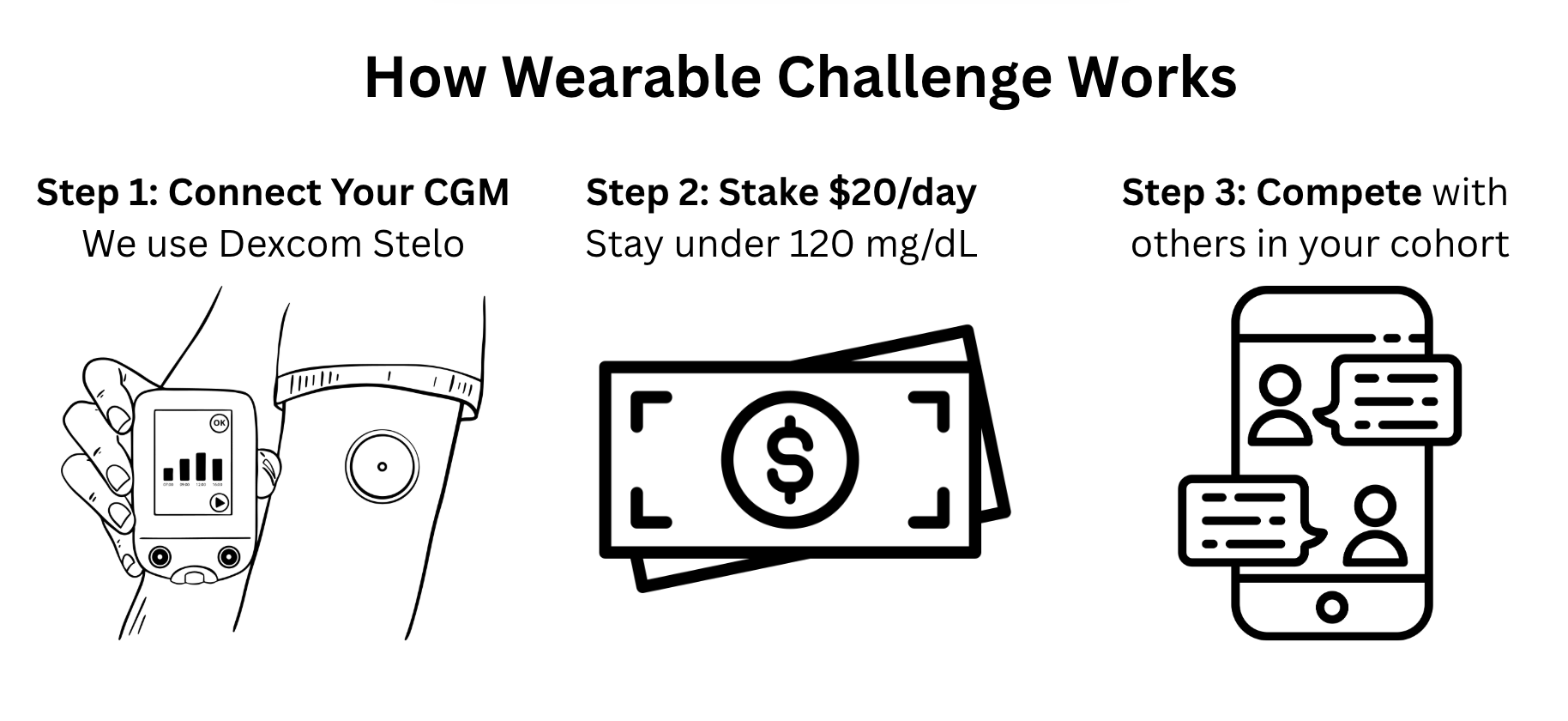
How Wearable Challenge Works:
Step 1: Join Wearable Challenge and Connect Your CGM
If you don’t have a CGM yet, we’ll give you links to get one.
Step 2: Stake $20/day for the 14 day challenge to stay under 120 mg/dL
If you eat excessive sugar or carbs and your glucose level spikes above 120, you’ll lose your $20 daily stake.
Step 3: Participate in the community
There’s also a secure SMS group chat where you can chat with others in your cohort and support one another.
To make the challenge fun, you'll compete in a cohort and can communicate with other players via a secure SMS group chat.
This weight loss challenge doesn’t have personalized coaching, but it’s a fun group challenge that’s highly effective for people who are serious about achieving their weight loss goals.
Learn more about Wearable Challenge and sign up with your friends.
#2: Chloe Ting’s 2025 Weight Loss Challenge
Chloe Ting’s weight loss challenge is a free, popular home workout program that offers structured routines and weekly fitness plans. It’s essentially a video course with daily workouts, so it’s easy to follow along and free to anyone with an internet connection.
Unfortunately, there isn’t a nutrition component, so you’ll have to come up with your own diet plan.
Chloe Ting’s weight loss challenge focuses mainly on exercise rather than nutrition, so you’ll have to manage your diet on your own.
The program is designed to last 4-12 weeks, depending on the program you select, though there isn’t a set start or end date.
There also isn’t a community beyond the YouTube comment section.
It’s an excellent program for anyone who wants some help getting started with workouts, but you’ll still need accountability and a nutrition plan to achieve your weight loss goals.
Effectiveness Chart:
#3: HealthyWage
HealthWage is a weight loss challenge with financial stakes.
You place a bet on yourself to lose a certain amount of weight within a set timeframe.
At signup, you decide how much weight you want to lose, the time duration (anywhere from 6 to 18 months), and how much money you want to wager each month. Based on those numbers, HealthWage calculates how much money you could win if you hit your goal.
However, you could also lose money if you don’t hit your goal.
For example, let’s say you agree to a monthly wager (say $50/month) for a set period of time (like 12 months).
That money is committed upfront and non-refundable.
If you reach your weight loss goal by the end of your challenge, you win back your own wager plus prize money (funded by people who didn’t hit their goals).
If you don’t reach your goal, you lose the money you wagered.
To keep things fair, participants must do verified weigh-ins at the beginning and end of the challenge.
This usually involves submitting a short video following HealthWage’s instructions (for example, showing the scale reset to zero, stepping on it, and reading your weight), or going to a participating gym for verification. Some challenges may also require additional weigh-ins along the way.
The downside of HealthyWage is that there isn’t any assistance or accountability in managing your own nutrition or workouts.
This can make it difficult to stay on top of your game because it may not be top of mind every day, which means you might slip up along the way.
Effectiveness Chart:
#4: Dietbet
DietBet is a group-based weight loss challenge where you place a bet on yourself to lose a certain percentage of your body weight within a set timeframe.
Unlike HealthWage, where you set your own goal and payout, DietBet works more like a community game: everyone contributes to a pot of money, and those who meet the goal split the winnings.
The most common games are “Kickstarters” (4 weeks long, goal of losing 4% of body weight) and “Transformers” (6 months long, goal of losing 10% of body weight).
You pay to join a game, and if you hit the target, you get your money back plus a share of the pot from people who didn’t make it.
To keep the competition fair, DietBet requires verified weigh-ins. At the start and end of the challenge, you submit photos of yourself on the scale following their instructions (wearing lightweight clothing and holding a special weigh-in word).
These weigh-ins are reviewed and approved by referees to ensure accuracy.
Day to day, you’re on your own to manage your diet and exercise plan — the program doesn’t provide coaching or structured nutrition guidance. However, accountability is built in through money on the line and public progress updates within the DietBet community. Participants often post updates, photos, and encouragement to keep each other motivated.
What makes DietBet unique is its combination of financial stakes with community support. Instead of placing a financial bet and hoping you meet your goal, you’re joining a group of people all chasing the same goal, which makes it both social and competitive.
#5: MacroFactor 90-Day Transformation Challenge
The MacroFactor 90-Day Transformation Challenge is a structured program that focuses on nutrition and flexible dieting.
It’s designed to get users to log their meals in the MacroFactor app.
Therefore, instead of giving you a rigid meal plan, MacroFactor encourages users to track calories and macronutrients (protein, carbs, and fats) so you can eat foods you enjoy while still staying in a calorie deficit. The goal is to build sustainable eating habits that help you lose fat without feeling overly restricted.
When you join the challenge, you’ll use the MacroFactor app to log your meals and workouts.
The app uses your data to make smart, adaptive adjustments to your calorie targets each week, so your plan evolves as your body changes. This makes it different from many programs that give you static calorie goals regardless of progress.
Participants also get support through coaching and accountability check-ins. Coaches help review your logs, give feedback, and keep you on track throughout the 90 days. While this requires consistent food logging, the added accountability makes it much easier to stick to.
Unlike betting-style challenges such as HealthWage or DietBet, the MacroFactor challenge doesn’t involve wagering money or competing against others. Instead, the emphasis is on education, habit-building, and consistency. That makes it especially appealing for people who want long-term results and prefer coaching support over financial stakes.
At the end of the 90 days, there are often prizes for top transformations (based on progress photos and adherence), but the real win is the nutritional knowledge and habits you build during the process.
#6: BetterTogether App Challenges
The BetterTogether app challenges are short-term group weight loss programs that focus mainly on community support rather than strict accountability or one on one coaching.
When you join, you’re placed into a group with other participants who are all aiming for a similar weight loss goal (usually 4% of body weight in 4 weeks or 10% in 6 months).
Participants are asked to log their starting weight and then submit weekly weigh-ins through the app, usually with photo verification. This provides a record of progress, but there’s no outside referee or coach double-checking consistency.
Beyond weight logging, most of the activity is social. People can post updates, share their struggles, and offer encouragement to one another, but day to day engagement isn’t required.
Communication happens inside the in-app group feed, where participants can comment and cheer each other on.
However, there are no financial stakes or penalties for missing weigh-ins, skipping logging, or failing to meet your goal. That means accountability relies entirely on peer encouragement and there aren’t any real stakes.
While it may seem less imposing to join, without real stakes, you’re more likely to miss your goal.
Additionally, there isn’t a focus on nutrition, which can make it difficult to lose weight.
This makes it a great social app, but isn’t necessarily the most effective one for achieving weight loss goals.
#7: YMCA Weight Loss Challenge
Many local YMCA branches run seasonal or yearly Weight Loss Challenges to help members build healthier habits in a supportive environment. The structure varies by location, but most follow a similar framework.
Participants typically sign up for a 6–12 week challenge and complete a starting weigh-in at the YMCA. From there, they do weekly weigh-ins, usually with a coach or YMCA staff member, to track progress.
These in-person weigh-ins create accountability since your progress is recorded by someone else rather than self-reported.
The challenge is often team-based or group-based, and participants attend weekly group meetings.
These sessions may include nutrition education, goal-setting guidance, and group exercise. Coaches provide advice on healthy eating and help participants track their dietary choices, but the level of nutrition accountability varies by location.
In many cases, participants are encouraged to self-monitor meals or use simple food logs, but detailed tracking tools (like calorie or macro tracking apps) are typically not provided.
While there are no financial stakes like DietBet or HealthWage, accountability comes from a combination of weekly weigh-ins, group support, coaching guidance, and social pressure within the team. To further motivate participants, YMCA challenges also offer prizes for top performers.
The YMCA challenge is unique because it leverages in-person community, coaching, and structured weekly accountability rather than relying on apps or monetary wagers. Participants benefit from education, peer support, and real-world tracking, even though the nutrition tracking is generally lighter and self-directed compared to app-based challenges like MacroFactor.
Reach Your Weight Loss Goals And Develop Lasting Habits
There are plenty of weight loss challenges, though we found that many of them either didn’t offer sufficient accountability or encouraged unhealthy eating habits.
We built Wearable Challenge because we wanted an effortless and reliable method to hold ourselves accountable to building healthy eating habits.
Join Wearable Challenge today and thank yourself later when you’ve accomplished your weight loss goals and developed lasting healthy eating habits.