8 Popular Weight Loss Accountability Apps Compared

Downloading a weight loss accountability app won’t magically make you consistent with your diet and exercise.
You’ll quickly realize that some are much more effective than others.
The question is, what makes a weight loss accountability app effective?
In this post, we’ll answer that question and then compare various weight loss accountability apps so that you can finally meet your weight loss goals.
The Problem With Most Weight Loss Accountability Apps
Most weight loss accountability apps look the same on the surface, but not all of them are equally effective.
First, we excluded any apps that focus exclusively on exercise, as nutrition is often much more impactful for weight loss.
Next, we looked at how the app tracks adherence and holds participants accountable.
The first core issue with many weight loss accountability apps is that they rely on manually tracking calories or macros.
Relying on food logging isn’t an effective long-term solution for many people for a few reasons:
To be clear, food logging isn’t bad. It’s a good practice to know what you’re eating and be more mindful.
However, the reality is that food logging usually isn’t a bullet-proof strategy.
Effective Weight Loss Accountability Apps Compared
Now that we’ve addressed what makes a weight loss accountability app fail, we can reverse engineer that to design a criteria for an effective weight loss accountability app.
Keeping that criteria in mind, here are a handful of weight loss accountability apps and an analysis of their efficacy.
#1: Wearable Challenge
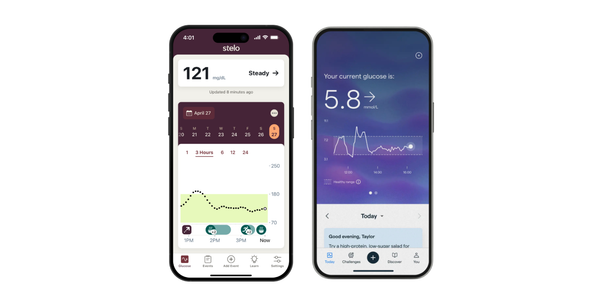
Wearable Challenge is unique from other weight loss accountability apps because you aren’t relying on manual logging.
Instead, it’s a 14 day challenge where participants wear a glucose monitor and stake $20/day to keep their blood sugar under 120 mg/dL.
The idea is that the challenge forces you to reduce high sugar/carb foods that spike blood sugar.
As a result, participants often lose weight.
Wearable Challenge is a highly effective weight loss challenge, because the glucose monitor tracks your blood sugar continuously. This means it’s effortless to participate (unlike manual meal logging) and it’s impossible to cheat ;)
And, unlike other weight loss accountability programs where there’s no consequence for quitting, Wearable Challenge is more painful to quit (and lose $20/day) than finish.
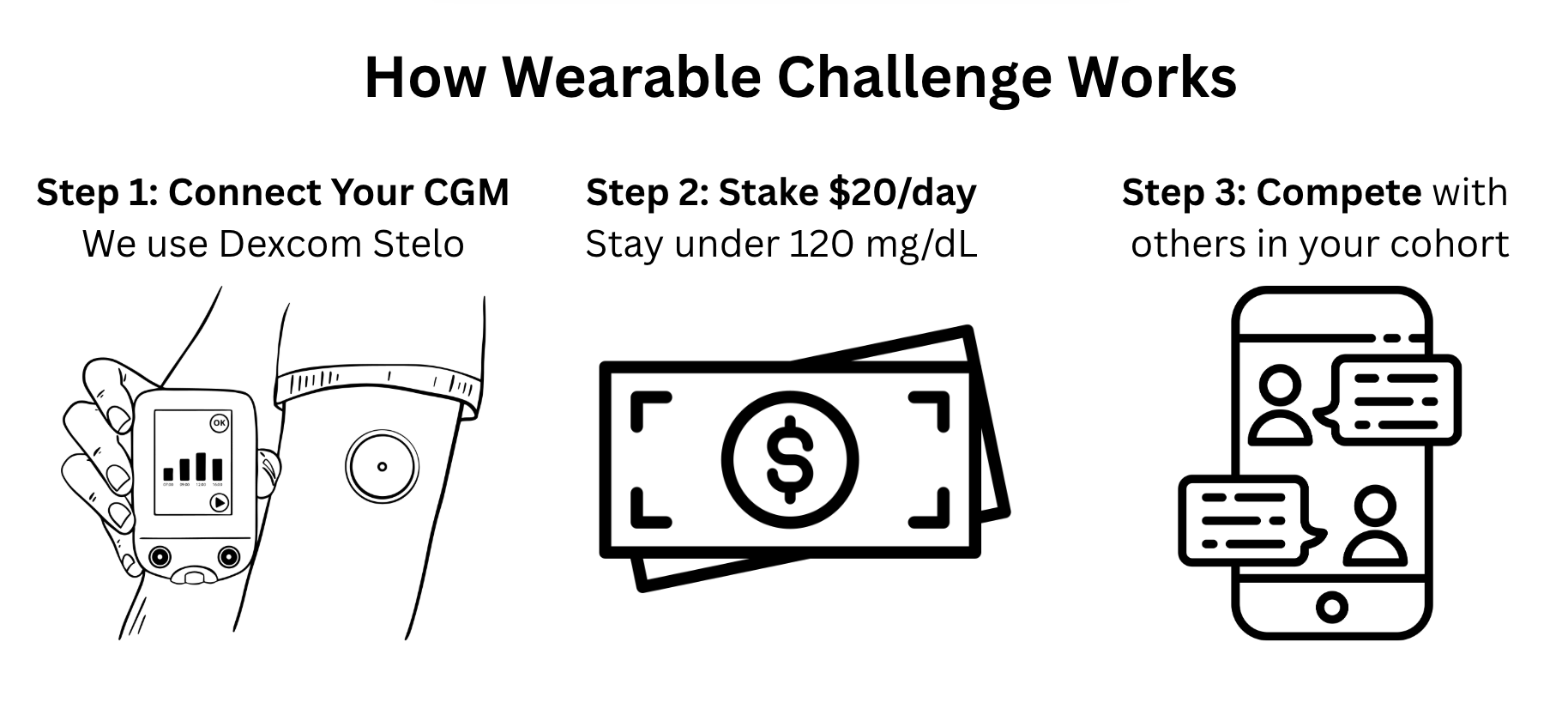
How Wearable Challenge Works:
Step 1: Join Wearable Challenge and Connect Your CGM
If you don’t have a CGM yet, we’ll give you links to get one.
Step 2: Stake $20/day for the 14 day challenge to stay under 120 mg/dL
If you eat excessive sugar or carbs and your glucose level spikes above 120, you’ll lose your $20 daily stake.
Step 3: Participate in the community
Losing weight is challenging, so we give you access to a community of others on a similar journey through a secure SMS chat. We’ll also announce weekly winners to inspire friendly competition.
Why Wearable Challenge Is an Effective Weight Loss Accountability Solution
Pricing
Wearable Challenge is free to join with $20/day stakes. So it’s free if you never slip up.
#2: Noom
Noom is a psychology-based weight loss and wellness program that focuses on behavioral change rather than just calorie counting.
The app combines manual food logging, daily lessons, and coach check-ins to help users understand their eating habits and develop sustainable lifestyle changes.
You receive guidance on nutrition, exercise, and mindset and can manually log food and exercises in that app.
Noom also includes group chat support, giving users some social accountability, though the primary interaction is through weekly coach check-ins.
Noom’s Program Options
#3: MyFitnessPal
MyFitnessPal is a nutrition-focused app that helps users track meals and exercise. It has a large food database for logging meals, along with tools for monitoring calories, macros, and nutrients.
You can connect with friends or participate in the community forums for social support, but the primary experience is self-directed.
While food logging is manual and may lead to under or overestimation, the MyFitnessPal has one of the largest food databases, making it one of the best manual reporting features available.
You can add exercise tracking by connecting other apps or manual logging, giving a basic view of total calorie balance.
MyFitnessPal Program Options
#4: Macrofactor
Macrofactor is a nutrition-focused app that helps users track calories and macronutrients. You give the app your current weight, goals (maintain, lose or gain weight) and current activity level.
The app uses a science-based algorithm to provide recommended macros and calorie targets.
Then, it adapts your calorie and macro targets over time based on your logged intake and progress.
Tracking is manual, but it does have a fairly large database of foods and you can save frequent meals.
There is no direct coaching or stakes, so the experience is primarily self-directed. However, the app automatically adjusts targets weekly, helping you stay on track without guesswork.
Macrofactor Program Options
#5: MyBodyTutor
MyBodyTutor is a weight loss accountability program that focuses on nutrition and exercise with daily coaching support. You communicate with your coach through text messages, uploading meals and updates on your progress each day.
Your coach reviews your logs, provides feedback, and helps you stay accountable. Unlike apps with self-directed logging, MyBodyTutor’s daily check-ins can help you stay consistent with food logging. However, that doesn’t mean you’ll never skip logging the occasional snack you grabbed from the pantry.
The program is highly personalized, with guidance tailored to your goals, current habits, and lifestyle. You also receive motivation and support directly from your coach, which adds a layer of accountability that self-directed apps lack.
MyBodyTutor Program Options
#6: Weight Watchers
Weight Watchers (WW) is a nutrition-focused program that uses a points-based system to guide food choices. You track what you eat by assigning foods a “points” value, which helps you stay within daily targets while still allowing flexibility.
The program can be followed online or in-person, and users have the option to attend workshops or connect with the WW community for social support. The system is primarily self-directed, but group workshops and optional coaching provide accountability.
Food logging is manual, so there may be some under or overestimation, but the points system simplifies tracking compared to detailed calorie counting.
Overall, WW is a fairly good system for weight loss that includes education, structured tracking, and community support to help users make sustainable lifestyle changes.
Weight Watchers Program Options
#7: Habit Nest
Habit Nest is a general habit-tracking program that helps users build better routines. It’s not health-specific, so you can use it for any habit, from drinking more water to reading daily.
You track your progress manually using journals or the Habit Nest app.
The app provides reminders and helps you visualize streaks and consistency, but there’s no coaching or stakes accountability, so progress depends entirely on your own motivation.
Habit Nest works well if you want a simple system to build habits gradually and track your consistency over time.
Its focus is on forming routines rather than giving nutrition or exercise guidance.
Habit Nest Program Options
#8: stickK
stickK is a general habit and goal-tracking platform that lets you create commitment contracts for any goal, including weight loss, fitness, or other personal habits.
You decide on a goal, set a target date, and optionally put money at stake that you will lose if you don’t achieve your goal.
You can also assign a referee to verify your progress and involve friends or a community for additional support. While you can create stakes, accountability is optional, so success still depends largely on your motivation and engagement.
stickK works well if you want flexible goal tracking with the option to add financial incentives. It’s not health-specific, but it provides a way to create external consequences to help keep you on track.
stickK Program Options
Choosing The Best Weight Loss Accountability App For Your Needs
There are plenty of weight loss accountability apps, but most of them either don’t focus on nutrition or require manual logging, which requires effort and therefore often leads to people quitting.
Wearable Challenge solves these problems as a CGM based challenge.
You can’t cheat the CGM data.
It’s effortless to collect.
And it’s very precise. It knows about every “little” snack you might have forgotten to log.
Additionally, the daily stakes make you realize the consequences of instant gratification and significantly increase your likelihood of succeeding.
Join Wearable Challenge today and your future self will thank you.