8 Effective Nutrition Challenges Compared

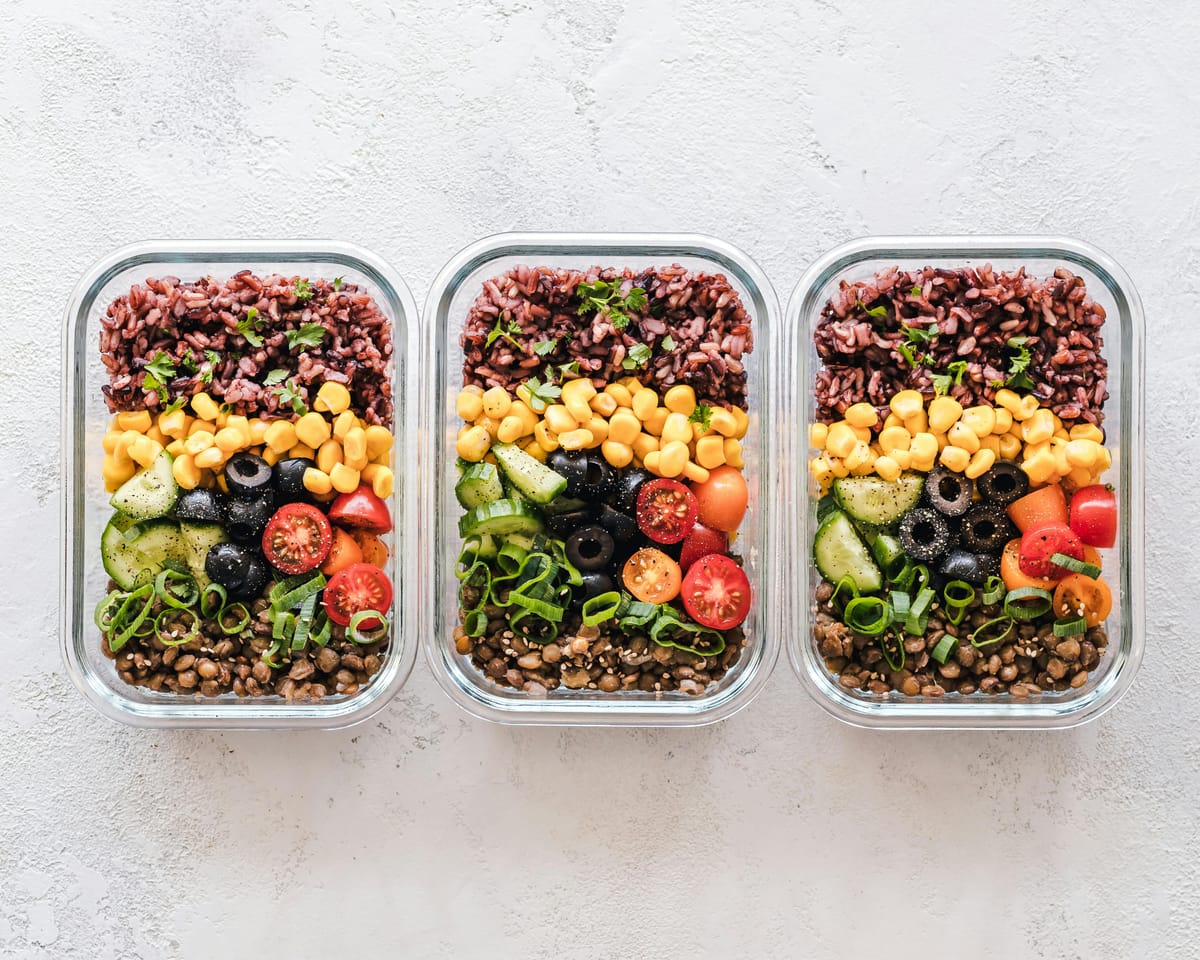
Not all nutrition challenges are equally effective or right for every lifestyle.
Some nutrition challenges incentivize people to make extreme and unhealthy choices, whereas others don’t provide sufficient accountability to drive real change necessary to help you achieve your goals.
In this post, we’ll first break down why many nutrition challenges fail and then use that analysis to evaluate some of the most popular nutrition challenges.
What Makes a Successful Nutrition Challenge? (And Why So Many Fail)
Before we get into the nutrition challenges, here are some simple rules that successful nutrition challenges follow.
#1: Simple Rules
Many nutrition challenges fail because they’re too complex.
For example, you might have to eat at specific times of the day or you might have to exclusively cook at home.
An excellent nutrition challenge that’s realistic and effective focuses on substituting foods, but doesn’t require changes in your daily routine.
#2: Easy Tracking
Manually logging food is a great way to be conscious of your food choices, but the reality is that most people simply won’t track 100% of the food they eat every day.
As a result, most people either quit, or they vastly underestimate the total calories consumed.
Instead, a successful nutrition challenge collects data automatically and precisely.
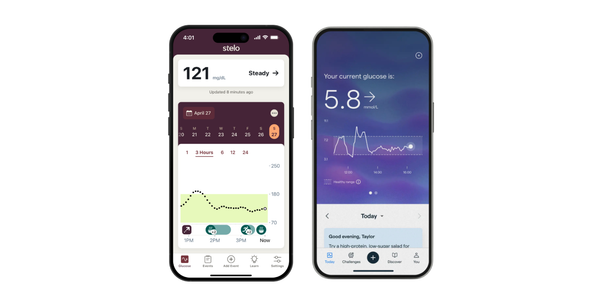
For example, a CGM based challenge where you wear a glucose monitor that continuously tracks your blood sugar is more accurate and effortless, meaning you’re more likely to stick with the challenge.
#3: Accountability and Stakes
The biggest issue with most nutrition challenges is that people quit.
Adding accountability with meaningful stakes fixes this problem.
For example, if the stakes are $20 per day, it’s more painful to quit the nutrition challenge than to finish it.
To ensure you don’t cheat, make sure that there’s immutable data tracking your progress.
For example, a CGM automatically tracks your blood sugar levels and the data can’t be altered. This makes it an excellent accountability tracker.
#4: Encourages Healthy Habits
Nutrition challenges should push you to make healthier food swaps, but shouldn’t incentivize you to consume fewer than 1,000-1,200 calories per day.
This is why a great nutrition challenge focuses on a daily target rather than an outcome. For example, a daily target might be blood sugar under 120 mg/dL where an outcome might be losing 20 pounds.
Ideally, a nutrition challenge will help you discover healthier food choices and make you aware of your food choices so that you build sustainable habits for a healthier lifestyle.
#5: Community and Support
You're more likely to succeed in a nutrition challenge if you’re experiencing it with others because they can provide support and also act as a sounding board if you run into problems along the way.
Often, your immediate friends may not have similar health goals, so you may need an online community to help you achieve your goals.
1.) Wearable Challenge
For this challenge, you wear a CGM (continuous glucose monitor) for 14 days and stake $20/day to keep your blood sugar under 120 mg/dL each day.
If you eat a lot of sugar or carbs, your glucose will likely spike, you’ll lose your stake for that day.
Wearable Challenge is highly effective at helping people reach their nutrition goals because:
- The CGM data is impossible to cheat
- The CGM makes tracking effortless (no logging required)
- $20/day skates make it more painful to quit the challenge than finish.
The glucose monitor will also help you learn how specific foods impact your body.
Why The CGM Challenge is More Effective Than Other Challenges
To ensure you achieve your goal, Wearable Challenge also has an active community where you can text others in your cohort who are doing the same challenge.
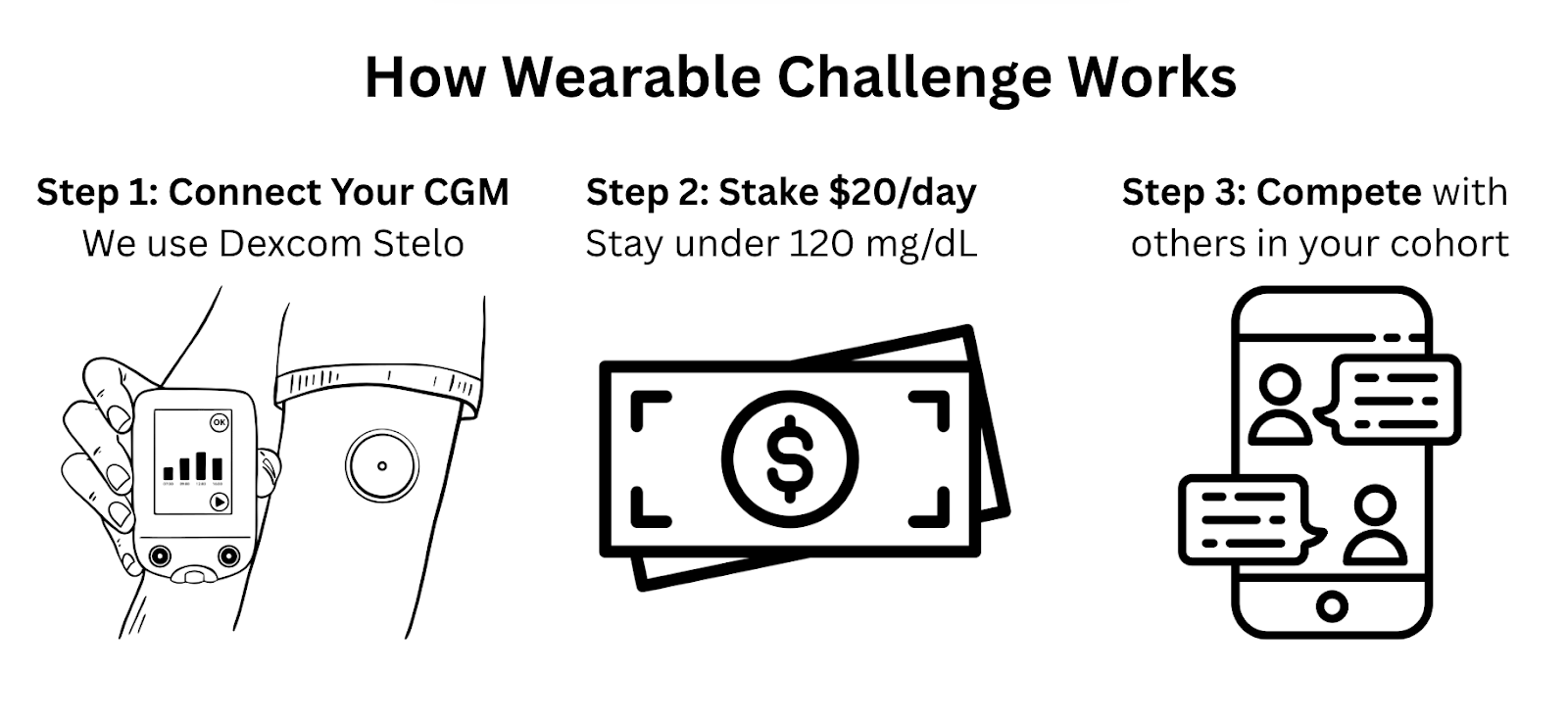
Here’s how it works:
- Step 1: Connect your CGM with Wearable Challenge (we have links to CGMs if you need one).
- Step 2: Stake $20 per day to stay under 120 mg/dL.
- Step 3: Connect and compete with others in your challenge via a secure SMS group chat.
Join Wearable Challenge today to take control and unlock the healthiest version of yourself.
2.) No Sugar Challenge
The No Sugar Challenge is a strong choice because it has simple rules (eliminate added sugars), is easy to track if you use apps or labels, and naturally encourages healthier food swaps without drastically cutting calories.
You can also integrate accountability by sharing your progress with friends or joining an online community, making it easier to stick with the challenge.
The main difficulty with this challenge is that many foods (especially processed foods) have hidden sugars.
To avoid hidden sugars, focus on whole, unprocessed foods and always read ingredient labels for terms like corn syrup, sucrose, maltose, dextrose, or anything ending in “-ose.” Cooking at home as much as possible also helps you control exactly what goes into your meals.
Goal: Eliminate added sugars from your diet for a set period (usually 7-30 days).
Execution Steps:
- Identify sources of sugar: Read labels for added sugars (corn syrup, sucrose, maltose, cane sugar, honey, etc.).
- Plan meals: Focus on whole foods like vegetables, fruits in moderation, lean proteins, whole grains, and healthy fats.
- Swap snacks: Replace candy, soda, and sweet treats with nuts, seeds, fruit, or sugar-free alternatives.
- Stay hydrated: Water and unsweetened tea/coffee can help curb cravings.
Tools:
- Use a food label scanner apps (e.g., MyFitnessPal, Yazio)
- Try a sugar tracking app or journal
- Meal prep containers for portioned meals
Pro Tips:
- Start by eliminating obvious sugars first (soda, candy, desserts) before tackling hidden sugars.
- Prepare sugar-free snacks ahead of time to avoid temptation.
- Track cravings to identify triggers and find healthier alternatives.
3.) Food Logging Challenge
Logging food is excellent because it’s simple, provides automatic accountability if you use apps, and gives immediate insight into your nutrition habits. You don’t need drastic calorie restrictions, and it can be done alone or with a supportive group to encourage consistent tracking.
Goal: Track every meal, snack, and drink you consume for a set period (usually 7-30 days). You can use a tool like Bitesnap to simply take a picture of the food or MyFitnessPal to log it manually or scan a barcode.
Execution Steps:
- Choose a logging method: App, spreadsheet, or paper journal. Apps are often the easiest choice.
- Record everything: Include portion sizes, beverages, sauces, and condiments.
- Review daily: Look for patterns like overeating at certain times or nutrient deficiencies. Look at not just your daily intake, but your weekly averages.
- Adjust: Use insights to make small, realistic changes.
Tools:
- Apps: MyFitnessPal, Cronometer, Lose It!
- Smart kitchen scale for accurate portion tracking
- Barcode scanner for packaged foods
Pro Tips:
- Be honest and detailed as hidden calories matter.
- Set reminders to log meals immediately after eating.
- Focus on learning patterns, not perfection.
4.) Whole30 Challenge
Whole30 is effective because it has clear rules, encourages major healthy food swaps, and emphasizes whole foods rather than calorie restriction. Tracking is simple, because all you have to do is eat whole foods rather than processed or packaged foods.
However, the drawback of the Whole30 challenge is that it usually requires quite a bit of time and effort to cook and meal prep, making it unrealistic for some people.
Accountability is also challenging. While you can log everything you make in a food journal, there isn’t a cut and dry method to ensure you’re adhering to the schedule.
Goal: Eat only whole foods (meat, seafood, eggs, vegetables, fruits, nuts, and seeds) for 30 days while eliminating sugar, grains, legumes, dairy, and alcohol.
Execution Steps:
- Prepare in advance: Stock your kitchen with whole foods or meal prep in advance.
- Plan meals: Breakfasts, lunches, dinners, and snacks that meet Whole30 rules.
- Read labels: Hidden sugars, soy, and preservatives are common non-compliant ingredients.
- Commit fully: Avoid “cheat” foods as even small amounts reset the program. Many foods with hidden sugars are addicting and can make it harder to get back on track.
Tools:
- Whole30 app for recipes and meal planning
- Meal prep containers
- Whole30 grocery list
Pro Tips:
- Batch cook proteins and veggies for easy meals.
- Track mood, energy, sleep, and cravings daily to notice changes.
- Focus on new habits, not just restrictions.
5.) Intermittent Fasting Challenge
Intermittent fasting works well because the rules are simple (eat within a time window), tracking is straightforward (monitor fasting hours), and it doesn’t require extreme calorie restriction.
You can combine it with community support or accountability tools to stick with your schedule, and it helps participants better understand hunger cues.
That said, intermittent fasting isn’t for everyone. Some people feel fatigued or find that they overeat when the fast ends. So it’s still worthwhile to log everything you eat to ensure you’re not overeating.
A pro tip is to break each fast with a high protein meal and wait at least 20 minutes before deciding to get more food if you’re still hungry.
Goal: Restrict eating to a specific time window each day (e.g., 16:8 means fasting 16 hours, eating in an 8-hour window).
Execution Steps:
- Choose a fasting schedule: Common options are 16:8, 14:10, or 18:6.
- Plan meals: Ensure meals are nutrient-dense to support energy during fasting.
- Stay hydrated: Water, black coffee, or herbal tea are allowed during fasting.
- Gradually adapt: Start with shorter fasting windows if you’re new.
Tools:
- Fasting tracker apps: Zero, Fastient
- Smartwatch or phone reminders for start/end times
- Meal prep containers for efficient eating windows
Pro Tips:
- Avoid high-sugar meals during eating windows as they spike insulin and increase cravings.
- Focus on protein and fiber to stay full longer.
- Track energy, sleep, and hunger cues to optimize your window.
6.) Plant-Based Challenge
A plant-based challenge is simple (focus on eating mostly or only plant foods), easy to track with a meal log or app, and encourages healthier swaps like vegetables, legumes, and whole grains.
The drawbacks of the plant-based diet is that it can be challenging to consume enough protein. It’s also challenging to find something healthy and high protein when eating out at a restaurant, so it might not fit with everyone’s lifestyle.
Goal: Eat predominantly plant-based foods for a set period (e.g., 7-30 days).
Execution Steps:
- Plan meals: Include vegetables, fruits, legumes, whole grains, nuts, and seeds.
- Identify protein sources: Beans, lentils, tofu, tempeh, or plant-based protein powders.
- Gradually reduce animal products: Start with one meal a day or certain days of the week if going fully plant-based is too big a leap.
- Track nutrients: Ensure adequate protein, iron, and vitamin B12 intake.
Tools:
- Apps: Cronometer, MyFitnessPal for nutrient tracking
- Meal prep containers
- Plant-based recipe websites like Plantstrong
Pro Tips:
- Batch cook beans, lentils, or grains to make meals easier.
- Experiment with plant-based substitutes for familiar dishes to avoid feeling deprived.
- Join online plant-based communities for ideas and accountability.
7.) Hydration Challenge
While not a nutrition challenge per say, the hydration challenge is simple, easy to track, and provides immediate feedback on how water intake affects energy and cravings.
It doesn’t require dietary restrictions and can be done alongside other challenges, plus accountability is easy with water tracking apps or a visible water bottle.
If you’re still struggling to stay hydrated, you can use electrolytes like LMNT or Liquid I.V.
Goal: Drink a set amount of water daily (e.g., 2–3 liters) for a set period.
Execution Steps:
- Determine daily water target: Use weight, activity level, and climate as a guide.
- Set reminders: Use alarms or apps to sip water throughout the day.
- Track intake: Keep a water bottle with measurements visible.
- Adjust for activity: Add more water for exercise, heat, or illness.
Tools:
- Water tracking apps: WaterMinder
- Reusable water bottle with measurements
- Smartwatch or phone reminders
Pro Tips:
- Add lemon, cucumber, or herbs for flavor if you don’t like plain water.
- Drink water before meals as it can reduce unnecessary snacking.
- Track how hydration affects energy, digestion, and hunger cues.
8.) Mindful Eating Challenge
Mindful eating is simple, encourages awareness of hunger and fullness cues, and is easy to track with a journal.
It promotes healthier habits without calorie restriction and can be reinforced through accountability by sharing reflections with a friend or group.
You can participate in a mindful eating challenge while also doing one of the other challenges.
It will make you more aware of what you’re actually eating, which in itself will likely encourage
Goal: Eat all meals slowly and attentively, focusing on hunger cues and portion control, for a set period.
Execution Steps:
- Eliminate distractions: Avoid screens during meals.
- Eat slowly: Chew thoroughly and pause between bites.
- Listen to hunger/fullness cues: Stop eating when satisfied, not stuffed.
- Reflect after meals: Note satisfaction, hunger levels, and cravings.
Tools:
- Food or mindfulness journal like MEAL
- Timer for meals if needed
- Guided mindful eating apps or videos
Pro Tips:
- Take deep breaths before and during meals to slow down.
- Start with one meal a day if doing all meals feels overwhelming.
- Track patterns to understand emotional or habitual eating triggers.
Start a Nutrition Challenge Today
Whether your goal is weight loss, improving your overall health, or simply optimizing your diet for better performance, start today.
In 30 days, you might look back and say, “I wish I started that nutrition challenge!”
However, as long as you pick a challenge that encourages healthy eating, you likely won’t look back and say, “I regret starting that nutrition challenge!”
So take action today.
The CGM challenge is our favorite because:
- Effortless tracking: No manual logging as the CGM data is automatically collected.
- No cheating: You can’t fake the data.
- Learn how your body responds to foods
- No drastic lifestyle changes.
- It’s free to join!
Join Rival today and watch yourself transform into the best version of you.