How to Lose Weight Without Counting Calories: Proven Solutions

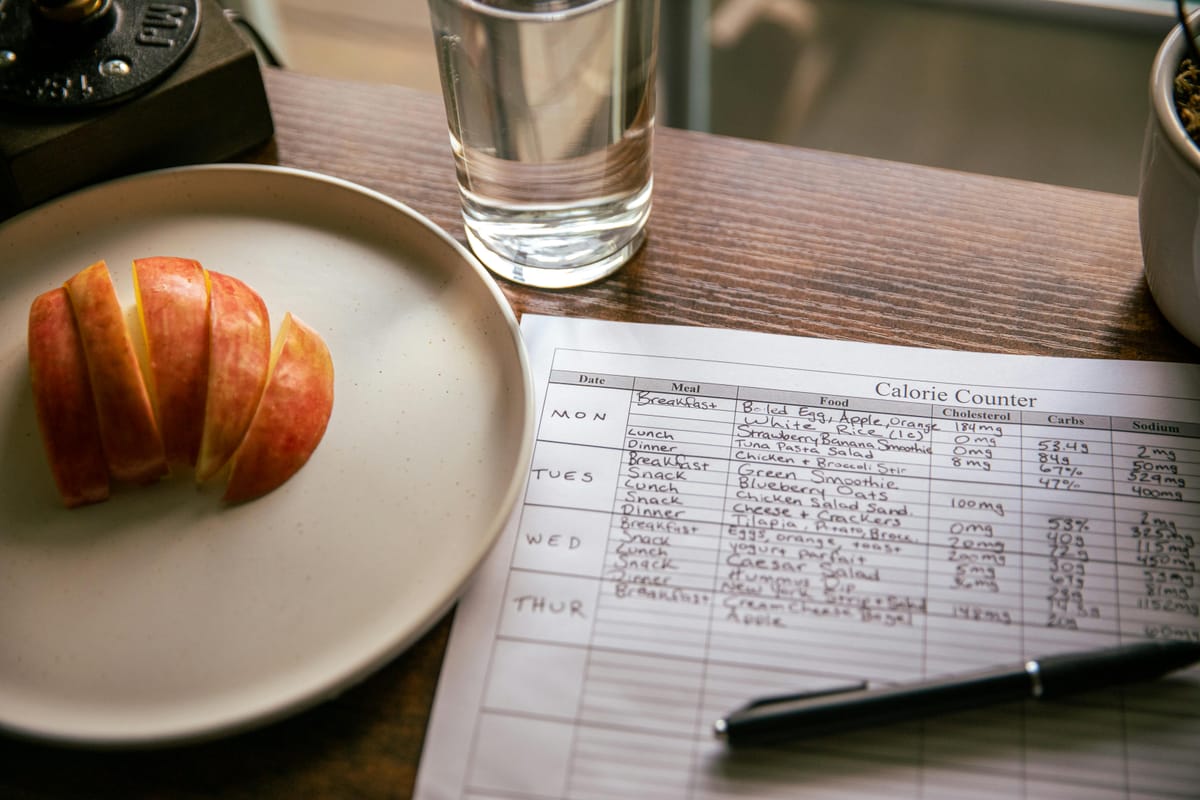
Counting calories is a good solution in theory, but manually logging food usually fails for a few reasons:
- It requires effort and you quit.
- It’s inaccurate as you’re often guestimating.
- You omit “little” snacks and treats that add up.
Instead of telling yourself to try harder, here are some better long-term solutions to lose weight without counting calories.
#1: Wear a CGM or Glucose Biosensor
The biggest challenge with counting calories is that you have to manually log each meal, snack, and treat you consume.
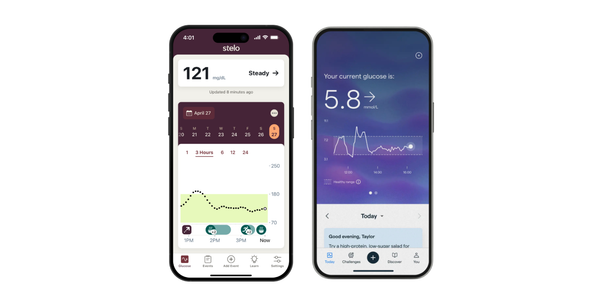
A CGM automatically tracks your blood sugar for you.
While a CGM doesn’t measure calories consumed, it does measure your blood sugar, which will spike if you consume high sugar/carb foods.
Of course, wearing the CGM alone won’t instantly make you healthier.
You need to also hold yourself accountable to keep your blood sugar in a healthy range by limiting high sugar/carb snacks and treats.
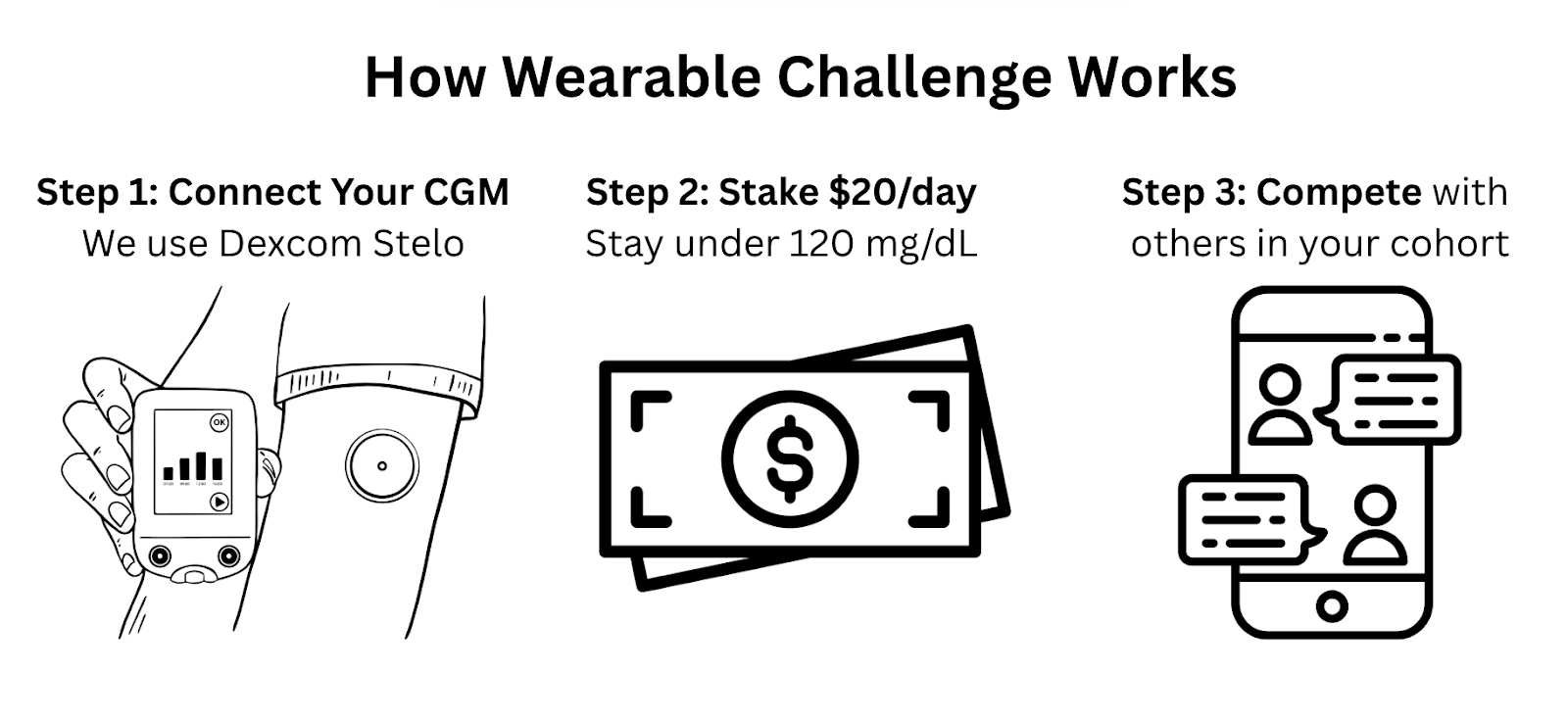
To solve the accountability problem, we created Wearable Challenge.
It’s a 14 day challenge where you bet $20/day to keep your blood sugar under 120 mg/dL (a healthy glucose threshold).
If you spike above that threshold, you lose your $20 for that day. Otherwise, it’s free to join.
Wearable Challenge is highly effective at helping you lose weight for a few reasons:
- CGM data makes tracking effortless and accurate
- You can’t cheat or omit treats, as the CGM data is immutable
- The $20/day stakes means you’re unlikely to quit the challenge
Below is a more detailed overview.
Why Wearable Challenge is an Effective Solution to Lose Weight Without Counting Calories
Join Wearable Challenge today and your future self will thank you!
#2: Use a Food Lockbox
In a perfect world, you simply wouldn’t have unhealthy foods in your house, though this is often unrealistic because you might live with others.
Or, you might want to just have a few sweet treats in moderation. (Which is completely fine!)
A food lockbox is a great solution to both of these because you can still have some of your favorite foods in moderation, though it can help prevent you from eating excessive amounts of your favorite foods.
If you live with family, you can get a food lockbox with a code that only the other people in your house know.
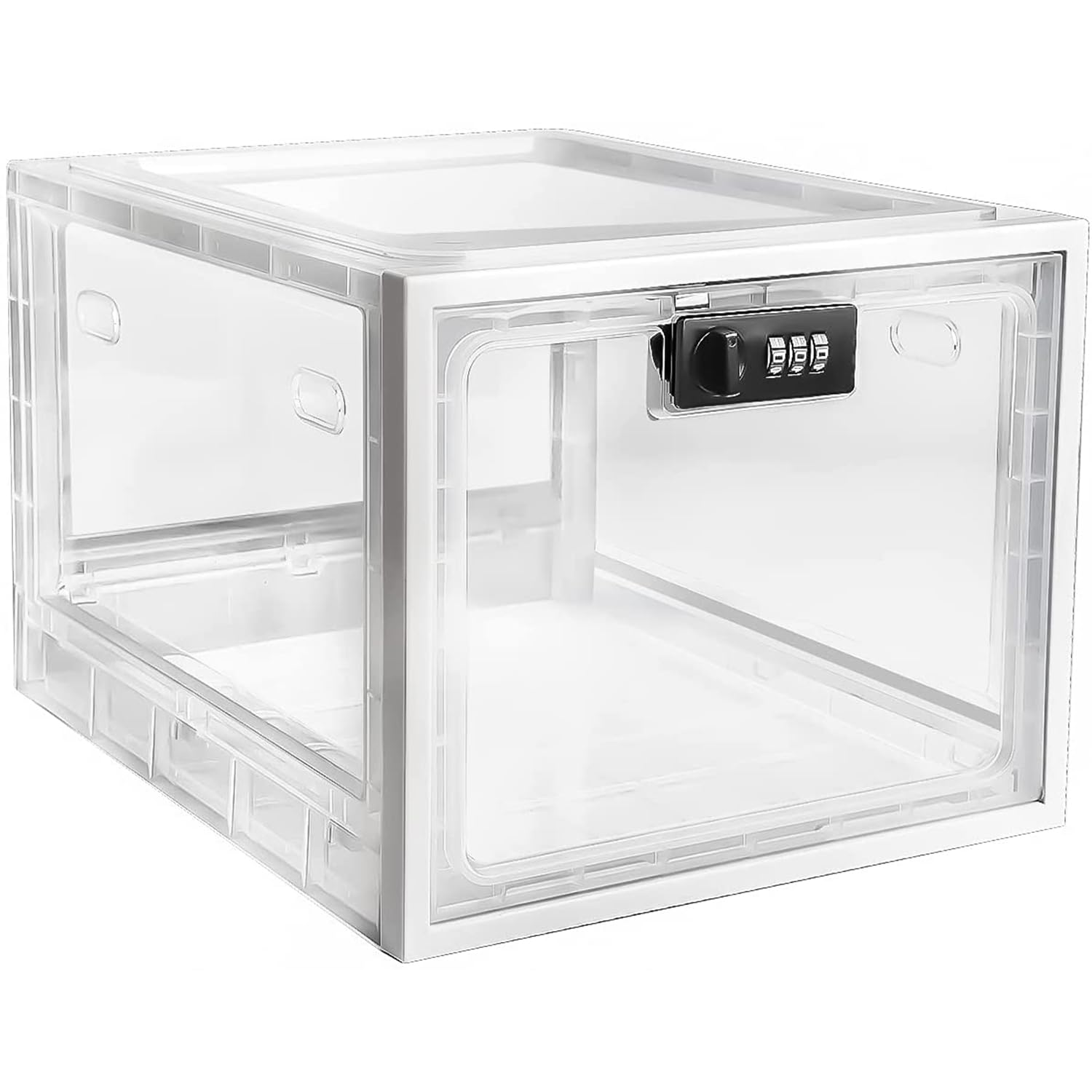
Or, if you just want to have a few of your favorite foods on hand, you can get a food lockbox with a timer. For example, you could set it to only open at 7pm if you want to have one cookie in the evening.
A pro tip is to take out the food you plan to consume and then close the lockbox before you eat. Otherwise, you might come back for seconds, thirds, and eventually eat everything in your lockbox before closing it.
#3: Prioritize High Protein Meals
When people say they’re always hungry when dieting, it’s usually because they’re cutting calories but not eating enough protein.
Protein is the one macronutrient that consistently keeps you fuller for longer and it’s harder to overeat than carbs and fats.
A good rule of thumb is to aim for 20 to 30 grams of protein per meal. That’s roughly a chicken breast, a couple of eggs plus egg whites, or one to two cups of Greek yogurt.
Start by eating your protein first, and then add carbs and fats.
One of the biggest mistakes people make when losing weight is trying to “snack light.”
They’ll grab a granola bar or a handful of crackers, and while they may seem low calorie (often 100-300 calories total), these snacks won’t keep you as full as a high protein snack, like a protein shake, cottage cheese, or jerky.
So even if you’re just snacking, prioritize high protein foods.
Finally, prioritizing protein is excellent for building muscle, which can help you with body recomposition (transforming your physique from soft to more muscular).
#4: Use a Weight Loss Accountability Partner
Counting calories makes you aware of how many calories you’re actually eating, as most people underestimate how much they consume in a day.
However, you probably already know you should eat fewer cookies and chips and more lean meats and veggies.
You simply aren’t doing it.
This is where a weight loss accountability partner can help.
However, choosing the wrong accountability partner can backfire.
While it might seem like a good idea to partner with someone who is also on a similar health journey, they might also struggle with consistency. If they fail to stay consistent, you might also lose motivation.
Instead, it’s important to work with an accountability partner who already has healthy habits you want to adopt.
However, even if you work with the right accountability partner, it still isn’t a foolproof solution because:
- They can’t hold you accountable if you aren’t tracking any metrics.
- If you are tracking metrics, but omit unplanned sweet treats, they can’t hold you accountable.
- Peer pressure isn’t always a positive way to hold yourself accountable, but positive support isn’t always sufficient motivation.
Wearable Challenge, a CGM-based nutrition accountability challenge, solves all of these problems.
Here’s how it works:
You bet $20 per day to stay under a healthy glucose range. And, you’ll also have access to an SMS group chat where you can connect with others on a similar journey.
This is the ultimate weight loss accountability partner system because:
- Data is automatically collected through a CGM, so you never have to log a single meal, and you can’t cheat or over/under estimate carbs/sugar consumed.
- $20 per day is strong motivation to stay in range, and instead of feeling pressure from peers, you can just support one another.
Join Wearable Challenge today to reach your weight loss goals without ever tracking calories.
#5: Practice Mindful Eating
Most overeating happens because you’re distracted, not because you’re actually hungry. Think about the last time you ate chips while watching TV. You probably didn’t even realize you finished the bag until it was gone.
The simplest fix is to slow down and pay attention. Try eating without your phone, laptop, or TV. It sounds small, but it makes a huge difference.
A good rule of thumb is to pause halfway through your meal and ask: “If I stopped now, would I still be satisfied?” More often than not, the answer is yes.
Even if you want more food, wait 15-20 minutes before getting more. If you’re still genuinely hungry, go back for more food, though you’ll probably find that you’re actually full.
You can also use little tricks to slow yourself down, like putting your fork down between bites or plating your food in the kitchen instead of eating straight from the package.
Mindful eating is about awareness, not restriction.
When you’re tuned into your food, you naturally eat less without feeling deprived.
#6: Sleep Earlier (And Longer)
Most overeating happens late at night, so going to bed early prevents these late night snacks.
There are also hormonal reasons why sleep can aid weight loss and prevent overeating.
When you’re sleep-deprived, your body produces more ghrelin (the hormone that signals hunger) and less leptin (the hormone that signals fullness).
This imbalance tricks you into feeling hungrier than you really are, while also making it harder to feel satisfied after eating.
Research has shown that even a single night of poor sleep can shift these hormones in a way that drives appetite upward.
Beyond hormones, sleep loss also changes how your brain responds to food.
Imaging studies using fMRI have found that when people are sleep-deprived, the brain’s reward centers (the anterior cingulate cortex and insula) light up more intensely in response to high-calorie foods.
In other words, cookies, chips, and pizza look far more appealing when you’re running on little sleep, and your ability to resist them decreases.
Aim for 7-9 hours of quality sleep, and optimize your environment. Here are a few tips:
- Keep your room cool, dark, and quiet.
- Shut down screens at least 30-60 minutes before bed.
- Use an eye mask.
Research shows that sleep also helps with recovery, which can help you exercise more intensely and ultimately lose weight faster.
#7: Remove (Or at Least Reduce) Alcohol
Alcohol is obviously empty calories, but it also has other negative effects on weight loss.
First, drinking lowers your inhibitions, so you’ll likely find yourself mindlessly eating late night snacks, like chips and pizza.
Additionally, alcohol negatively affects sleep.
You might fall asleep faster, but your quality of sleep suffers. Poor sleep then makes you hungrier and crave high-calorie foods the next day.
And, if you’re hung-over, you’ll have less energy to work out the next day.
If the thought of cutting out alcohol is painful, consider trying one of these approaches:
- Set alcohol-free days, like weekdays. You’ll naturally cut calories without feeling restricted.
- Swap alcoholic drinks for non-calorie alternatives like sparkling water with lime, kombucha, or non-alcoholic beer. Here’s a detailed analysis of the best mocktails.
#8: Cook and Meal Prep
Most people overeat because they don’t have any healthy food with them. So instead, they eat at a restaurant or get take out.
However, most restaurant meals are calorically dense, low in protein, and have large portion sizes.
As a result, you consume too many calories.
Cooking at home fixes this problem as you can control what goes into your food and reduce portion sizes.
Cooking at home does take time, so consider meal prepping.
Cook a batch of chicken, ground beef, or beans at the start of the week, then build meals around it with veggies and carbs.
It’s also a good idea to keep a handful of high protein snacks on hand so that you don’t buy chips or sweet treats when you’re feeling hungry.
Keep high-protein, filling options like Greek yogurt, boiled eggs, or jerky ready to go. If the healthy choice is convenient, you’re way more likely to stick with it.
#9: Ask For Only Half The Plate at Restaurants
Cooking at home is the best solution to prevent overeating, but for many people, it’s unrealistic.
So if you plan to go to a restaurant, one hack is to select a high protein dish and then ask them to box up half of the meal before they bring out the food.
This can easily cut the calories you consume in half without feeling restricted.
Start Losing Weight Without Counting Calories Today
There are plenty of different hacks to cut calories without counting them, but most people simply don’t stick to a plan because they don’t have accountability.
Wearable Challenge is the effortless accountability that fixes this problem.
You wear a CGM and stake $20 per day to stay under 120 mg/dL (a healthy glucose level).
If you eat excessive carbs or sugar and your glucose spikes over 120 mg/dL, you’ll lose your stakes. Otherwise, it’s completely free to join.
The CGM is also a much better alternative to calorie counting because:
- You can’t cheat by “forgetting” to log snacks and treats
- It effortlessly collects data rather than relying on you to manually log food
- It’s a more accurate reflection of what you’ve actually eaten and how your body is affected by those foods than calorie guestimating.
Join Wearable Challenge today and watch yourself finally achieve your weight loss goals.