How To Use a CGM For Weight Loss (And Why it Works)

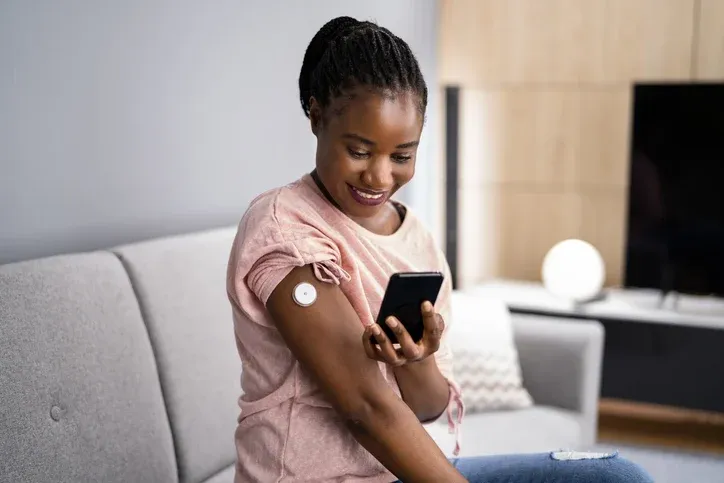
There are plenty of people using CGMs for weight loss, but there is plenty of confusion as to what a CGM for weight loss is and how it works.
In this post, we'll discuss:
- What is a CGM?
- Is a CGM an effective weight loss tool?
- How do you use a CGM for weight loss?
We’ll answer all of these questions and more in the rest of this post.
What is a CGM And How Does it Work?
CGMs (continuous glucose monitors) is a wearable device that tracks your glucose levels throughout the day and night.
While CGMs are medically prescribed for diabetics, a new version of over-the-counter CGMs are now available for non-diabetics who want to track their glucose levels to optimize their health and/or lose weight.
Why Does a CGM Help With Weight Loss?
The only way to lose weight is to burn more calories than you consume.
There are plenty of studies that verify this statement, so why are CGMs helpful for weight loss?
Stable Glucose = More Energy/Less Cravings
The key reason a CGM can help with weight loss is that stabilizing glucose levels tends to lead to a stable appetite and more energy. In contrast, glucose spikes and crashes can make you feel tired and trigger cravings, even if you’ve recently eaten.
As a result, blood sugar spikes can cause you to eat more and move less. In contrast, if your glucose levels are stable, you’ll likely have more energy and fewer cravings.
Therefore, even though glucose levels don’t directly impact weight loss, glucose levels do influence factors (cravings and energy) which can lead to behaviors that cause weight gain or loss.
Foods With Refined Sugar/Carbs Are Often High Calorie
Additionally, foods high in refined carbs or sugar that cause glucose to spike (like cookies, cake, etc.) are often calorically dense and lead to weight gain.
By removing foods that are high in refined carbs and sugars, you’ll likely lose weight.
To be clear, not all high calorie foods cause blood sugar spikes.
However, foods with refined sugars/carbs do often cause glucose to spike, and by simply removing these foods from your diet, you’ll likely lose weight.
A More Detailed Explanation
If you’re curious why blood sugar spikes cause cravings and reduce energy, here’s a more detailed look.
Spike → Crash Cycle
When you eat a high-sugar or high-carb food, your blood glucose rises quickly.
Your body responds by releasing insulin, a hormone that moves glucose out of the bloodstream and into cells.
If the spike is large, insulin can overshoot, causing blood sugar to drop below normal levels (a “crash”).
Cravings
During that crash, your brain senses low glucose (its main fuel).
Therefore, it triggers hunger signals and cravings (especially for fast-digesting carbs and sugar) to quickly raise blood sugar again.
Reduced Energy
The drop in blood sugar after the spike leaves cells with less available glucose.
As your brain’s main fuel is glucose, you’ll feel fatigue, brain fog, irritability, and low motivation (often called an “afternoon slump”).
How to Use a CGM For Weight Loss
Wearing an OTC CGM helps you become aware of foods that spike blood sugar.
If the awareness causes you to reduce foods that spike blood sugar (often foods with refined carbs/sugars), you’ll likely reduce cravings, have more energy, and reduce overall caloric intake.
In fact, a recent study published in PubMed showed the following promising statistics that CGMs might help with weight loss:
- 90% of CGM users believe it helped them lead a healthier lifestyle.
- 47% of CGM users claimed they were more likely to do some physical activity, like going for a walk, if they saw a rise in their blood glucose.
- 87% of CGM users claimed they modified their food choices based on CGM readings.
The Problem With CGMs For Weight Loss
While the statistics look promising, you may have spotted a problem.
CGMs may make you aware of foods that spike blood sugar, but that doesn’t mean that you’ll change your behavior.
In fact, you already probably know that you should eat less cake and more lean proteins.
You just aren’t doing it.
This is why we created Wearable Challenge.
Instead of just watching your blood sugar spike, Wearable Challenge holds you accountable.
It’s a 14 day challenge where participants wear a CGM and stake $20/day to keep their blood sugar under 120 mg/dL.
It’s free to join, but if you spike over 120 mg/dL, you lose your $20 stakes for that day.
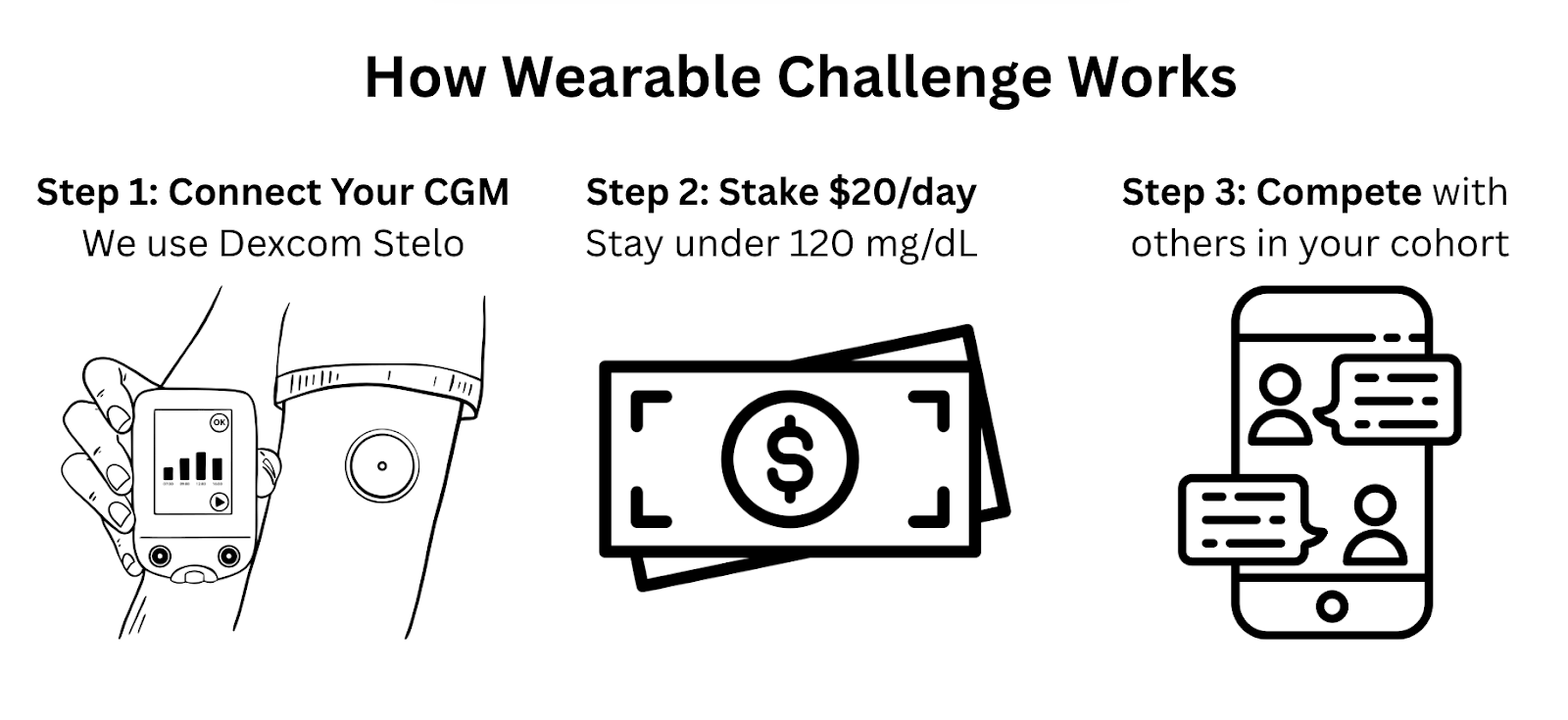
The beauty of Wearable Challenge is that the pain of quitting (losing $20/day) often outweighs the pain of continuing the challenge.
For example, most weight loss challenges offer a reward at the end of the challenge, but there’s rarely any daily motivation to keep going.
With Wearable Challenge, every day counts.
Join Wearable Challenge today to unlock the best version of yourself.
What Are The Best CGMs For Weight Loss?
This is usually the next question, and there are actually a few layers to it.
First, it’s important to realize that there are medical CGMs designed for diabetics that require a prescription and OTC CGMs that you can use for weight loss.
The main takeaway is that you’ll want to get an OTC CGM if you’re not diabetic and just want to use it as a weight loss device.
However, if you’re curious about the difference between the medical versus OTC CGM, here’s a helpful chart:
CGMs vs OTC CGMs
What Are OTC CGMs?
Abbott Lingo and Dexcom Stelo are currently the only two OTC CGMs available.
Both of these devices are quite similar and perfectly acceptable for general wellness and weight loss.
To give you a sense of the differences, the Dexcom Stelo is known for being user friendly and direct, whereas the Lingo has a more advanced interface.
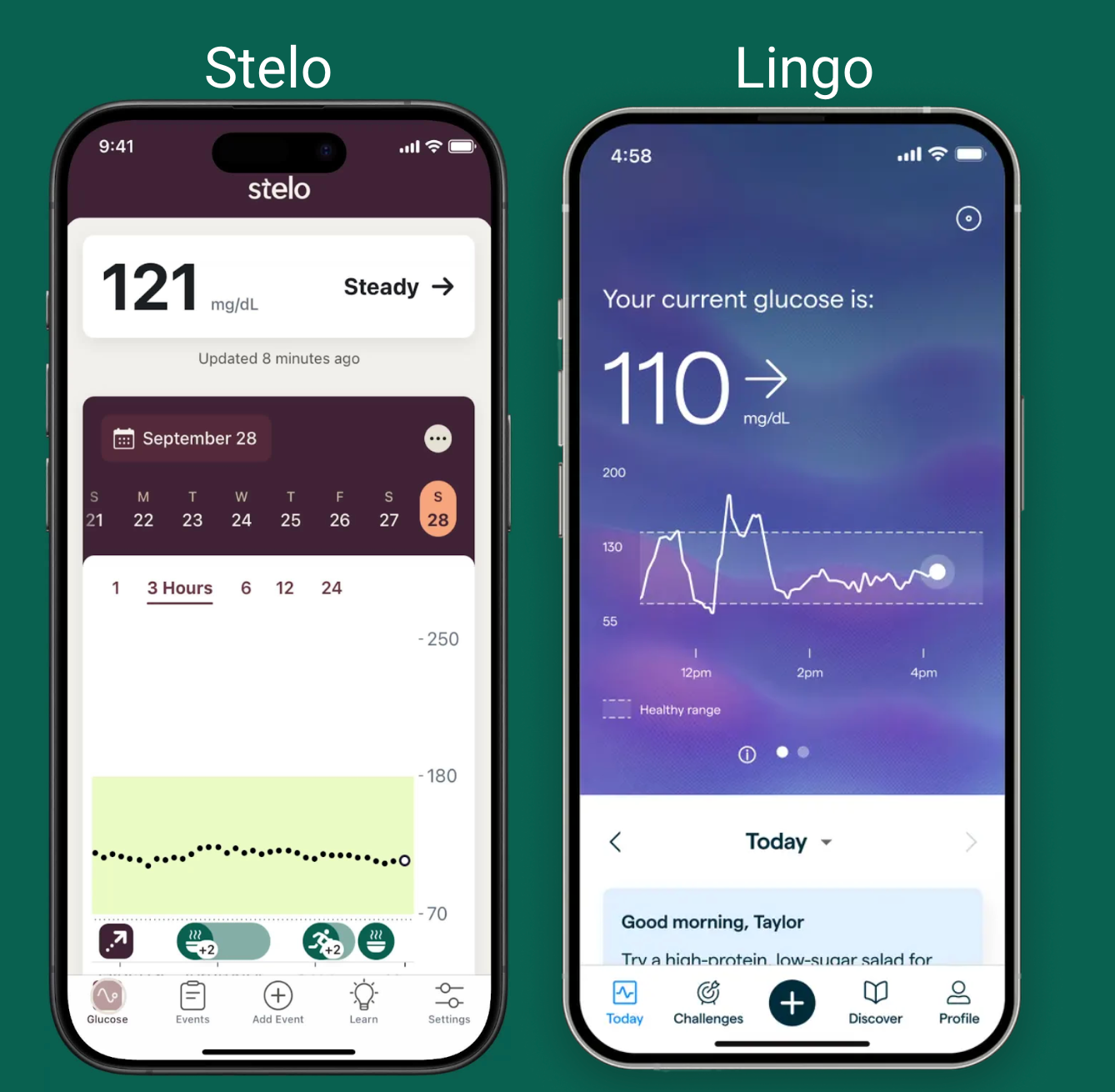
Additionally, while the Dexcom Stelo is only updated every 15 minutes, the Lingo updates every minute.
The main drawback of Lingo is that it is not currently available for Android users.
The pricing for both is fairly similar if you’re buying a month’s supply of sensors (two sensors, given that each sensor lasts about 2 weeks).
However, only the Lingo allows you to purchase a single sensor. Dexcom Stelo requires you to purchase two sensors at a time.
Here’s a more detailed overview of the pricing comparison:
What Are CGM Based Health Services?
If you do a quick search for CGMs, you may quickly become confused as there are plenty of companies like Levels, Nutrisense, Veri, and Signos that offer a complimentary software component for reading CGM data.
However, these companies don’t manufacture the CGMs. Instead, they simply build software and offer coaching services that are complimentary to the CGMs.
Tips to Achieve Your Weight Loss Goals With a CGM
Simply wearing a CGM and looking at it daily can help you lose weight, but here are a few tips to help you reach your weight loss goals in less time.
1.) Track Your Food and Workouts
One of the benefits of a CGM is that it shows how your body responds to specific foods.
However, relying on your memory alone to track how specific foods impacted your body isn’t a great method to incrementally improve your diet.
Instead, log your meals inside either the Stelo/Lingo app or in a separate food tracking app.
Stelo even has a smart meal tracking app:
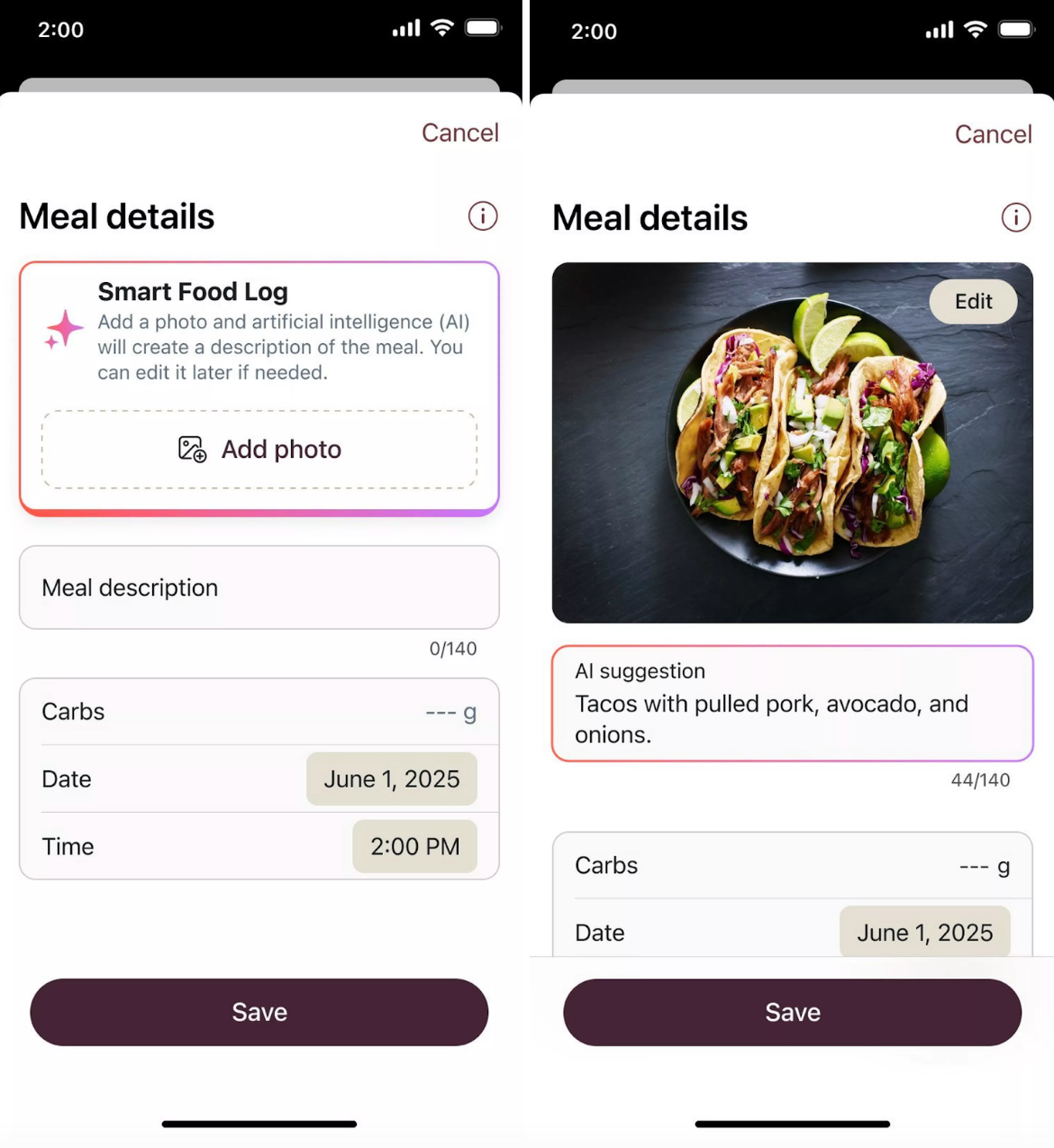
Tracking your meals will also help you account for calories. This is important because there are plenty of high calorie foods, like oils and butters, that won’t spike glucose.
If your goal is weight loss, it’s important to still track these kinds of foods to ensure you aren’t overconsuming calories.
2.) Use an Accountability System
The CGM can give you data to help you understand what you should and shouldn’t eat, but that doesn’t mean that you’ll make healthier choices.
You can use an accountability challenge, like Wearable Challenge to solve this problem. With Wearable Challenge, you stake $20/day to keep your glucose under 120 mg/dL for the duration of the challenge.
It’s free to join and you’ll compete in a cohort with others working towards similar goals.
Alternatively, you can work with an accountability partner. For example, send them screenshots of your daily progress and let them know how you’re progressing.
To ensure the accountability system works, here are two pro tips:
- Pick the right partner: Select someone who already has habits that you admire. If you partner with someone on a similar weight loss journey, you’re both in the process of developing healthy habits and could derail one another.
- Use stakes: One of the key issues with most accountability systems is that there aren’t any stakes. Words of encouragement can only motivate you so much when you’re experiencing cravings.
3.) Work with a Coach
The final option is to work with a coach as they can give you more detailed insights on your information and help you improve your mindset towards weight loss.
If you plan to work with a coach, consider asking them if you can set some stakes to challenge yourself to keep your glucose levels within a certain range.
Setting stakes will keep you motivated to remain consistent and avoid slipping up.
Start Losing Weight By Using a CGM Today
Everyone always says they’ll start tomorrow.
Don’t be like everyone else.
Make the commitment by signing up for Wearable Challenge today.
With $20 at stake every day, it’s the one fitness challenge you won’t quit.
Join Wearable Challenge today.