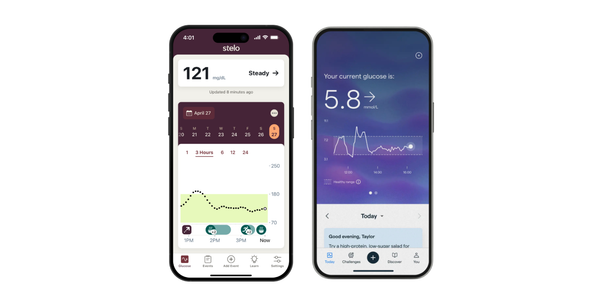
Diet Challenges: 10 Ideas That Are Highly Effective


The thought of starting a diet is often overwhelming for people, so diet challenges with a set end date can be a less daunting method to learn healthy eating habits.
However, not all diet challenges are equally effective.
Usually diet challenges are either too extreme and therefore aren’t sustainable.
Or, they don’t put enough positive pressure on the participant to actually change their habits and they quit.
In this post, we’ll discuss what makes a diet challenge effective and then compare some of the most popular diet challenges.
What Makes a Diet Challenge Effective?
Here’s a simple criteria you can use to evaluate any nutrition or diet challenge. And, we’ll use this exact criteria to evaluate each of the diet challenges below.
#1: Wearable Challenge
Wearable Challenge is a unique diet challenge because you aren’t following a specific diet tracking anything manually.
Instead, you wear a continuous glucose monitor (CGM) for 14 days and stake $20/day to keep your blood sugar under 120mg/dL (a low, but healthy range).
If your blood sugar spikes over 120 mg/dL, you lose $20 that day.
Otherwise, it’s free to participate.
The idea is that you remove high sugar/carb foods that spike blood sugar, which ultimately leads to weight loss.
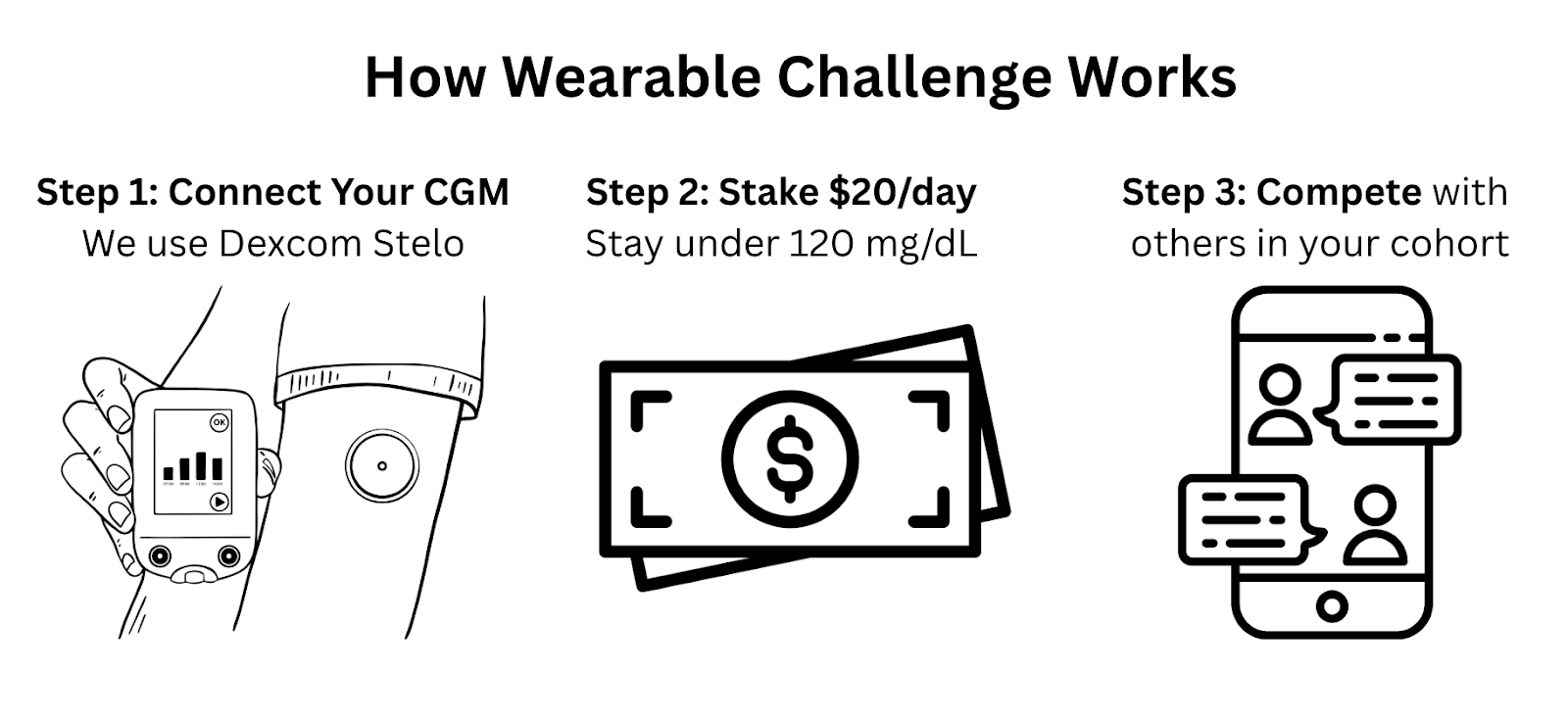
Wearable Challenge is a highly effective diet challenge because:
- CGM tracking is effortless: You don’t have to worry about manually logging food at each meal.
- CGM tracking is accurate: Food logging is often inaccurate either because you have to guess calories, whereas the CGM is measuring your real blood sugar.
- CGM data makes cheating impossible: With food logging, you can omit sweet treats and lie to your accountability coach. CGM data is immutable.
- $20/day stakes is meaningful accountability: Accountability for most diet challenges is either non-existent or just a call with a coach. Encouragement from a coach isn’t always meaningful accountability.
Here’s how Wearable Challenge measures up on our criteria:
Join Wearable Challenge today to unlock the best version of yourself.
#2: Whole30 Challenge
The Whole30 is one of the most popular diet challenges because it’s a total reset of your eating habits.
For 30 days, you cut out added sugars, alcohol, grains, legumes, dairy, and processed foods. Instead, your meals consist of whole foods like vegetables, fruit, meat, seafood, nuts, and healthy fats.
The idea behind Whole30 is to give your body a break from potentially inflammatory foods and help you recognize how different foods affect your energy, digestion, and cravings.
It doesn’t eliminate food groups and doesn’t restrict calories, though you’ll find that it is challenging to stick to as most it’s difficult (but not impossible!) to eat out or at events.
For some people, it works as a long-term lifestyle, but for those who travel frequently or simply eat out a lot, it isn’t sustainable.
#3: No Sugar Challenge
The No Sugar diet challenge is exactly what it sounds like: eliminate all added sugars for 30 days.
This includes obvious sources like soda, candy, desserts, and sweetened drinks, but also hidden sugars in things like sauces, breads, and packaged foods.
However, you can still eat foods with natural sugars, like fruits.
Added sugar is addictive and the goal of this challenge is to break free of your cravings and become more aware of how much sugar sneaks into your diet.
Removing added sugar is challenging the first week, but afterward, you’ll likely have more energy and a more stable mood.
The no sugar challenge isn’t as restrictive as some diets, because you aren’t eliminating entire food groups, and it’s therefore a sustainable lifestyle.
The main difficulty lies in tracking your no sugar challenge.
You’ll have to read labels carefully and resist processed foods. There also isn’t really any way of knowing if you unknowingly ate foods with added sugar, and there isn’t accountability.
To solve these problems, you could wear a CGM, as any high sugar foods will spike your glucose, thereby alerting you of the effect a specific food had on your body.
So, you might just want to join the Wearable Challenge instead.
#4: No Snacking Challenge
The No Snacking Challenge means you only eat at mealtimes.
For 30 days, you commit to eating three balanced meals (or whatever set structure you choose) without reaching for chips, cookies, or even “healthy” snacks in between.
The purpose is to help stabilize your appetite, reduce mindless eating, and improve awareness of true hunger cues.
As a result, you’ll likely eat fewer calories overall, have better digestion, and notice improved energy levels when they stop snacking.
You can use a tool like stickK to hold yourself accountable and track each day with an accountability partner. The downside is that your accountability buddy won’t necessarily know if you’re telling the truth.
The alternative is to wear a CGM, which would track any glucose spikes if you eat high sugar/carb foods, though it won’t necessarily pick up any low carb/low calorie foods.
At that point, you may as well just join Wearable Challenge, where we hold you accountable to stay under a healthy glucose range (120 mg/dL) per day.
#5: Mindful Eating Challenge
The Mindful Eating Challenge focuses on slowing down and paying attention to every meal. For 30 days, you commit to eating without distractions like phones, TV, or laptops. Instead, you take the time to notice the taste, texture, and smell of your food, while checking in with your hunger and fullness cues.
The purpose of this challenge is to help you eat more intentionally, prevent overeating, and enjoy food more fully. By tuning into your body, you’re more likely to stop when you’re satisfied rather than stuffed.
To execute this challenge, try setting aside at least 15-20 minutes for each meal, chew thoroughly, and put your fork down between bites. A simple tip is to ask yourself halfway through your meal, “Am I still hungry, or just eating because it’s in front of me?”
For accountability, you can keep a daily journal noting how many meals you ate without distractions and how you felt afterward. Apps like Ate Food Diary (photo-based mindful eating tracker) or a simple habit tracker can help.
#6: Macro Counting Challenge
The Macro Counting Challenge is where you track your protein, fat, and carbohydrate intake at each meal rather than just calories.
It’s one step up from counting calories, but by increasing protein and balancing fats and carbs, you’ll be able to achieve a better body composition.
For 30 days, you’ll set daily targets for each macronutrient and log your meals to make sure you’re hitting them.
The purpose of this challenge is to bring awareness to what makes up your calories, not just how many you’re eating. Many people discover they don’t eat enough protein or they eat too many fats and carbs per meal.
To execute this challenge, start by calculating your daily macro targets based on your calorie needs and goals (fat loss, maintenance, or muscle gain). Apps like MacroFactor can make tracking easier.
Many of these apps will also give you target macros based on your current weight, goals, and activity level.
For accountability, you can share your daily log with a partner or coach. The challenge is easiest if you meal prep or eat repetitive meals so you’re not constantly guessing portion sizes.
Macros counting is a little more involved than calorie counting, so this is usually best for more advanced fitness enthusiasts.
#7: Eat at Home Challenge
For 30 days, you commit to making all of your meals at home instead of eating out, ordering delivery, or grabbing takeout.
Restaurant and takeout meals are often much higher in calories and contain more hidden sugars than you might realize. By preparing your own meals, you’ll naturally eat healthier and save money at the same time.
To execute this challenge, set aside time each week for meal planning and grocery shopping.
Batch cooking and prepping staples (like rice, roasted veggies, or grilled protein) makes it easier to throw meals together quickly. If you’re short on time, using tools like a slow cooker, Instant Pot, or air fryer can make home cooking much more manageable.
If you still want the social element of going out with friends, invite them over for a home-cooked meal, organize potlucks, or suggest activities that don’t revolve around eating (like coffee walks, game nights, or workout classes).
For accountability, you can keep a daily food log or share photos of your meals with a friend or group.
If you want extra motivation, calculate how much money you’re saving compared to your usual takeout habits and track it over the 30 days.
#8: Keto/Low Carb Challenge
Keto challenges are designed to limit your carb intake to less than 50 grams per day. If you’re doing a low carb challenge, you can go a little higher, but keep it under ~70 grams per day.
The rest of your calories come from protein and healthy fats.
The purpose of this challenge is to stabilize blood sugar, reduce cravings, and encourage fat loss.
To execute this challenge, plan your meals around protein, low-carb vegetables, and healthy fats like avocado, olive oil, and nuts.
Avoid obvious carb sources like bread, pasta, rice, and sugar, but also check hidden carbs in sauces, condiments, and packaged foods.
Apps like Carb Manager or MyFitnessPal can help track net carbs.
For accountability, consider joining Wearable Challenge. To participate in Wearable Challenge, you wear a CGM which tracks your glucose levels. You stake $20/day to keep your glucose levels under 120 mg/dL. If you break your plan and eat a lot of carbs, your glucose will spike and you’ll lose your $20/day stakes.
As a result, you’ll remain accountable.
While it isn’t a keto challenge per say, it will help you reduce your carb intake.
#9: No Alcohol Challenge
For 30 days, cut all alcohol consumption, including beer, wine, spirits, cocktails, and even low-alcohol drinks.
The purpose of this challenge is to improve health, reduce empty calories, improve sleep quality, and observe how alcohol affects your energy, digestion, and overall wellness.
The hardest aspect of this challenge is navigating social situations.
Therefore, plan alternatives for social situations, like sparkling water, mocktails, or herbal tea. You can also have a pre-planned line as to why you aren’t drinking.
For example: “I’m not drinking for 30 days because I want to (see how it improves my mental clarity, remove empty calories, etc.)”
Tracking your progress can be as simple as marking each alcohol-free day on a calendar or using habit-tracking apps like Habitica.
For accountability, consider doing the challenge with friends or joining an online community. You can also set a financial incentive by saving the money you would normally spend on drinks and putting it toward a reward at the end of the 30 days.
#10: Protein Intake Challenge
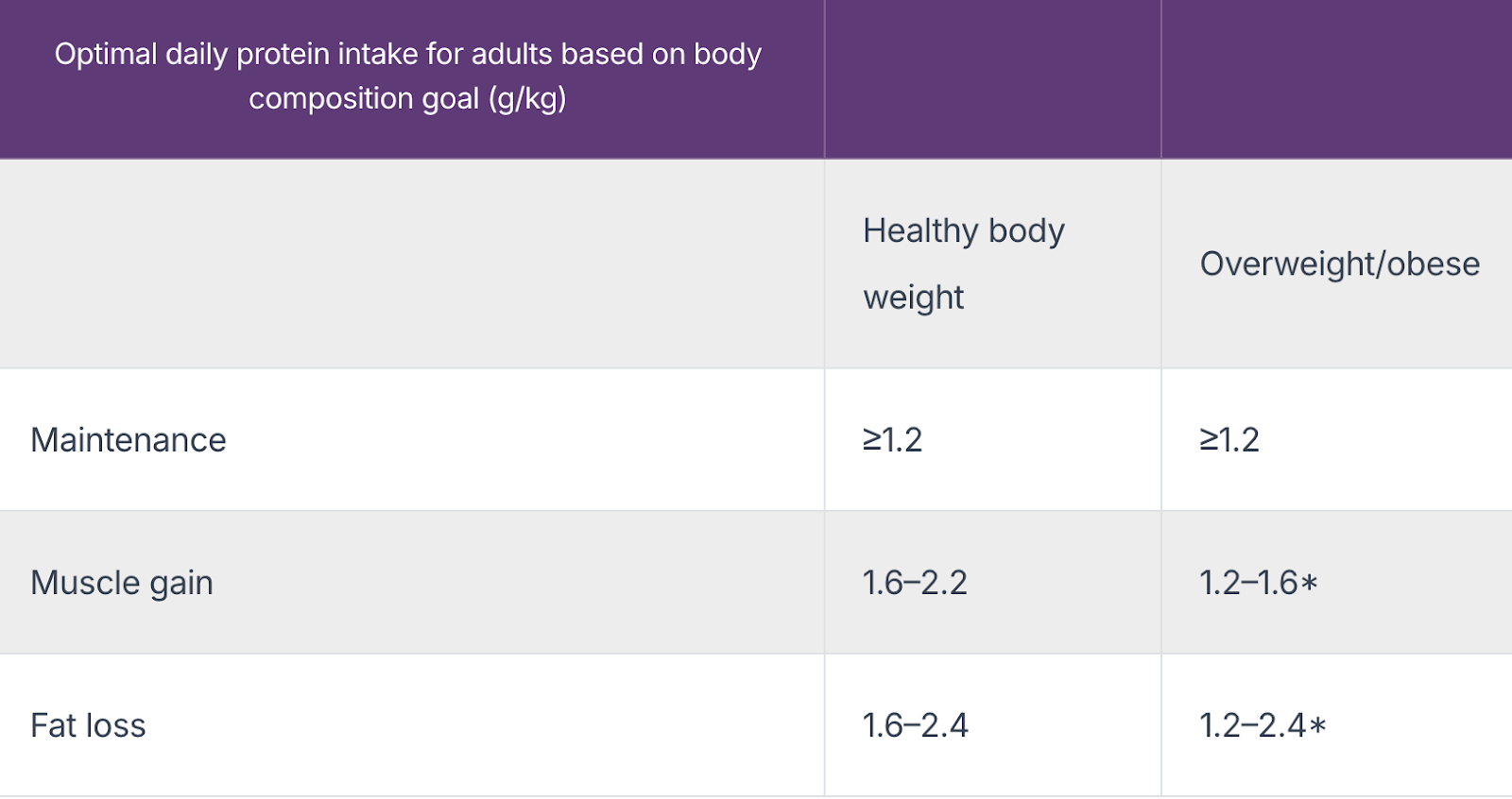
For the Protein Challenge, aim to hit a daily protein target for 30 days.
Examine.com supplied this chart to help you understand how much protein you should aim to consume daily. They also have a free calculator you can use to better estimate your needs.
If you eat sufficient protein, you’ll likely feel full longer, reducing your overall caloric intake (and potentially preventing you from reaching for junk food).
Sufficient protein also helps you build and maintain muscle, which can help with body recomposition.
To execute this challenge, plan your meals around high-protein foods like eggs, Greek yogurt, lean meats, fish, tofu, or legumes.
Use a food scale or tracking app like MyFitnessPal, Cronometer, or MacrosFirst to log protein intake. Prepping protein-rich snacks like boiled eggs, jerky, or protein shakes can make it easier to reach your target.
For accountability, consider sharing your daily protein log with a friend or using habit-tracking apps. Setting mini-goals, like hitting at least 80% of your protein target each day, can keep the challenge manageable.
Start Your Diet Challenge Today (And Thank Yourself Later)
Right now is the best time to start your diet challenge.
Think about where you’ll be in 30 days if you make the commitment right now.
If you’re not sure where to start, Wearable Challenge is probably the most effective because it combines accurate, effortless tracking (CGM data) with real stakes ($20/day).
Join Wearable Challenge today to see how it transforms your eating habits.