Dexcom Stelo vs Abbott Lingo: An Unsponsored Comparison

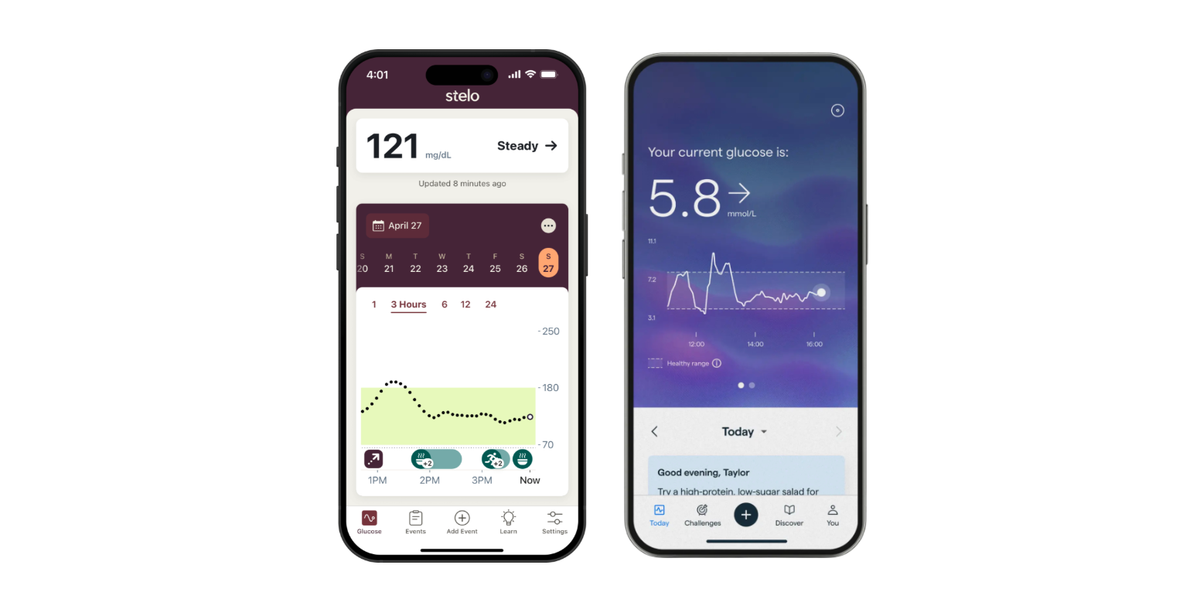
Dexcom Stelo and Abbott Lingo are the OTC CGMs currently available, and they’re very similar in many ways.
They both show you glucose data from the date that you insert the sensor, and they have the same basic features, like meal and exercise logging.
In this post, we’ll discuss the key differences between each so that you choose the best one for your needs.
What is an OTC CGM?
The Dexcom Stelo and Abbott Lingo are both OTC CGMs, meaning consumers can purchase them without a prescription.
Cleared by the FDA in 2024, these are the first OTC CGMs designed specifically for general consumers who want to improve their overall health rather than diabetics.
While these OTC CGMs don’t have the advanced features and alerts required for insulin dosings, they still offer most of the basic features you’d expect from a CGM, like glucose trends over time (available in-app from the day you inserted the CGM) as well as meal and exercise logging.
Both of them are also pre-calibrated and the sensors last about 14-15 days.
Let’s dive into the key differences between each of them.
The Key Differences: Dexcom Stelo vs Abbott Lingo
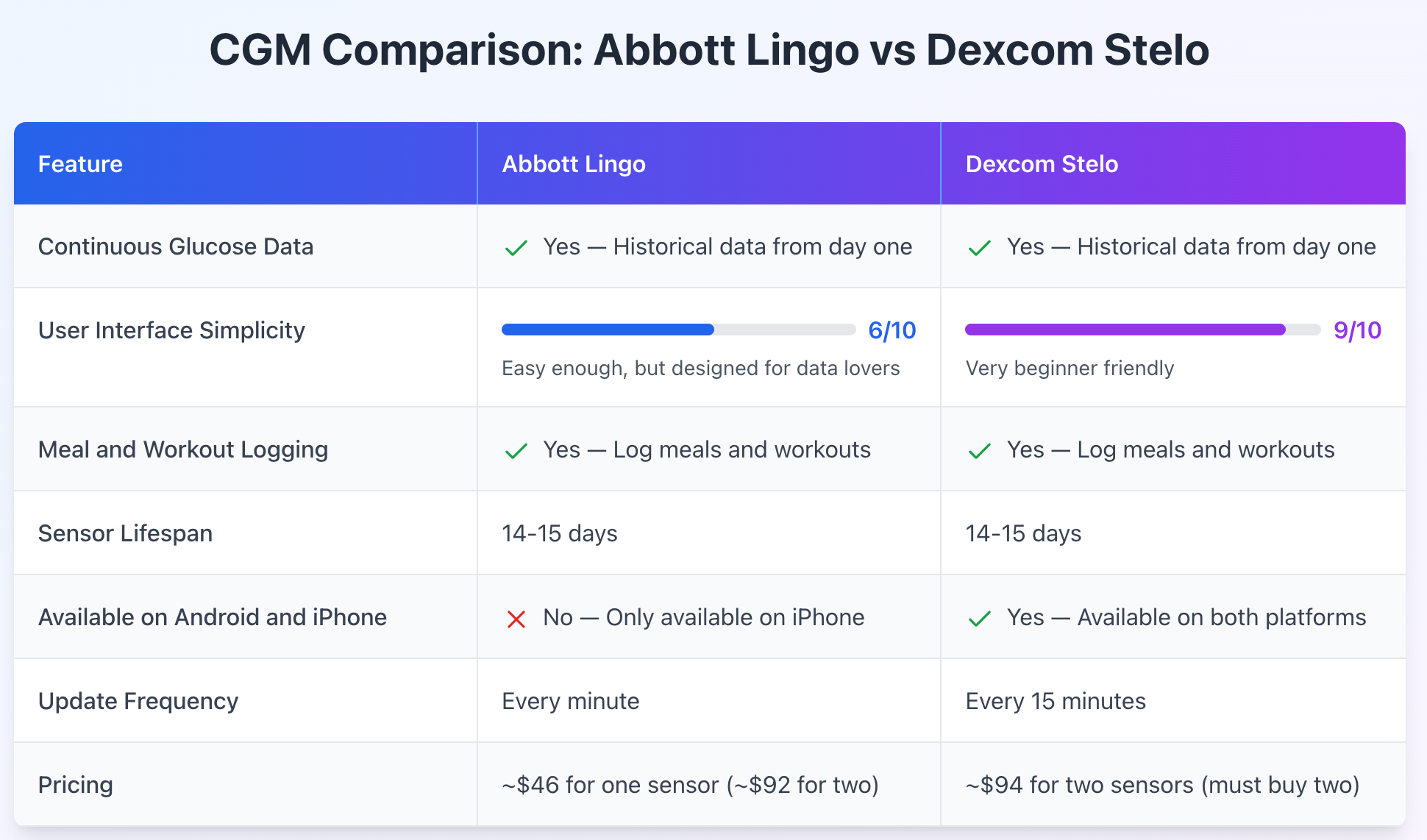
Before we jump into a more detailed overview of each OTC CGM, here’s a summary of the main differentiators, as both of them are quite similar:
Dexcom Stelo
The Dexcom Stelo is known for its simplistic user interface and is generally considered a slightly more user friendly option than the Abbott Lingo.
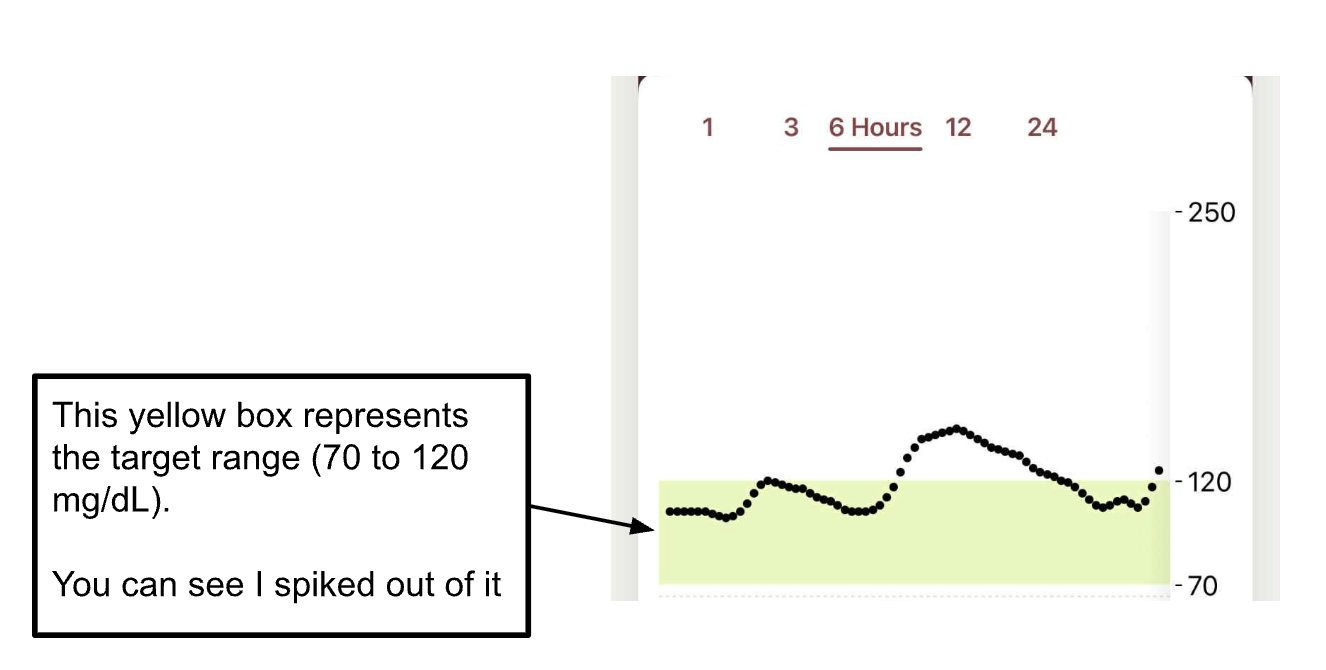
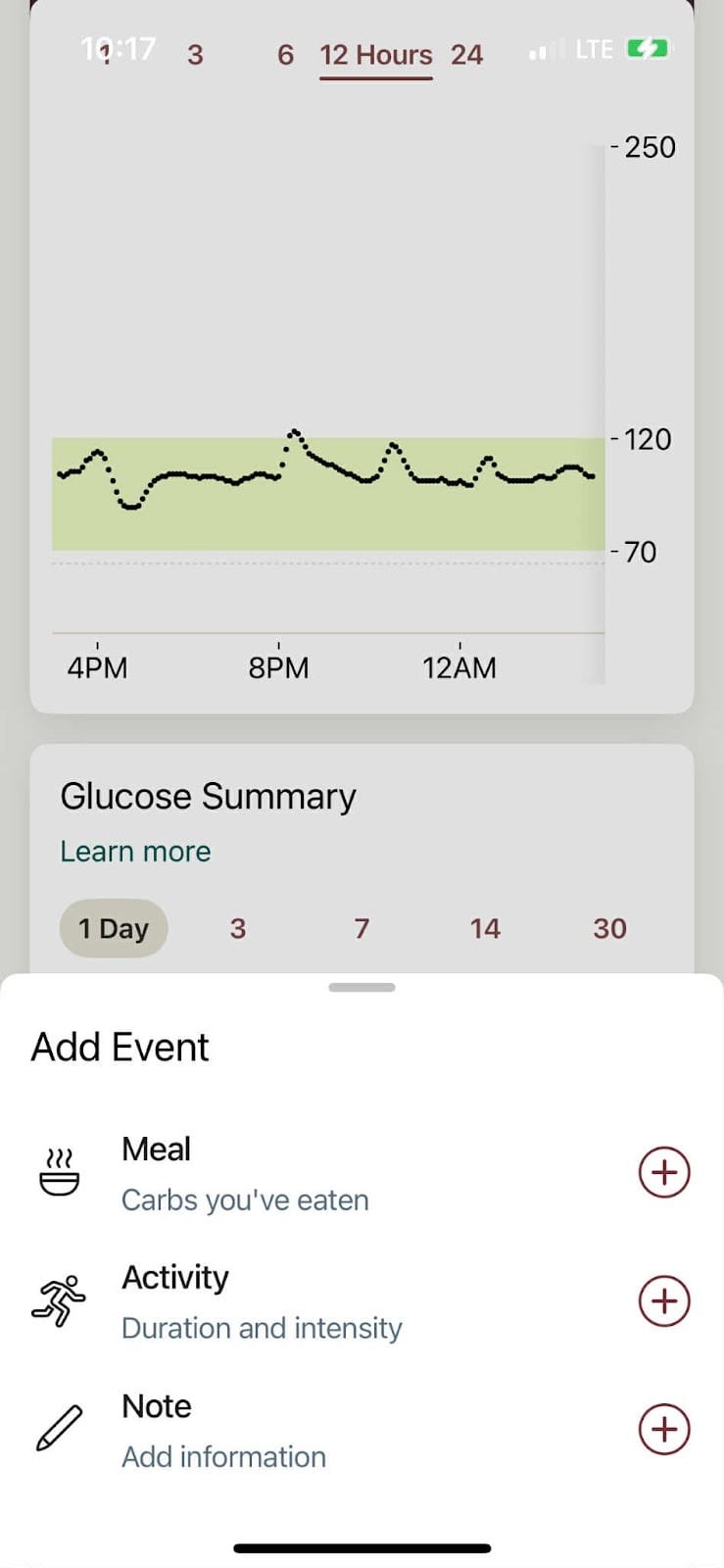
When you first log into the app, the Dexcom Stelo interface shows you a graph of your glucose levels over time. You can also adjust it to show the past 3, 6, 12, or 24 hours:
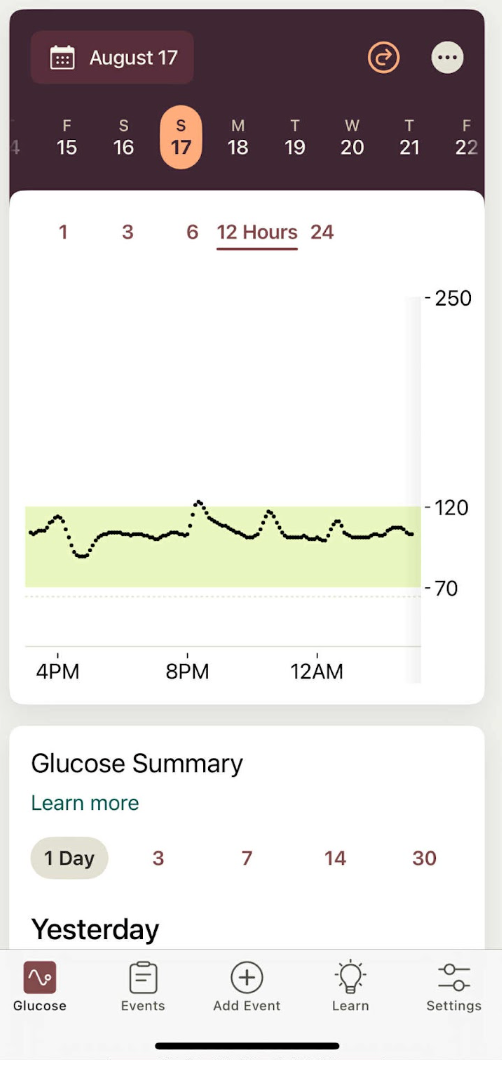
Previously, you were unable to look back at your glucose trends from previous days, though Dexcom has since updated the app, and now you can go back to any previous days.
The yellow box you see is your target range. The idea of wearing a CGM is to keep your glucose levels steady, so the yellow box helps you see how well you stayed within that target range.
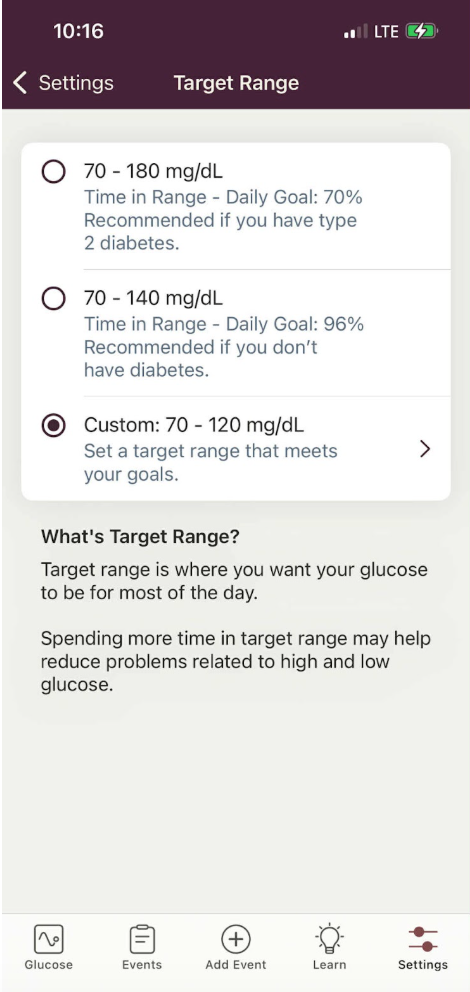
You can go into the settings and adjust your target range:
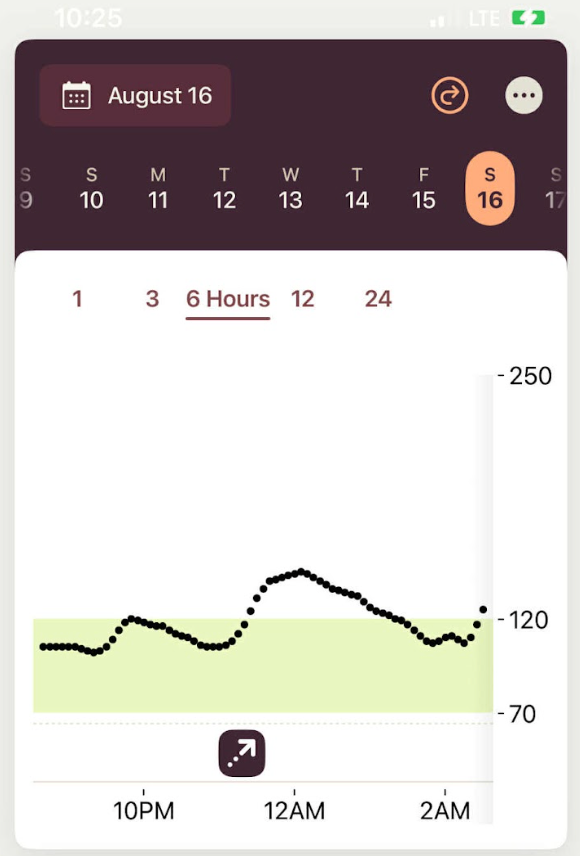
It also highlights meaningful spikes.
For example, I had pizza and you can see that it caused a meaningful spike:
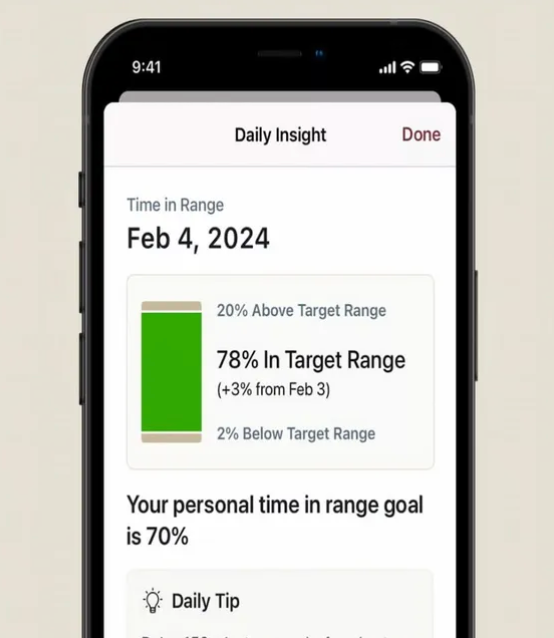
However, it’s not unrealistic to spike over your target ceiling. Instead, the goal is to minimize the amount of time out of range. This is why Stelo also provides an overview of the time spent in range:
To track what causes meaningful spikes, you can log meals, activities, and other notes. This allows you to identify patterns of specific meals that cause spikes and how specific exercises impact your glucose levels.
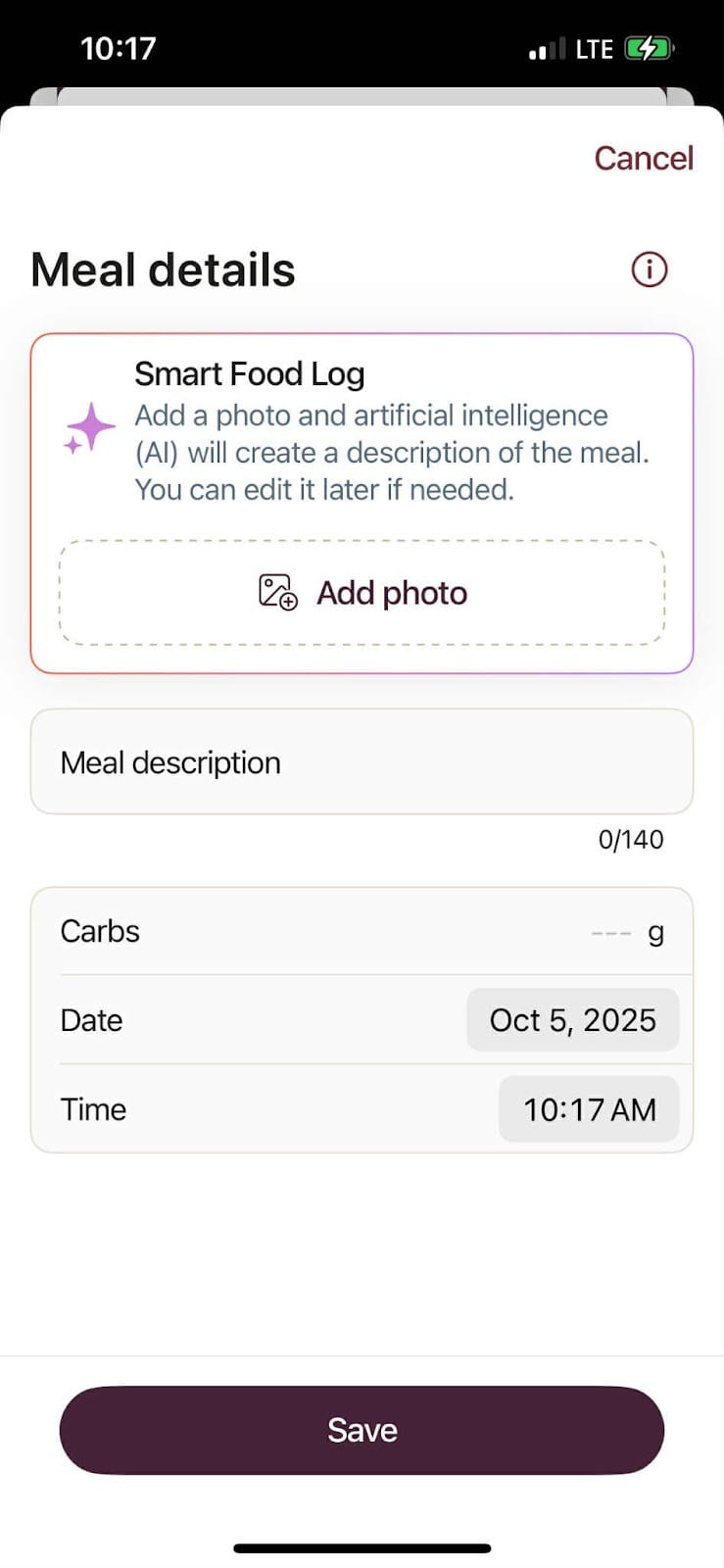
The food logging feature also has an AI detector that allows you to take a picture of your meal and it estimates the contents. To ensure it’s accurate, you can always update the AI generated description.
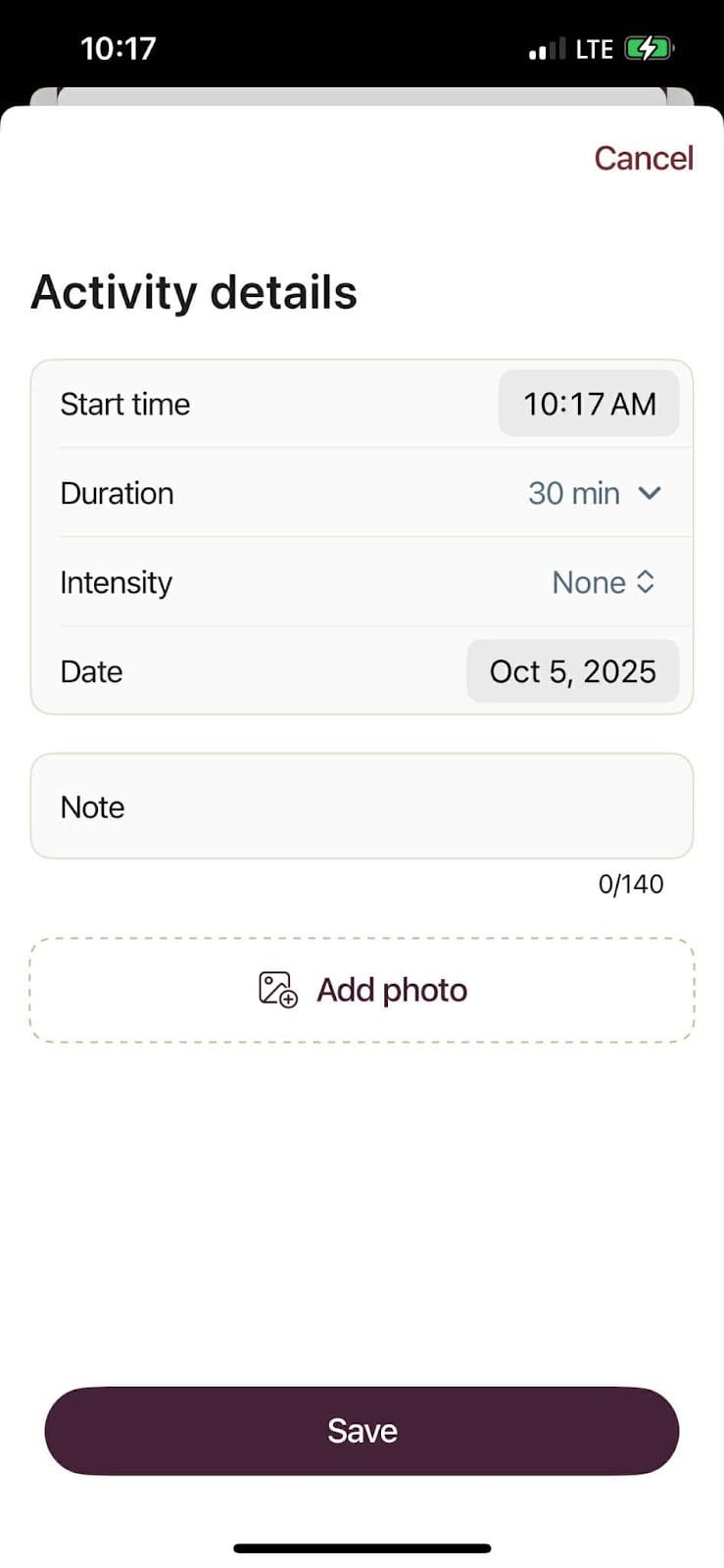
And, because different exercises impact your glucose levels differently, you can also log workouts:
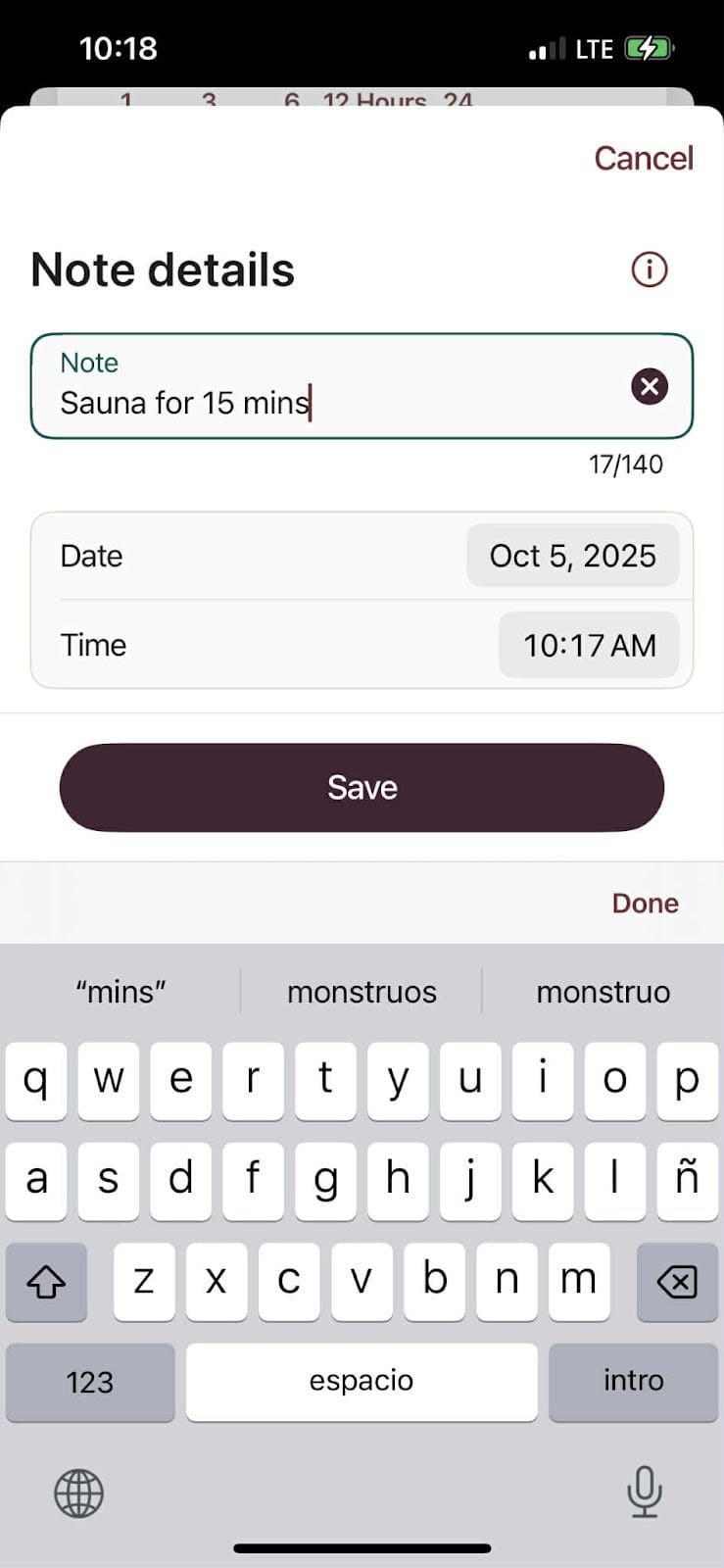
Even temperature, like sauna and cold plunges, can impact blood sugar. So you can add them in the “Notes” section:
Even if you don’t log any exercises, you can also integrate the Dexcom Stelo with Apple Health and it automatically tracks your steps and active energy for each day:
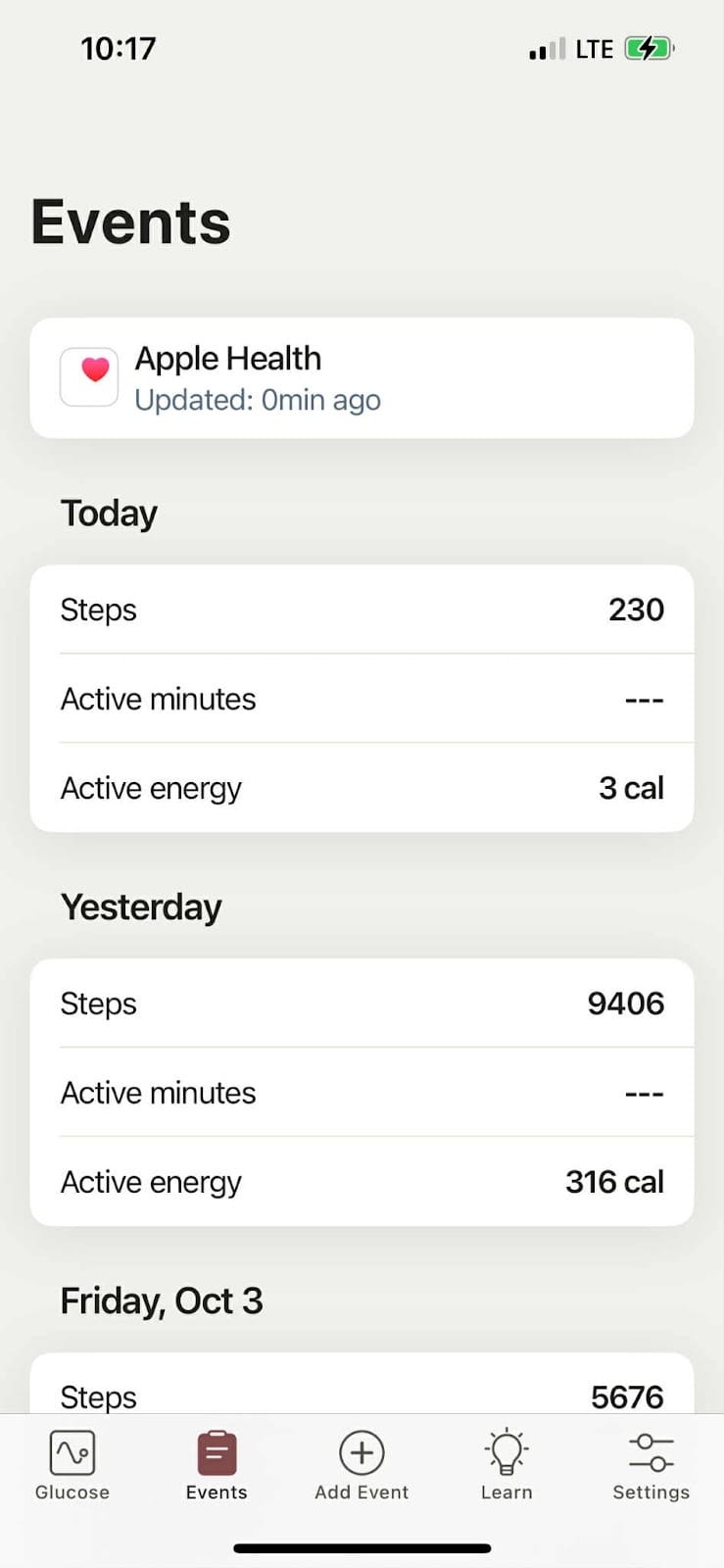
Dexcom also integrates with Dexcom Clarity, which is a desktop application that allows you to share your results with a healthcare professional.
The Clarity integration is quite useful if you’re working with a coach, and it’s a key reason why we use Dexcom Stelo for Wearable Challenge.
The Dexcom Stelo sensor lasts for about 15 days and they only sell packages of two sensors. This isn’t a big deal if you plan to use the Dexcom Stelo for an entire month, but if you’re just curious about trying it out, there isn’t an option to buy just one sensor.
Another potential con is that the app only updates every 15 minutes. This was an intentional decision from the team at Dexcom Stelo, as they feel that you shouldn’t be staring at your data every minute.
However, for athletes who use an OTC CGM to track glucose trends during a workout to fuel appropriately (e.g., eat a quick snack as they see their blood sugar dropping), this data delay can be a problem.
Finally, healthcare professionals have cited that the Dexcom Stelo is slightly more accurate than the Abbott Lingo, but this is purely anecdotal observations and so far, there isn’t any data to prove this statement.
The Dexcom Stelo is available on Amazon for about $95, which includes the two 15 day sensors (about a month’s supply) and access to the app.
Abbott Lingo
The Abbott Lingo is very similar to the Dexcom Stelo in many ways, as it’s a 14 day sensor that connects with an app that gives you an overview of your blood sugar trends over time.
Here’s an overview of the interface when you first log into the app:
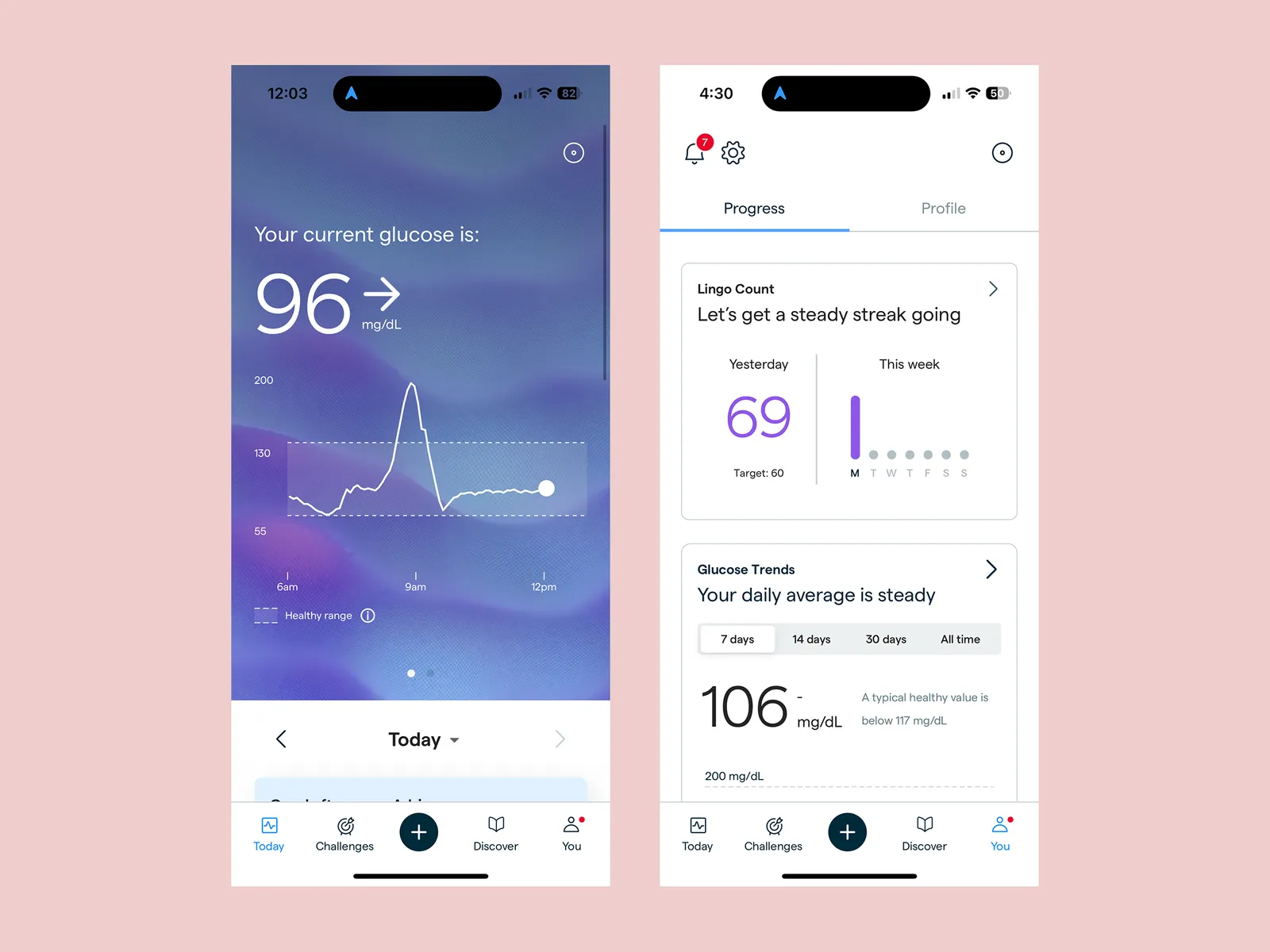
You can see that it shows you your current glucose as well as your trends over time.
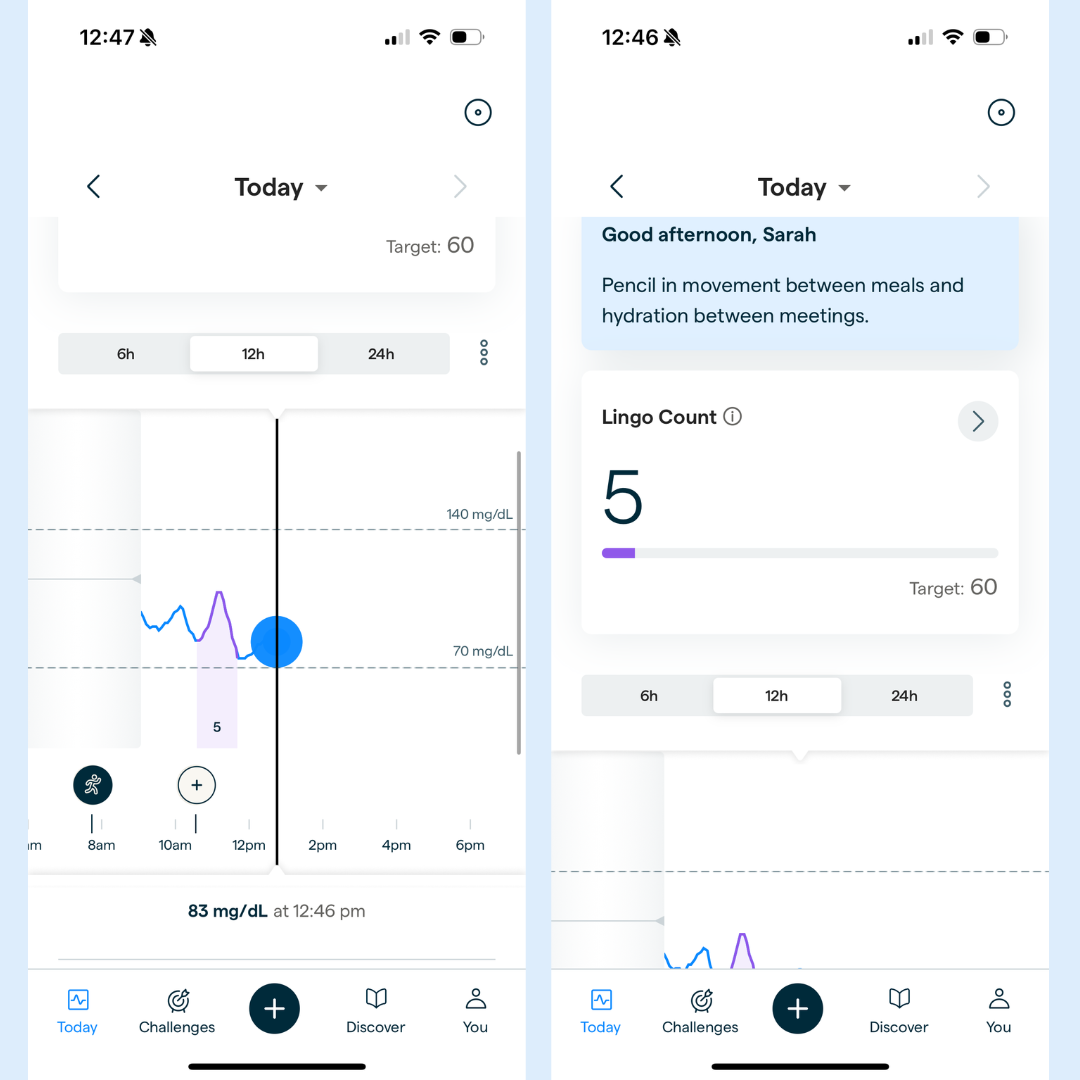
One key differentiator of the Abbott Lingo is its Lingo Count.
The Lingo Count measures the size and duration of glucose spikes, which is a much more accurate metric to gauge how well you’re maintaining steady blood sugar.
The count generally increases when your glucose spikes and stays high for an extended period of time, whereas it decreases when your levels are stable and in range.
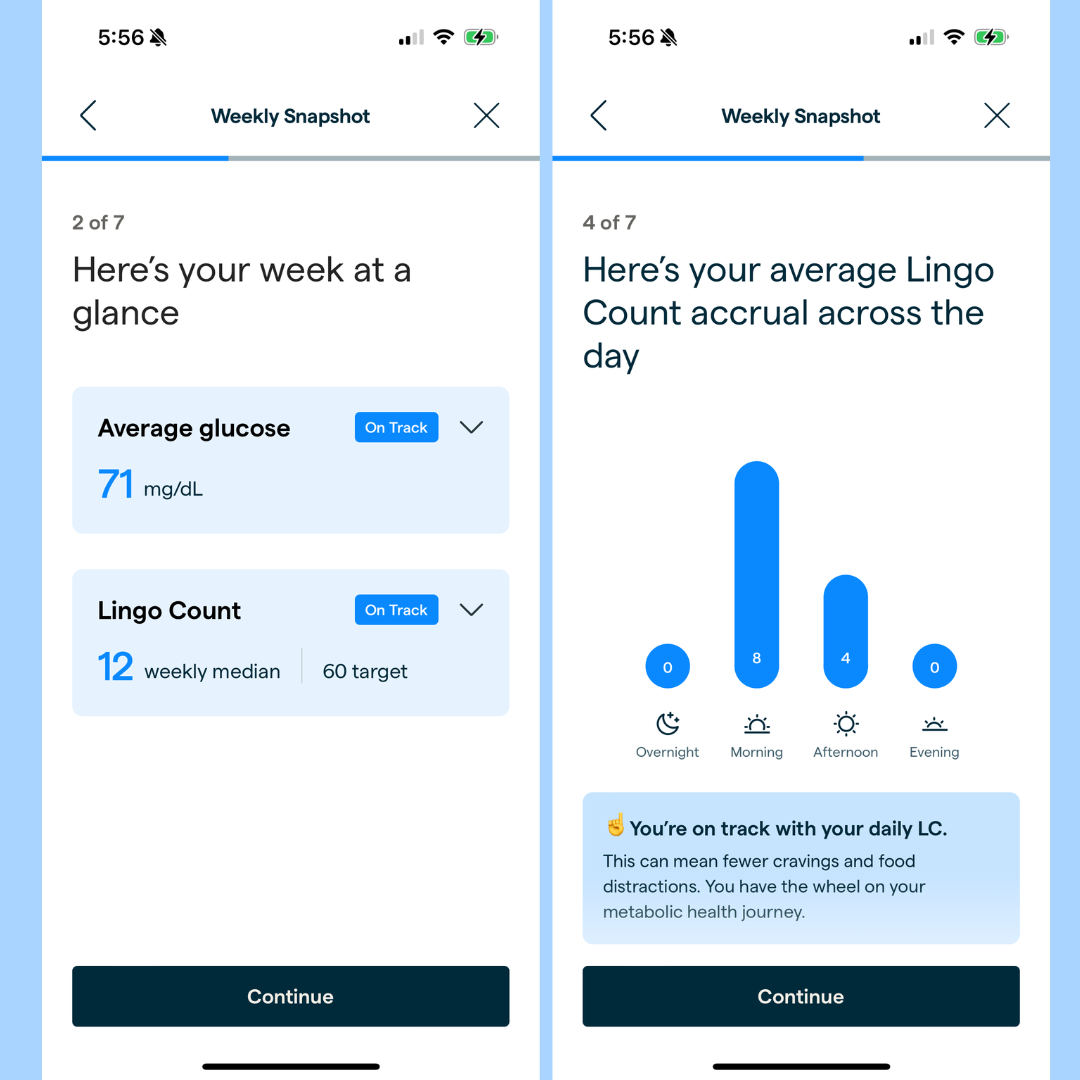
It also provides a weekly overview so that you can see your progress over time:
You can also log food, exercise, and other activities inside the Lingo app, and it integrates with Apple Health.
In general, the Abbott Lingo is a little more complex than the Dexcom Stelo, especially with the concept of the Lingo Count, so it may be intimidating for beginners.
Another drawback of the Abbott Lingo is that it is not available to Android users.
However, a benefit of the Abbott Lingo over the Dexcom Stelo is that it updates every minute, so it’s potentially more useful for athletes who need up-to-the-minute data on their blood sugar during a workout.
Which One is Best? Dexcom Stelo vs Abbott Lingo
There isn’t a single answer for which OTC CGM is best, but here are a few things to consider:
- Dexcom Stelo is best if you value a simple user interface, and it’s compatible with more programs (like Wearable Challenge).
- Abbott Lingo is best if you need real-time data during a workout as it provides updates every minute whereas Dexcom Stelo only updates every 15 minutes).
- Dexcom Stelo is best if you are an Android user (as Abbott Lingo doesn’t work on Android).
- Abbott Lingo is more cost effective if you only want to try it out once.
Here’s a more detailed overview of the comparisons:
How to Make The Most of Your CGM
Most people use OTC CGMs to improve their general health, but one of the main problems is that the data alone doesn’t instantly make you healthier.
You also need accountability to take action on the data.
A coach can help with accountability, but if the “accountability” is just a conversation, that might not be meaningful enough for you to change your actions.
That’s why we created Wearable Challenge.
It’s a 30 day challenge where you stake $15/day to keep your glucose levels under 120 mg/dL, a low yet healthy range.
The idea is that this prevents you from consuming foods high in refined sugar and carbs, and it gives you the reset you need to develop healthy habits.
Join Wearable Challenge today to see how it can help you reach your health goals.