The Best CGMs For Weight Loss: Clear Explanation

We discussed why many people are using CGMs for weight loss, but actually choosing a CGM is somewhat confusing.
We’ll clear up:
- What a CGM is (and how a medical CGM is different from an over the counter CGM)
- The difference between CGM manufacturers and CGM software/service providers
- A comparison of the best manufacturers and software/service providers.
By the end of this post, you should be able to make an informed purchase decision and get the right CGM to help you accomplish your weight loss goals.
What is a CGM? (Medical CGMs vs Glucose Biosensors)
CGMs (continuous glucose monitors) were previously available by prescription only to diabetics.
It is essential that these CGMs provide accurate glucose data with minimal time delay to guide insulin dosing.
However, studies have shown that monitoring glucose levels is helpful for general health and weight loss.
So in March 2024, the FDA cleared the Dexcom Stelo Glucose Biosensor as the first over-the-counter (OTC) continuous glucose monitor (CGM) available to the public.
Since then, Abbott's Lingo glucose monitoring system has also received FDA clearance and is available as an OTC CGM.
The Abbott Lingo and Dexcom Stelo are currently the only OTC CGMs available, and we’ll discuss each of them in more detail below.
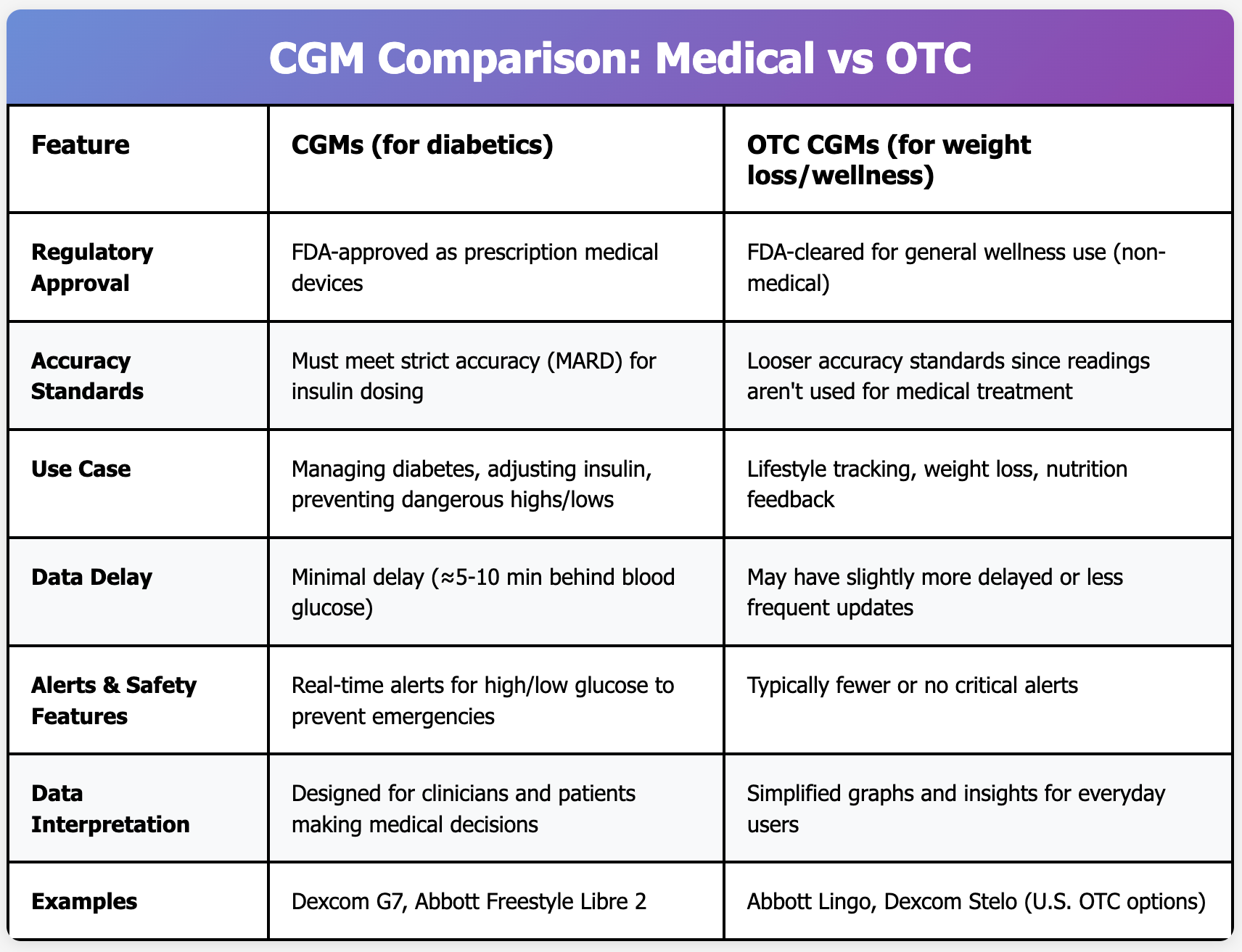
However, the main difference between a medical CGM and an OTC CGM is that the medical CGM must have a specific accuracy (MARD) score and a minimal time delay to guide insulin dosing.
Here’s a more detailed overview of the differences between each:
The Best CGM For Weight Loss
The Dexcom Stelo and Abbott Lingo are currently the only OTC CGMs available to the public and are the go-to CGMs for weight loss.
Both of them are very similar as they offer continuous glucose monitoring and provide options to log your meals, exercise, and other changes that might impact your blood sugar.
Many users have also confirmed that the Dexcom Stelo and Abbott Lingo are similar in terms of accuracy.
Note that accuracy does vary between systems because the number you see on the screen is actually the result of an algorithmic calculation.
This is because it’s reading the interstitial fluid rather than the blood itself. Therefore the algorithm is more or less making a calculated prediction of the current measurement of your blood.
The biggest difference between the two OTC CGMs is that the Lingo is currently only available to iPhone users and is not available on Android.
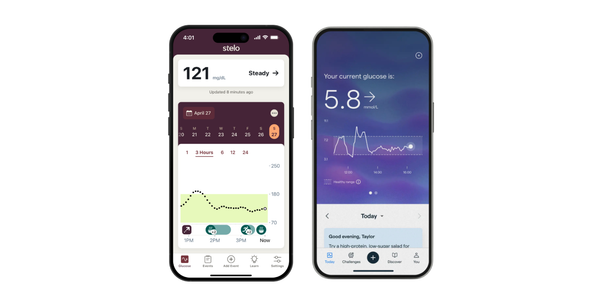
The Dexcom Stelo user interface is also a little more simplistic, though many users appreciate that it’s easy to read. Here’s a comparison of the interfaces:
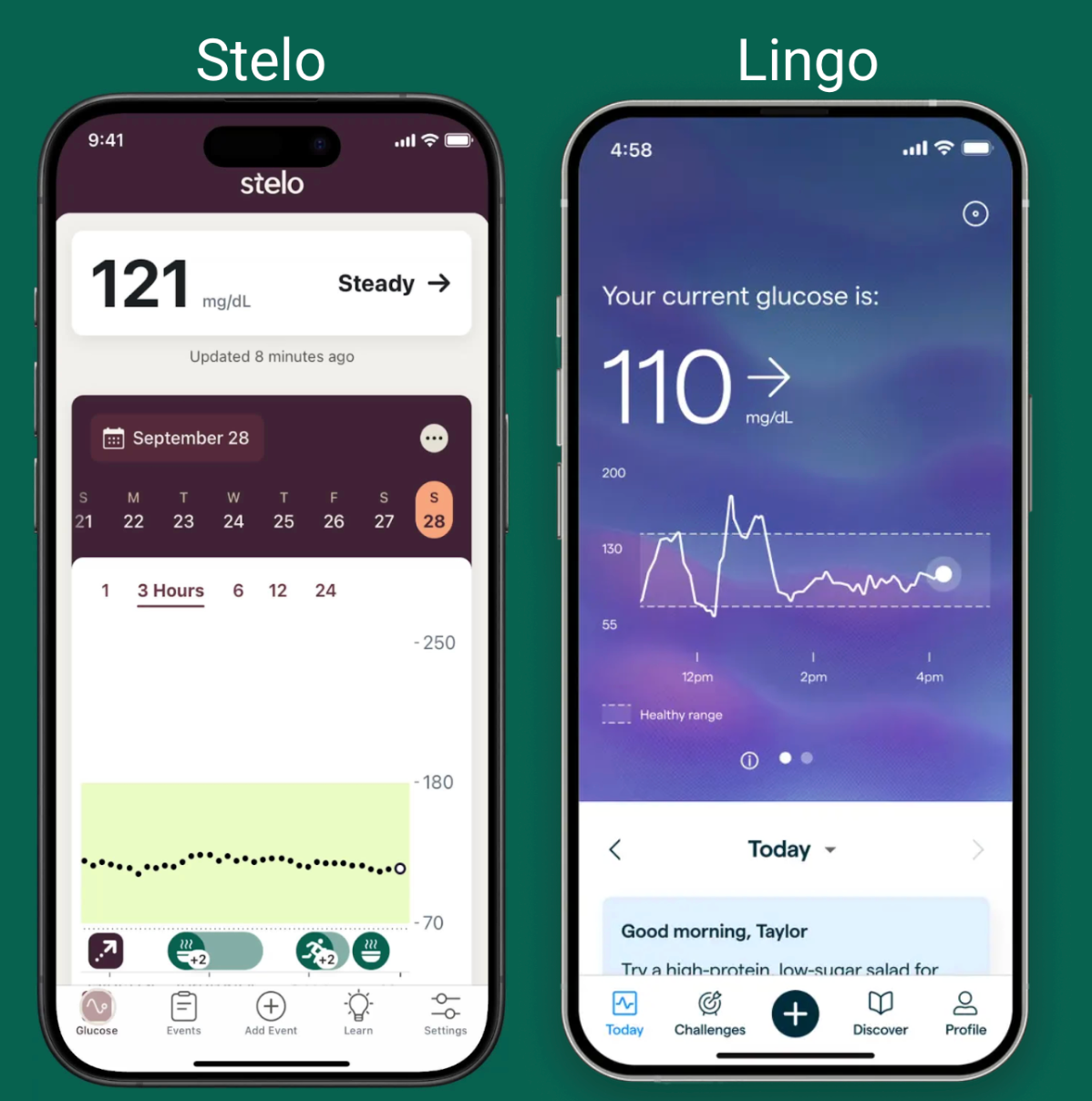
The drawback of the Dexcom Stelo is that you must buy two sensors at once.
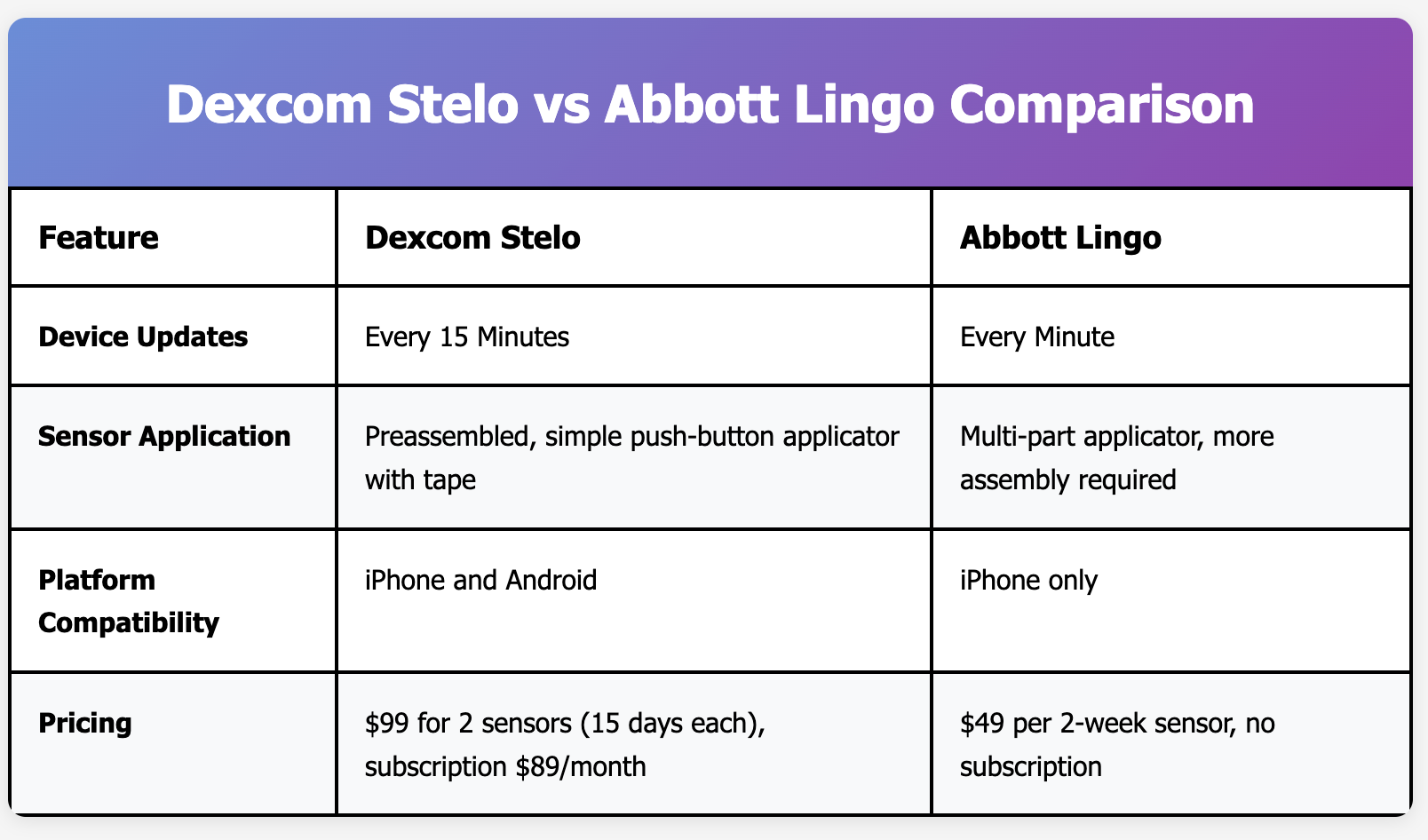
Both the Dexcom Stelo and Abbott Lingo sensors only last about two weeks, so you need two sensors to last a full month. However, if you just want to try it out for two weeks, you can only do so with Lingo.
Here’s a more detailed comparison chart of the two:
The Verdict
Both OTC CGMs work for iPhone, though if you’re an Android user, you’ll have to choose the Dexcom Stelo option.
However, if you’re an iPhone user and just want to try out an OTC CGM on a budget, Lingo is probably the best option as it’s the only one that allows you to purchase a single biosensor (Stelo requires a minimum of two biosensors per purchase).
The Best Companion CGM Software Options For Weight Loss
Now you may have noticed plenty of other software promoting OTC CGMs.
This is because there are plenty of companion products that you can use along with an OTC CGM.
Here’s a brief overview of each of the most popular solutions.
1.) Wearable Challenge
Wearable Challenge is a challenge rather than a direct companion CGM software.
Participants wear the Dexcom Stelo for 14 days and stake $20/day to keep blood sugar under 120 mg/dL (a healthy, yet low range).
If your blood sugar spikes over 120 mg/dL, you lose your $20 for the day.
Otherwise, Wearable Challenge is free to join.
By reducing high sugar/carb foods from your diet, you're more likely to lose weight.
Thus, Wearable Challenge is a highly effective weight loss challenge.
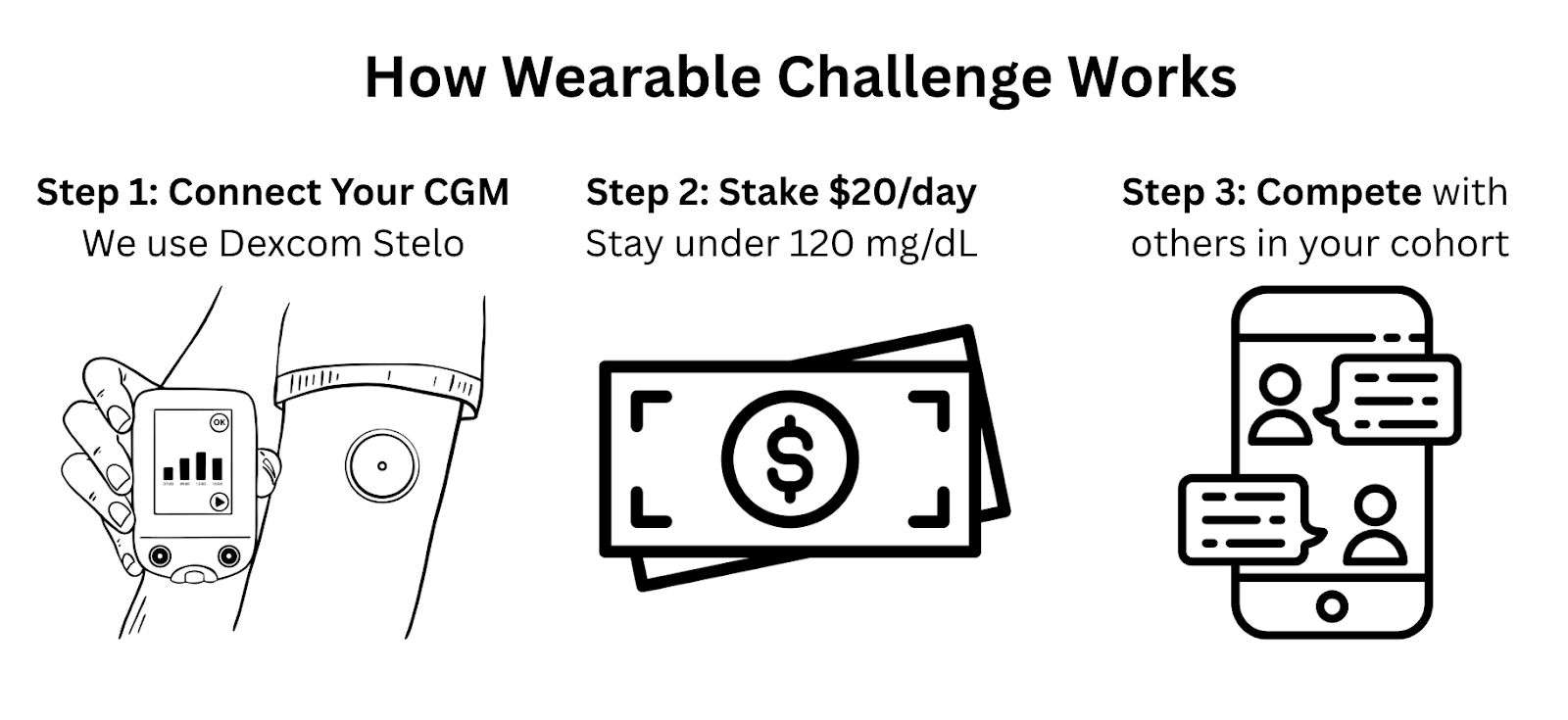
How Wearable Challenge Works:
Step 1: Join Wearable Challenge and Connect Your CGM
If you don’t have a CGM yet, we’ll give you links to get one.
Step 2: Stake $20/day for the 14 day challenge to stay under 120 mg/dL
Avoid foods high in refined sugars/carbs to keep your blood sugar under 120 mg/dL.
Step 3: Participate in your cohort’s group chat
To keep you motivated and make the experience fun, you’ll have access to a group chat with other people in your cohort.
There are a few reasons why Wearable Challenge is much more effective than other weight loss challenges:
What Makes Wearable Challenge Effective
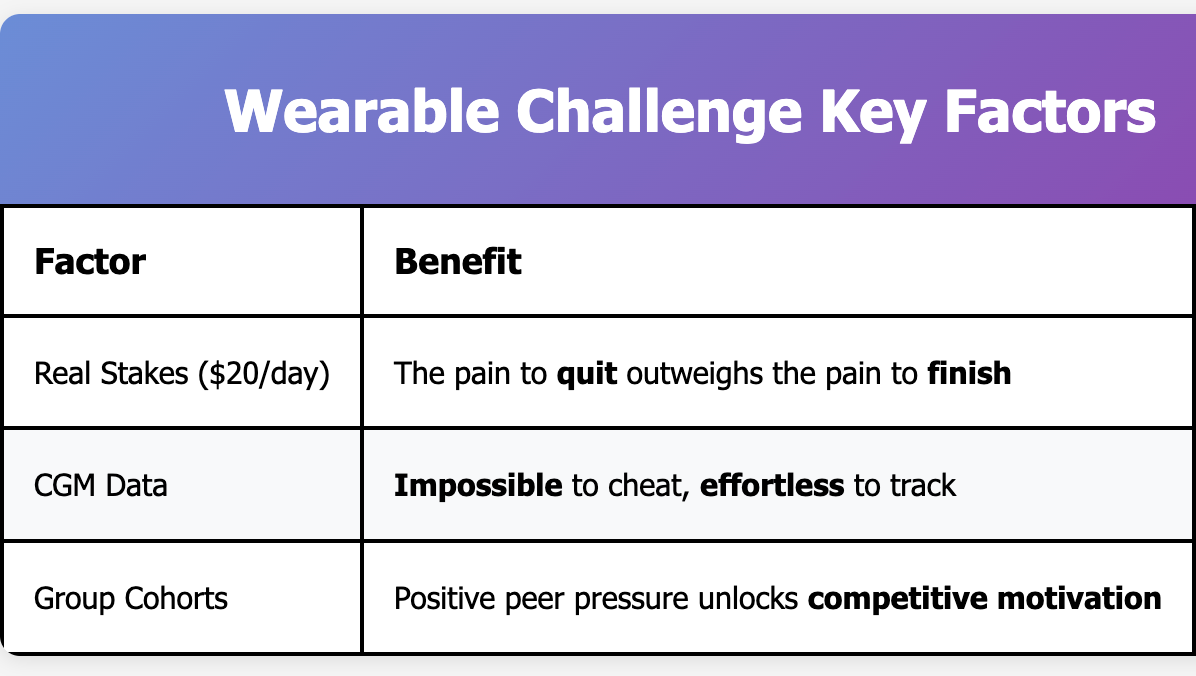
It's a fun challenge that allows you to discover how foods impact your body and with $20 daily stakes, you're more likely to finish the challenge and reach your goals.
Join Wearable Challenge today to unlock the best version of yourself.
2.) Levels
Levels is a CGM program that primarily targets health optimizers.
It works with Dexcom Stelo, Dexcom G6 and G7, and FreeStyle Libre sensors, pairing them with its app that tracks glucose trends, assigns stability scores, and generates reports.
For example, when you log a meal, the app will show how much your glucose spiked, how long it stayed elevated, and how quickly you recovered.
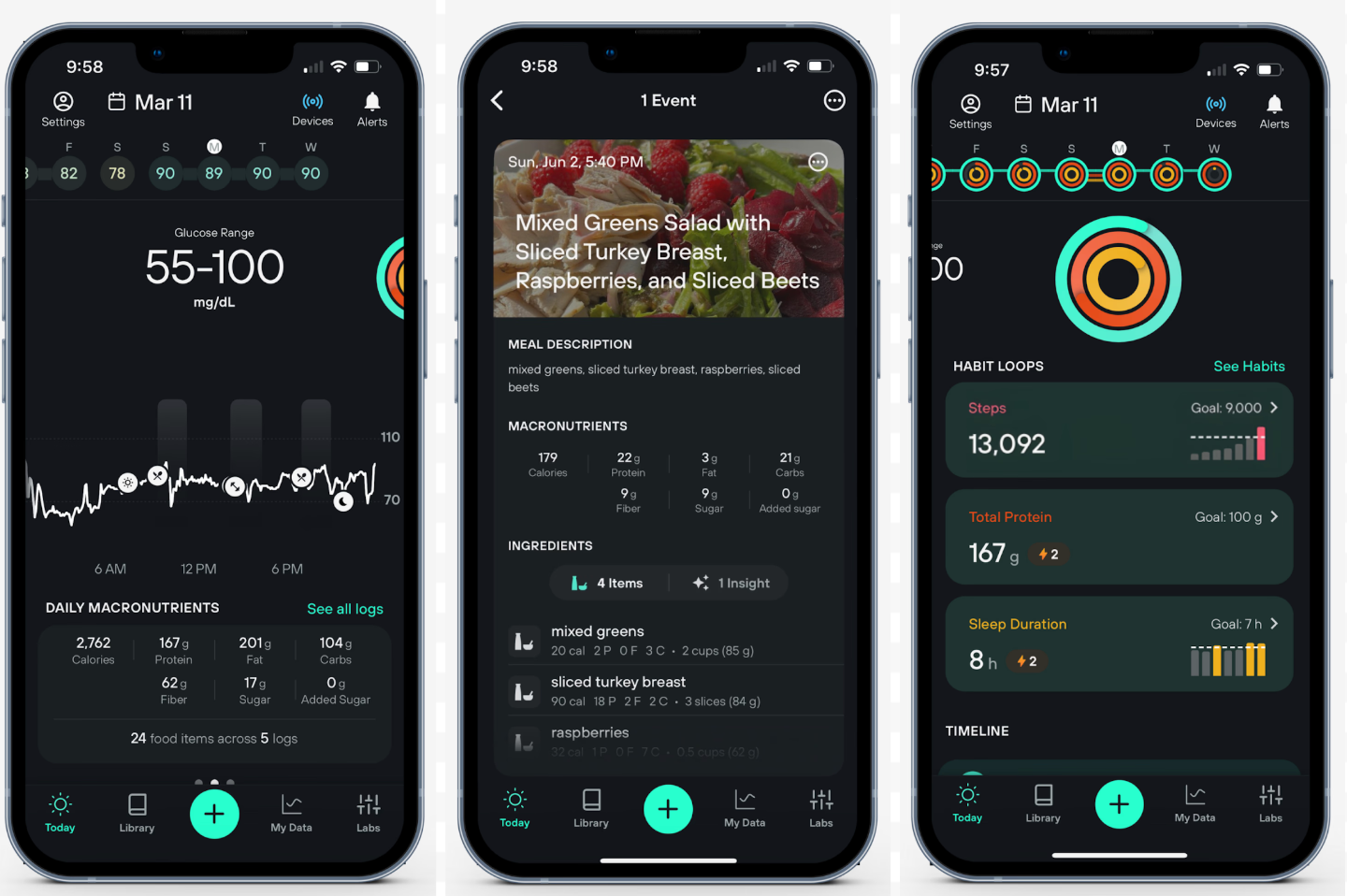
Over time, these logs build into a profile of which foods and activities support better glucose control for you personally.
It integrates with Apple Health and Google Fit, but it does not offer integrations with Keto Mojo, Oura or some other popular fitness tools.
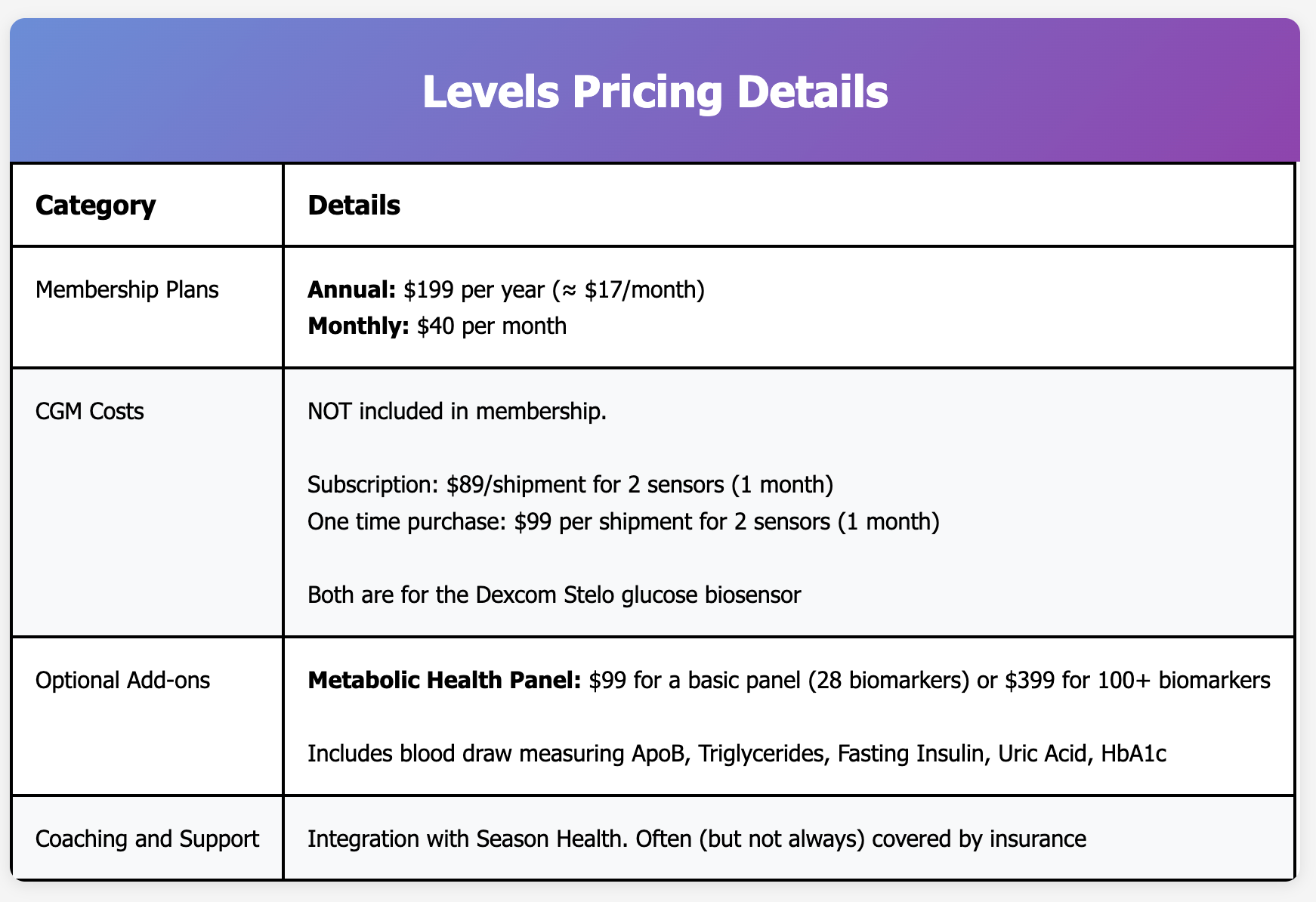
Levels Labs also offers an optional metabolic blood panel to give deeper context around your health. You can go to a local Labcorp and get information on cardiovascular health (ApoB, Triglycerides), insulin resistance (Fasting Insulin), metabolic health (Uric Acid), and glucose levels (HbA1c).
Levels also now integrates with Season Health to offer one on one coaching with a dietician, but this is a paid service.
One of the downsides of Levels is that it does not allow you to calibrate the sensor (sometimes the sensor is not 100% accurate and calibrating it can help).
Pricing
3.) Nutrisense
Nutrisense is a fairly advanced CGM program that offers personalized coaching and detailed analytics.
It works with FreeStyle Libre sensors (with native in-app scanning, so you don’t need Abbott’s app) and Dexcom G6 and G7, and Stelo Glucose biosensor.
The Nutrisense app includes a food database, meal logging, and detailed glucose trend analysis.
For example, when you log a meal, the app not only shows your glucose response but also allows you to track macronutrients and see how different food combinations impact your body.
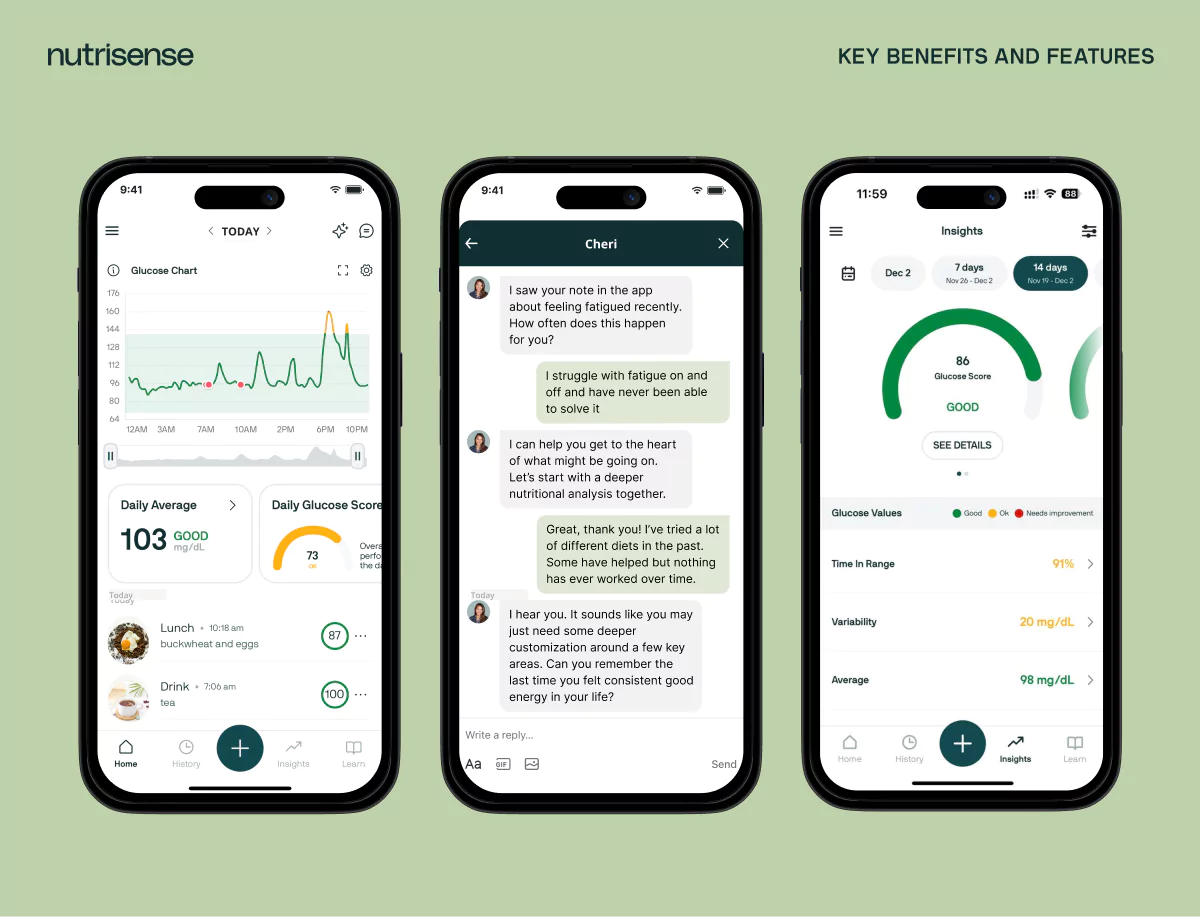
If you choose, you can also opt into Nutrisense’s nutrition coaching.
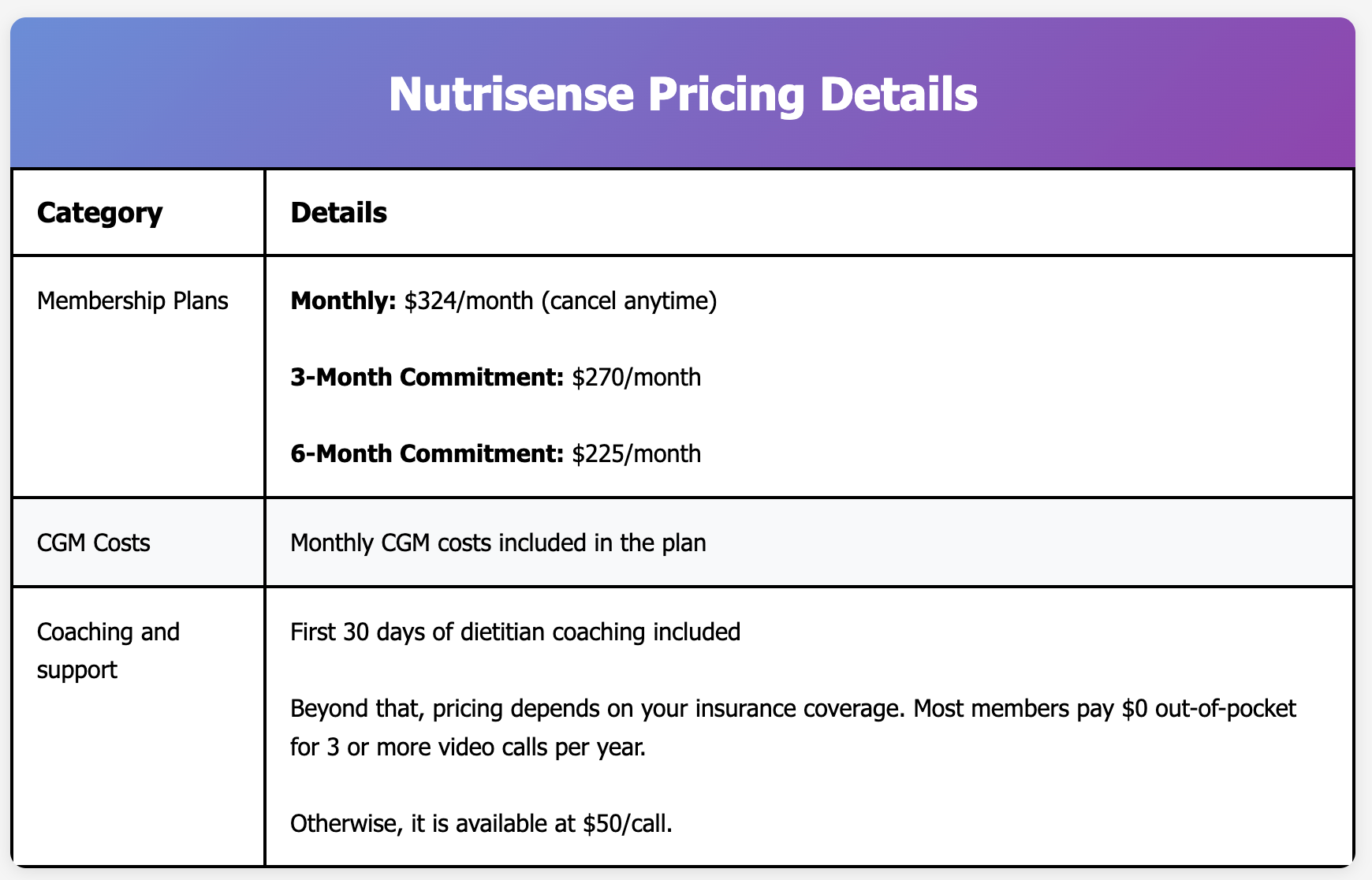
Every new user gets 30 days of one-on-one coaching in the app, and you can use insurance to continue working with a dietitian afterward or pay out of pocket. While expert guidance isn’t necessarily a unique feature, it is unique in that the coach will reach out to you via message based on insights they see in your food logs.
This proactive approach can be a major benefit for people who might not reach out for support.
Nutrisense also integrates with popular health tools like Apple Health, Garmin, Oura, Fitbit, and Keto-Mojo, which is much more advanced than many of its competitors.
Nutrisense also allows you to calibrate your sensor in the app.
Pricing
4.) Signos
Signos is a CGM program built specifically for weight loss.
Signos uses Dexcom Stelo sensors combined with its AI-powered app to give users real-time guidance on how to keep blood sugar stable.
This is the key differentiator that sets it apart from other platforms, because it tells you what to do based on your glucose levels.
For example, instead of just showing you your glucose trends, it suggests how to take action, like taking a walk after a spike or adjusting meal timing. It will even give you meal recommendations based on your glucose data to avoid a spike. Here’s an example:
This makes it especially appealing to people who want direct, behavior-based recommendations to support weight loss goals, rather than sifting through raw data.
However, it’s also worth noting that it isn’t realistic for everyone to take action on all of the recommendations.
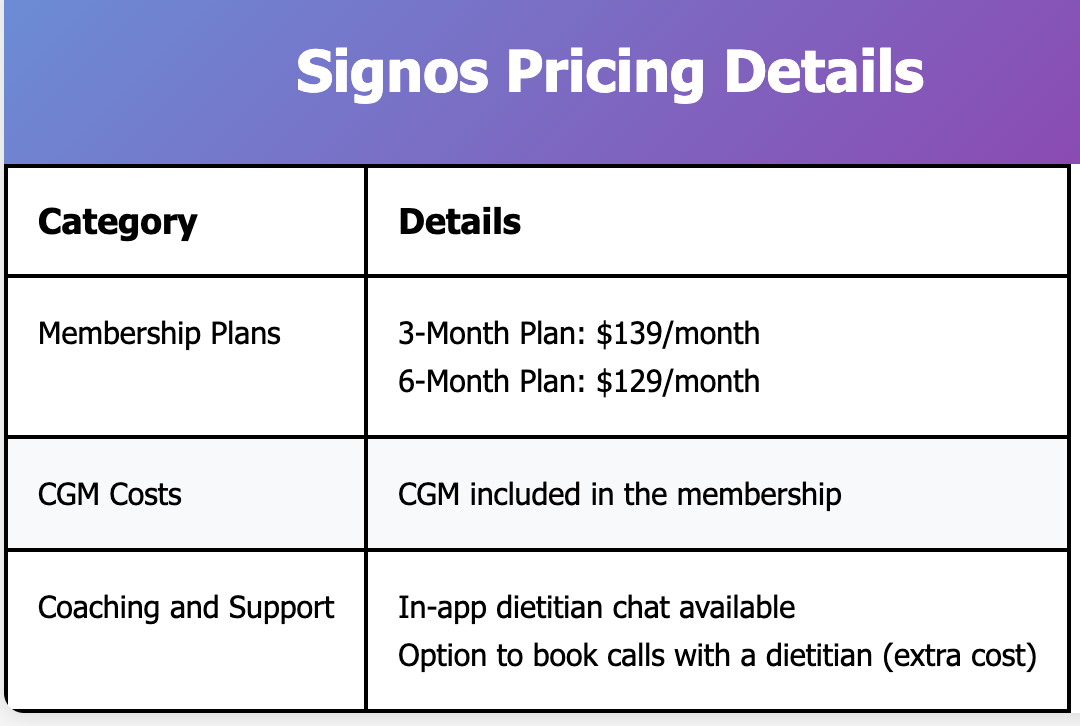
Signos allows you to chat with a dietitian in-app or you can book a call.
Signos Pricing
The Best CGM For Weight Loss
While there isn’t a single best CGM for weight loss, the Dexcom Stelo is used more commonly with a variety of other services.
There are also plenty of companion apps that offer coaching services as an add-on. However, most people need more accountability rather than more knowledge.
This is why we built Wearable Challenge.
You stake $20/day to stay under 120 mg/dL. This forces you to build healthier habits and take action on your glucose data.
Join Wearable Challenge today to unlock the best version of yourself.