CGM Cost Comparison: Does Insurance Cover it?


Note: All discussion of insurance is relevant only to the United States.
CGMs were previously available only by prescription to people with diabetes. While CGMs are often covered by insurance for diabetics taking insulin, CGMs can be prohibitively expensive for people paying for them out of pocket.
Additionally, there's growing interest in over-the-counter (OTC) CGMs for general health and wellness, which are often less expensive out of pocket but aren't covered by insurance.
There are also a variety of CGM companion programs, such as Levels, Nutrisense, and Signos, that offer their own apps and coaching programs.
To help you better understand the real cost of CGMs, this post provides a detailed CGM cost comparison of popular brands and factors that impact insurance coverage.
Does Insurance Cover The Cost of CGMs?
If you have diabetes, your insurance will likely cover at least part of the cost of a CGM, but coverage isn't guaranteed, and it can vary depending on your plan and your type of diabetes.
Here are some key factors that impact coverage:
- Insulin Use: Most insurers cover CGMs for individuals taking any type of insulin, including basal, multiple daily injections, or those using an insulin pump.
- Hypoglycemia: Medicare and some other plans now cover CGMs for those with Type 2 diabetes who experience problematic low blood sugar events (hypoglycemia), even if they are not on insulin.
Even if your insurance plan covers CGMs, other factors can affect your final cost.
For example, you may need to meet a deductible before your plan provides coverage for the CGM, and copays may apply per sensor or per month.
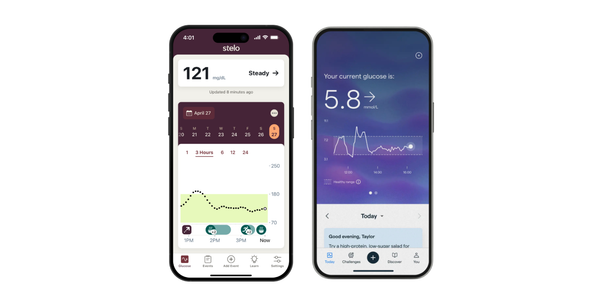
Unfortunately, OTC CGMs used by non-diabetics for general health and wellness are not covered by insurance because they aren't considered medically necessary. For example, the Dexcom Stelo and Abbott Lingo are usually not covered by insurance.
However, many CGMs (including OTC CGMs) can be paid for with your Health Savings Account (HSA) or Flexible Spending Account (FSA).
These programs can help offset out-of-pocket costs.
To use FSA or HSA, you can either pay directly with your FSA/HSA card at checkout or submit your invoice for reimbursement from your plan administrator after purchasing with a different payment method.
Given that FSA funds have a "use it or lose it" structure and HSA funds, while eligible for rollover, can't be used for anything outside of medical expenses, OTC CGMs can be an excellent use of the money.
Popular CGMs and Their Costs
Below is an overview of the cost of the most popular CGMs.
How Much Do CGM Companion Programs Cost?
There are companion programs that use CGM data to help people leverage glucose data to lose weight, maximize athletic performance, and improve general health.
Most companion programs are not covered by insurance because they are considered lifestyle or wellness services rather than medically necessary for managing diabetes.
In fact, even if you have insurance coverage for a CGM, that coverage typically only applies to the sensor itself, not the coaching, app, or subscription services.
Although there are some exceptions. For example, Nutrisense claims that most of its users pay $0 out of pocket for their dietitian coaching offering.
You also may be able to use HSA or FSA funds to cover some of the cost of these companion programs.
Here's an overview of some of the most popular programs.
Levels Health
Levels is positioned as a data-first program that primarily targets health optimizers who want to leverage glucose data to improve their diet, sleep quality, reduce stress, and ultimately maximize performance.
The focus is on providing real-time insights and personalized reports rather than structured coaching, though you can elect to add RDN coaching to your plan.
There's also a community available for users.
Nutrisense
Nutrisense is designed for people who want structured guidance and accountability. It targets people interested in weight loss and heavily emphasizes its one-on-one coaching program.
In addition to video calls, the coach will review your data and send you messages via the app to hold you accountable and help you use the data more effectively.
Signos
Signos is different from the other apps as it gives you real-time action items based on your glucose data.
For example, if your glucose spikes sharply after a bowl of pasta, Signos might suggest a short walk right after the meal to help bring levels down. Over time, these prompts train you to notice how your body responds to different foods and exercises, helping you build better habits.
Unlike Levels (or even Nutrisense), Signos is exclusively focused on weight loss and stands out for its goal-driven approach to weight management.
Tips for Saving Money on CGMs
First, call your insurance provider to see if your plan covers the cost of the CGM.
However, here are some alternative methods to reduce the cost of your CGM. Some of them only work for people with diabetes, whereas others also work for people using CGMs for general health and wellness.
#1. Leverage HSA and FSA Programs
Even the OTC CGMs can usually be covered (at least partially) by either Health Savings Account (HSA) or Flexible Spending Account (FSA) funds.
This reduces your out-of-pocket cost by using pre-tax dollars that are available only for medical expenditures.
#2. Ask Your Doctor for a Free Sample (Trial)
Many manufacturers, including Dexcom, offer free trials on certain CGMs (not the Dexcom Stelo) if your doctor prescribes it.
This is a great way to try a CGM for free before making a commitment, but it isn’t a long-term solution.
#3. Enroll in a Manufacturer’s Patient Assistance Program (PAP)
If you are uninsured or have a high copay, you may qualify for a PAP based on your income. Here’s a brief overview of a few different PAP options:
- Dexcom: Offers a pharmacy savings program that can significantly reduce the cash price for Dexcom G6 and G7 sensors and transmitters. A separate, income-based patient assistance program is also available.
- Abbott (FreeStyle Libre): The MyFreeStyle program offers a free 14-day trial sensor and reader for eligible patients. If you are commercially insured or uninsured and asked to pay more than $75 for two sensors, you can call their customer service for a voucher.
- Ascensia (Eversense): The company behind the implantable Eversense CGM offers a financial aid package that can reduce costs for eligible patients.
#4. Use a Pharmacy Savings Card
Websites and apps like GoodRx offer coupons that can significantly lower the cash price of CGM supplies at major pharmacies.
For example, GoodRx claims it can reduce the cost of the Dexcom G6 by up to 68%.
Final Thoughts on the Cost of CGMs
Continuous Glucose Monitors (CGMs) have evolved from being prescription-only tools for diabetes management to becoming accessible wellness devices for anyone interested in better understanding their metabolism.
While insurance typically only covers CGMs prescribed for medical reasons, primarily for people with diabetes, there are still ways to reduce costs through HSAs, FSAs, manufacturer assistance programs, and pharmacy savings cards.
For non-diabetics, over-the-counter options like the Dexcom Stelo and Abbott Lingo make it easier than ever to start tracking glucose without a prescription.
Ultimately, the right CGM for you depends on your goals, whether that’s medical management, weight loss, or optimizing your daily performance—and your budget. By comparing costs, understanding insurance options, and exploring available discounts, you can find a solution that fits both your health needs and your wallet.