The 75 Hard Challenge: Rules and Reviews

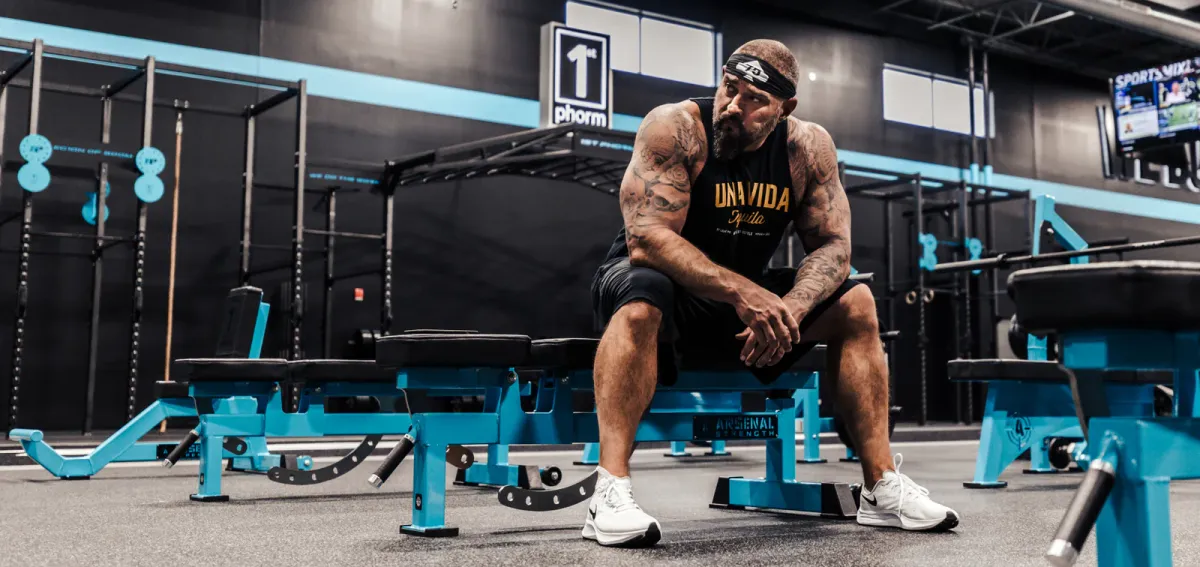
Entrepreneur Andy Frisella started the 75 Hard Challenge because he wanted to improve his own mental and physical strength.
Today, over a million people have completed the 75 Hard Challenge, and while it’s highly effective at driving transformation, it’s also controversial.
In this post, we’ll discuss what the 75 Hard Challenge is, the rules, and some alternatives.
What is The 75 Hard Challenge?
While 75 Hard Challenge does have a fitness component, it isn’t just a fitness challenge.
Created by entrepreneur Andy Frisella, this program is designed to develop mental toughness, discipline, and resilience over the course of 75 days.
On his website, Andy Frisella says to consider it “an ironman for your brain,” as it’s designed to help people develop discipline, grit, and confidence.
Therefore, it focuses on mental transformation and physical transformation is just a byproduct.
The Rules of 75 Hard?
The 75 Hard Challenge is defined by its strict daily rules, and it’s these rules that make the program so effective for building mental toughness.
If you miss even one day, you have to start over on Day 1.
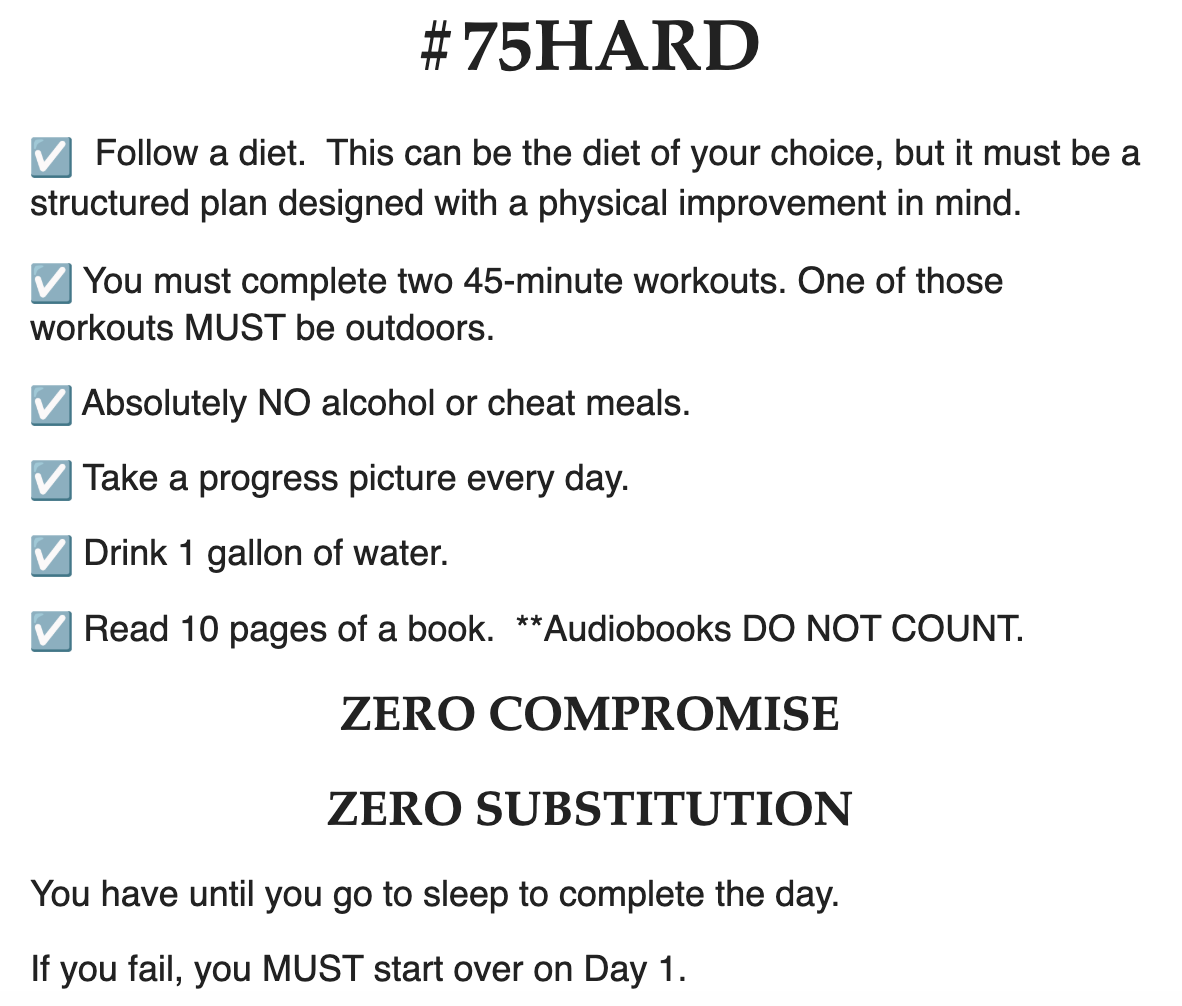
Below, we’ll outline each of the rules of the challenge.
Follow a Diet
First, you choose a structured diet plan that aligns with your personal goals, whether that’s weight loss, muscle gain, or general health improvement.
Frisella says, “This can be the diet of your choice, but it must be a structured plan designed with a physical improvement in mind.”
You also can’t have any cheat meals or alcohol for the full 75 days.
Even though you can choose your own meal plan, this is often the hardest aspect of the challenge for most people.
If you’re worried about it setting you back, consider joining Wearable Challenge to further hold you accountable and ensure you stay on track with your meal plan.
What is Wearable Challenge?
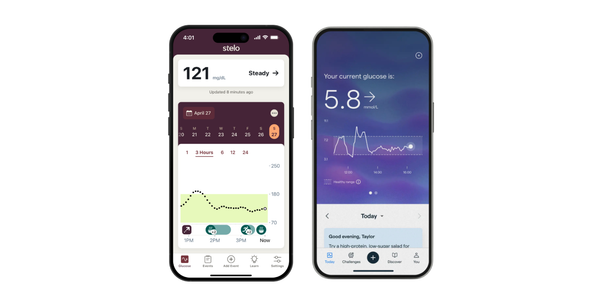
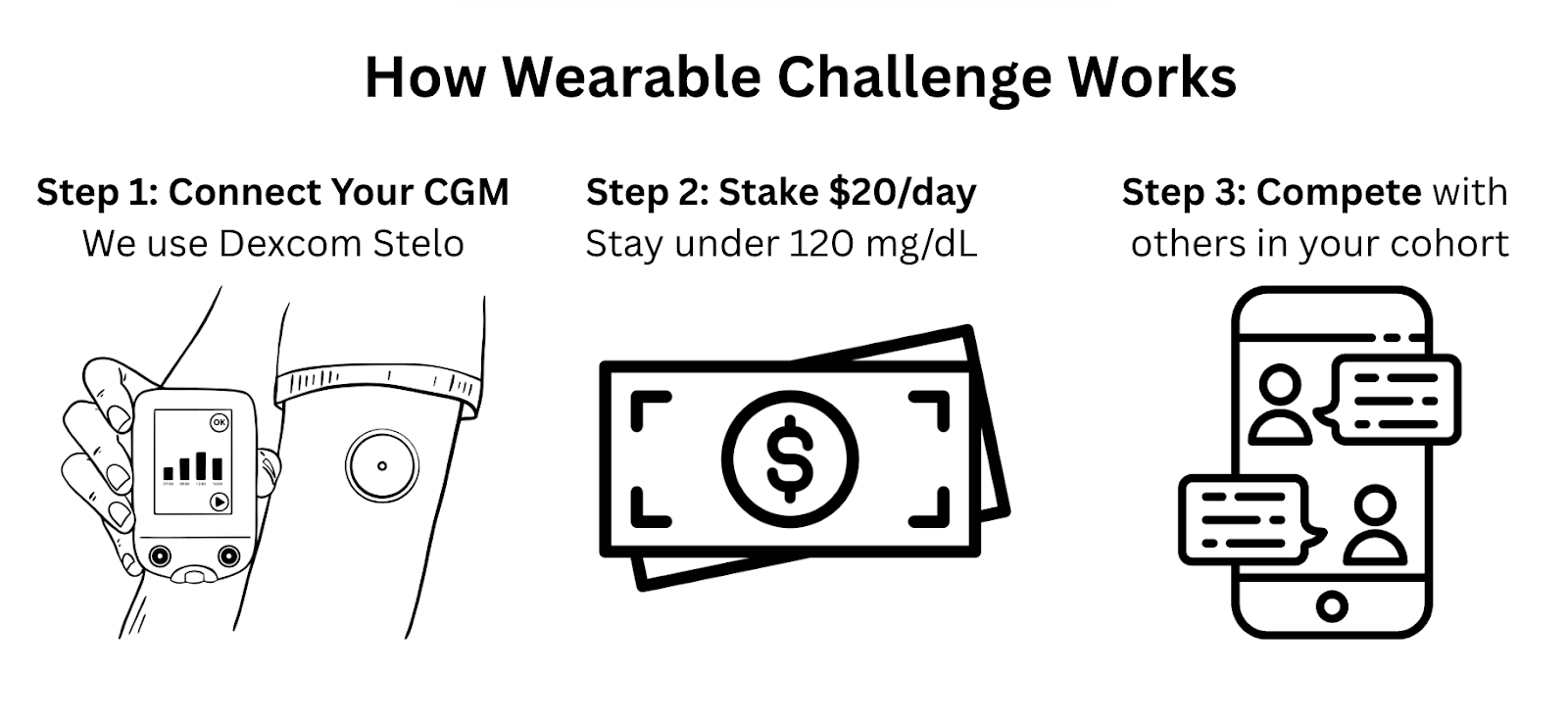
Wearable Challenge is a nutrition accountability challenge where you wear a CGM and stake $20/day to keep your blood sugar under 120mg/dL.
The idea is that you limit high sugar/carb foods from your diet, which leads to weight loss and better general nutrition.
If you’re looking for additional inspiration, you could also try one of these meal plans:
- Keto or Low-Carb: Focus on high-fat, moderate-protein, and very low-carb foods. Here’s a sample keto meal plan, or you could ask ChatGPT to generate one for you based on the foods you have on hand.
- Intermittent Fasting (16/8): This is a time-restricted eating schedule where you fast for 16 hours and only eat for eight hours. Pair this with healthy balanced meals. Here are some tips if you want to try intermittent fasting.
- Whole Foods/Clean Eating: Only eat unprocessed foods, fruits, vegetables, lean proteins, and healthy fats. Here’s a link to the Whole30 program, which you could follow for the 75 days of the program.
- Plant-Based or Vegetarian Diets: Focus on eating plant-derived foods and exclude or minimizing animal products. However, make sure that you’re still consuming sufficient protein if you choose this meal plan. Here’s a sample high protein vegan meal plan and high protein vegetarian meal plan you could use.
- Flexible/Macro-Based Dieting: Instead of selecting a diet that restricts specific foods, you could choose to just hit specific macro goals each day. For example, you might aim for 1,900 to 2,200 calories per day and macros of 100-150 grams of protein, 50-120 grams of carbs, and 50-80 grams of fat per day. There are plenty of macro trackers you can use, like MacroFactor.
Two Workouts Per Day
Every day requires two 45-minute workouts, and at least one must take place outdoors, no matter the weather.
The workouts can be anything you want and tailored to your fitness level, from walking or light stretching for beginners to intense weight training or running for advanced athletes.
The goal is not just physical improvement, but to cultivate discipline, perseverance, and time management.
Here are some sample workouts you could use:
Beginner:
- Two 45-minute walks (one can be outdoors)
- Light bodyweight exercises like push-ups, squats, lunges, and stretching
- Gentle yoga or mobility routines
Intermediate:
- Weight training at the gym for one session, plus a 45-minute outdoor run or bike ride
- HIIT (High-Intensity Interval Training) indoors and brisk outdoor walk
- Mixed cardio and strength circuits
Advanced:
- Two high-intensity workouts per day, such as heavy lifting, running, cycling, or CrossFit
- One outdoor session that could include sprint intervals, trail running, or bodyweight circuits
- Combining strength and endurance training in two separate sessions
Drink One Gallon of Water
This one is easy. You can just buy a gallon of water and make sure you drink all of it each day.
Read 10 Pages of a Non-Fiction Book
Each day, you must read at least 10 pages of a self-improvement or business-related book.
Audiobooks don’t count as the purpose is to actively learn and engage with ideas that challenge your thinking.
Here are some ideas if you don’t know what to read:
Personal Development/Mental Toughness:
- “Can’t Hurt Me” by David Goggins: Lessons in resilience, mental toughness, and pushing past limits.
- “Atomic Habits” by James Clear: Strategies for building lasting habits and breaking destructive ones.
- “The 7 Habits of Highly Effective People” by Stephen R. Covey: Principles for personal and professional effectiveness.
Business/Entrepreneurship:
- “The Lean Startup” by Eric Ries: Guidance on creating and growing successful businesses.
- “Start with Why” by Simon Sinek: Insights on purpose-driven leadership.
- “Think and Grow Rich” by Napoleon Hill: Classic principles of success, wealth, and mindset.
Finance/Wealth Building:
- “The Millionaire Next Door” by Thomas Stanley & William Danko: Habits and mindsets of financially successful people.
- “Rich Dad Poor Dad” by Robert Kiyosaki: Lessons on financial literacy and building wealth.
Health/Lifestyle:
- “Why We Sleep” by Matthew Walker: Understanding the science of sleep and performance.
- “The Power of Habit” by Charles Duhigg: How habits shape behavior and how to change them.
Leadership/Mindset:
- “Extreme Ownership” by Jocko Willink & Leif Babin: Lessons on leadership, responsibility, and discipline.
- “Grit” by Angela Duckworth: Understanding perseverance and passion in achieving long-term goals.
Take a Progress Picture Daily
A daily photo may seem like a small task, but it reinforces accountability and visibility of progress.
However, don’t expect to see a magical transformation from day to day. The point is to track your progress over time.
No Compromises, No Substitutions
If you miss any task on any day, you must start over from Day 1.
This rule is the heart of the program as it ensures you it emphasizes integrity, follow-through, and the elimination of excuses.
The principle is simple: discipline without compromise leads to lasting transformation, both mentally and physically.
75 Hard Reviews From People Who Completed The Challenge
If you’re interested in hearing feedback from people who have completed the 75 Hard Challenge, here are some reviews:
#1: Alex Chen
Alex Chen describes the 75 Hard Challenge as one of the most difficult yet rewarding experiences of his life.
Over the course of 75 days, Alex lost about 20 pounds, regained strength in his lifts (squat 405 lbs, deadlift 500 lbs, bench 285 lbs), and established consistent workout routines, including early morning sessions and outdoor exercise.
He also said that it helped him set small achievable goals, practice habit stacking, meal prep consistently, and prioritize hard tasks first to start the day productively.
Alex chose to read Atomic Habits, which allowed him to develop new productive habits and reinforced the importance of incremental daily improvement.
By the end of the program, Alex noticed a shift in his mindset. He no longer sought instant gratification from junk food and had a renewed sense of confidence and self-discipline. He stresses that the key to success is adapting the challenge to your own lifestyle in a sustainable way, rather than blindly copying someone else’s approach, and values the journey as much as the results.
#2: Michael Tillet
Growing up, Michael struggled with weight, and weighed 260lbs at his heaviest. Over the years, he developed unhealthy eating habits, became sedentary, and even suffered a back injury that left him partially paralyzed for months.
Michael tried diets and exercise programs, but often fell back into old habits. When his cousin Brian completed 75 Hard, he was inspired to try it.
Over the 75 days, he completed over 113 hours of workouts, drank 75 gallons of water, read over 750 pages of self-improvement books, followed a strict diet with no cheat meals or alcohol, and even stayed on track during a Disneyland vacation.
By the end, he lost 32.8 pounds, dropping to 185 pounds.
#3: Cam (From Goal Guys)
Cam from the Goal Guys also successfully completed 75 Hard and saw similarly outstanding physical and mental results.
Cam lost 8.6 pounds of body fat, gained over 5 pounds of lean muscle, and dropped his body fat percentage from 32.4% to 27.7%. His testosterone levels skyrocketed from the bottom 10% for his age to the top 10%.
The experience also helped him to learn how to persevere, even when you're sore, tired, or no longer feel motivated.
To make consistency sustainable, he incorporated walks, yoga, and balanced recovery days alongside strength training.
Is The 75 Hard Challenge Healthy? (Pros and Cons)
The 75 Hard Challenge is designed to push participants to their limits mentally, physically, and emotionally.
While many people experience remarkable transformations, it’s important to understand both the benefits and potential drawbacks to determine if it’s a good fit for you.
Pros
- Builds resilience, grit, and discipline: Completing two workouts per day, sticking to a strict diet, and following all daily tasks without compromise teaches persistence and self-control. These skills often translate to other areas of life, from work to relationships, which can make you a generally more successful individual.
- Boosts confidence and productivity: 75Hard can help you improve self-confidence, focus, and the ability to manage your time and priorities more effectively. The structure of the program encourages decisive action and accountability.
- Physical health improvements: Following a disciplined diet and completing daily workouts can lead to weight loss, improved strength, endurance, and overall fitness. However, it’s important to pick a diet that’s genuinely healthy and well balanced. Similarly, the exercises should be appropriate for your condition and fitness level.
- Encourages lifelong positive habits: Daily reading, hydration, outdoor activity, and consistent self-reflection are excellent habits that contribute to general wellness.
Cons:
- Very rigid structure: The program allows no exceptions. Missing a single task means starting over from Day 1, which can be discouraging and mentally taxing.
- Diets can be triggering: If you have a history of disordered eating, a challenge that encourages a strict diet can be triggering.
- Risk of burnout or injury: If you over-exercise or execute exercises incorrectly, you could injure yourself.
- Not tailored for individual needs: The program does not adapt for medical conditions, injuries, or other factors that could put you at risk for completing 75 Hard.
Alternatives to The 75 Hard Challenge
For some people, the idea of failing at 75 Hard is too challenging.
So if you’re not ready for 75 Hard, but you still want to do a fitness challenge that will allow you to become a better version of yourself, consider these challenges.
#1: Wearable Challenge
Maintaining any habit for 75 days is challenging. Maintaining multiple, new, tough habits for that long can be a recipe for failure.
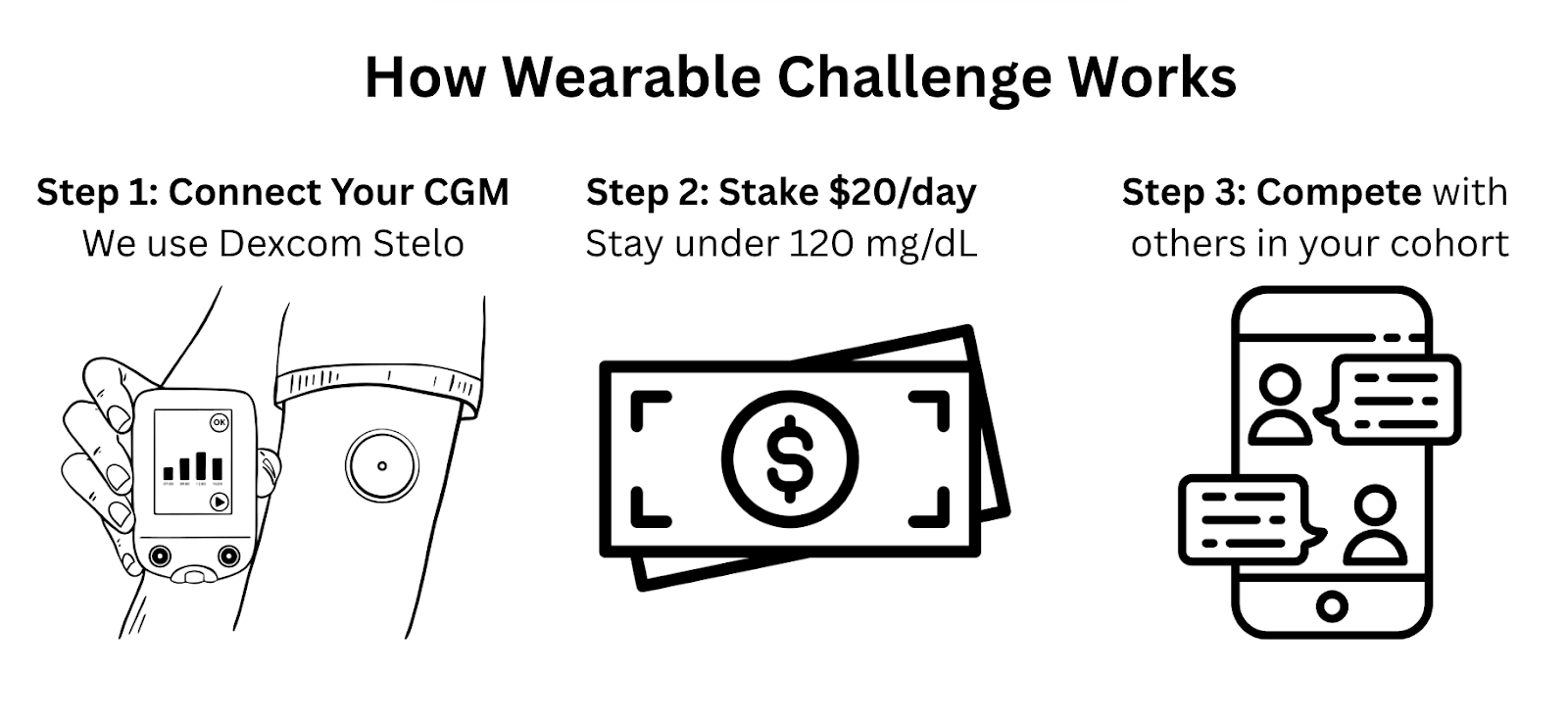
Instead, Wearable Challenge is a 14 day challenge where you commit exclusively to improving your diet.
Specifically, you wear a CGM for 14 days and stake $20/day to keep your blood sugar under 120mg/dL each day.
If you spike over that limit (120mg/dL), you lose your daily bet ($20).
Otherwise, Wearable Challenge is completely free.
Additionally, every day is a new day. Even if you lost your bet from the day before, you continue with the challenge.
Sure, you feel the consequences of slipping up (lose $20), but you keep going to avoid losing any more money.
This leads to long term results and builds habits of consistency rather than quitting after a few days.
Finally, nutrition has a bigger overall impact on your health than exercise, so mastering just your diet can significantly move the needle for weight loss and overall health.
Join Wearable Challenge today if you want an alternative to 75 Hard that focuses on nutrition aspect and holds you accountable with real stakes.
#2: 75 Soft
Unlike the Hard version, 75 Soft is a challenge that’s more flexible and therefore sustainable.
There are many different versions of it, but here’s an example of what a 75 Soft Challenge might entail:
- Eat Well and Drink Alcohol Moderately: Eat a nutritious, balanced diet that includes all food groups, but still minimize processed and high sugar foods. You can also have alcohol on social occasions, and occasional sweet treats in moderation. The goal is to develop a healthier relationship with food rather than enforcing strict restrictions that could trigger unhealthy behaviors.
- Train for 45 Minutes Daily: Participants commit to 45 minutes of physical activity every day for 75 days. Unlike 75 Hard’s two daily workouts with one outdoor session, 75 Soft allows for a single daily workout and incorporates active recovery days once a week, making it more manageable for beginners or those with busy schedules.
- Drink Three Liters of Water Daily: You still must drink at least three liters of water per day, as this is relatively easy but still has a major positive impact on overall health.
- Read 10 Pages a Day: Read at least 10 pages of any book (fiction or non-fiction) each day. This helps you develop habits that aren’t simply scrolling social media for entertainment and hopefully you’ll also learn.
Unlike 75 Hard, you don’t have to take a progress photo every day, and you also don’t have to restart from Day 1 if you slip up.
This makes it less daunting and helps you focus on consistency rather than perfection.
#3: Couch to 5K (C25K)
Couch to 5K (often shortened to C25K) is a popular and effective beginner-friendly fitness challenge that helps people with no prior running experience complete a 5K (3.1 miles) in just about nine weeks.
The magic of C25K is in its interval training structure.
In the early weeks, workouts alternate between walking and short bursts of running, making the process approachable and less intimidating.
Each week, the program gradually increases the time spent running while decreasing the walking intervals, helping you build endurance and stamina.
By the end of the program, most people are able to run a 5K without stopping, a huge milestone for anyone who previously thought of themselves as “not a runner.”
To follow along, you can use one of the many Couch to 5K apps available, which provide guided workouts and progress tracking, or you can download a printable schedule and track your sessions manually.
Take Control of Your Life Today
The 75 Hard Challenge is designed to help you take back control of your life.
Instead of compromising with yourself, you become the best version of yourself.
If you want some extra help with the nutrition accountability side of 75 Hard, consider combining it with Wearable Challenge.
You’ll wear a CGM for 14 days and stake $20 per day to keep your glucose under 120mg/dL.
You can’t quit the challenge. There is no starting over. Every day counts.
And, there’s no cheating with real CGM data.
If you’re ready to take control of your health, join Wearable Challenge today.