The Best 75 Hard Challenge Alternatives To Try


Developed by Andy Frisella, the 75 Hard Challenge is designed to make you mentally stronger.
However, 75 Hard has received plenty of criticism for its rigid and unsustainable structure from many health and fitness professionals.
Here are a handful of more sustainable (or at least, approachable) 75 Hard alternatives you can try.
What is The 75 Hard Challenge?
The 75 Hard Challenge is a mental toughness and self-discipline program created by Andy Frisella.
It’s not marketed as a fitness challenge, though it includes physical components. The idea is to follow a strict set of rules for 75 consecutive days without compromise. If you miss one rule one day, you start over from day one.
Core Rules of 75 Hard:
- Follow a diet of your choice (no cheat meals, no alcohol).
- Complete two 45-minute workouts daily, with at least one outdoors.
- Drink one gallon of water per day.
- Read 10 pages of a nonfiction or self-improvement book each day.
- Take a progress photo every day.
Criticisms of 75 Hard
Plenty of people claim the 75 Hard challenge has changed their lives for the better, but the challenge has also received a lot of criticism from health and fitness professionals. Here’s why.
1.) It’s Unsustainable
Any challenge, whether it’s fitness or personal growth, should push you to be the best version of yourself, but it should also lay the groundwork for sustainable healthy habits.
Andy Frisella specifically states that 75 Hard is not designed to be sustainable, but rather to push yourself mentally to earn your own self-confidence.
However, engaging in any extreme activities can have the opposite impact.
If you practice healthy habits to an extreme degree and hate it, you build a poor relationship with those healthy habits. As a result, you'll be less inclined to try them again.
2.) It Creates an All or Nothing Mindset
One of the rules of 75 Hard is that you can't skip a single task once.
If you do, you have to start over on Day 1.
This structure creates an all-or-nothing mindset, and you're more likely to quit than finish.
Yet to truly succeed at anything, failure is expected. If you simply quit after one small failure, you'll never build lasting positive habits.
3.) Risk of Injury and Overexercise Without Rest Days
The 75 Hard challenge requires two 45-minute workouts each day.
While the 75 Hard challenge rules explicitly state that workouts can be any level of intensity, two workouts daily of any capacity encourages overexercising, which can lead to injury.
Additionally, there aren't any rest days, which are critical for building muscle and general sustainability.
4.) Encourages Unhealthy Relationship with Food
The 75 Hard Challenge requires participants to follow a meal plan with no cheat days. The meal plan can be anything you choose (keto, carnivore, paleo, etc.), but you can’t deviate from it.
For some people, following a strict diet is triggering and can lead to an unhealthy relationship with food.
A more effective approach is to aim for a balanced diet that doesn’t demonize any specific foods.
Alternatives to 75 Hard
The idea of improving mental toughness and becoming the best version of yourself is definitely positive. 75 Hard is simply a little too extreme for many people.
Instead, here are a few different 75 Hard alternatives that are more sustainable and/or healthier.
1.) Wearable Challenge
Nutrition is often the hardest yet most important element of any fitness or wellness challenge.
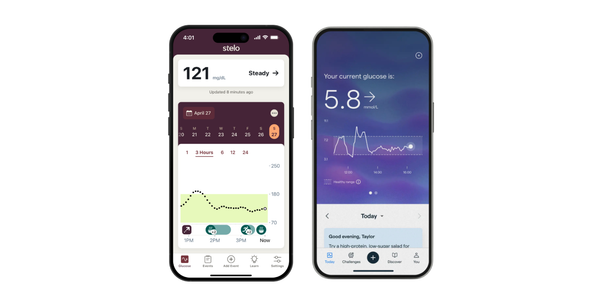
Wearable Challenge is a 14 day nutrition challenge where you wear a CGM for 14 days and stake $20/day to keep your blood sugar under 120 mg/dL (a healthy, yet low glucose level).
The idea is that you reduce high sugar/carb foods that spike glucose.
While it isn't a mental toughness or fitness challenge like 75 Hard, it focuses on diet, which is arguably the most important variable for improving your overall health.
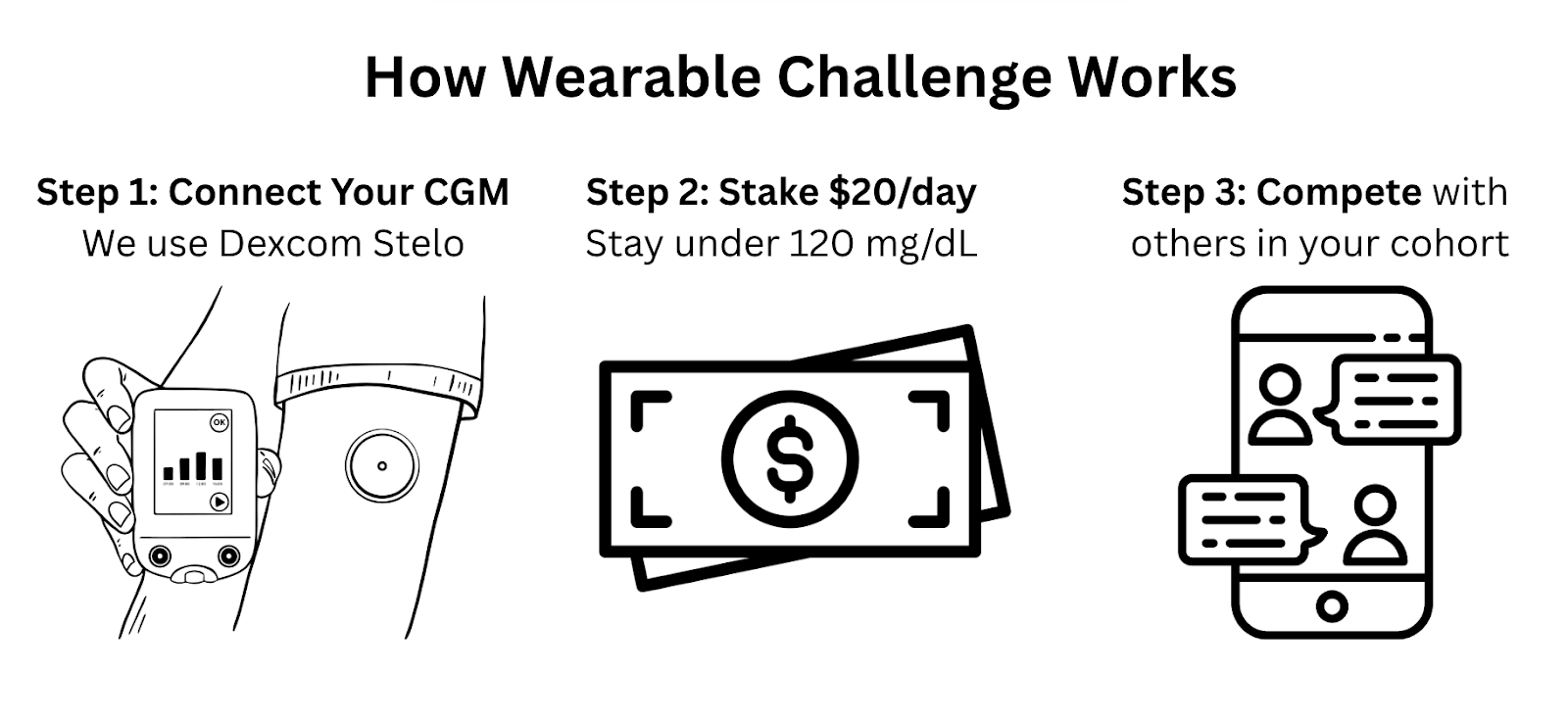
How Wearable Challenge Works:
Step 1: Join Wearable Challenge and Connect Your CGM
If you don’t have a CGM yet, we can help you find one.
Step 2: Stake $20/day to stay under 120 mg/dL for 14 days
If you eat high sugar/carb foods and your glucose level spikes above 120, you’ll lose your $20 stake for that day. Otherwise, you don’t pay anything to participate.
Step 3: Participate in the community
You participate in a cohort with others and can discuss challenges with others in the SMS group chat.
Here’s how Wearable Challenge solves some of the issues with 75 Hard.
Focuses on Moderation vs Complete Elimination
Unlike 75 Hard, which requires a strict meal plan, Wearable Challenge offers more flexibility. It focuses on minimizing high sugar/carb foods.
There aren't any foods that are "off limits," which encourages users to develop healthier lifestyle habits.
Removes “All or Nothing” Mindset And Focuses on Finishing
If you miss one task one day during 75 Hard, you have to start over from the beginning.
Yet most people will just quit altogether if they miss a day.
However, real progress comes from consistency, not perfection.
By committing to a $20 daily stake for 14 days, Wearable Challenge is more painful to quit than finish. As every day counts, you build the habit of consistency.
Adjust to Your Body
A key criticism of 75 Hard is that it doesn't account for each person's individual needs.
The beauty of a CGM is that it shows how your body responds to specific foods, allowing you to customize the challenge to your body's individual needs.
You can join Wearable Challenge for free today to unlock the best version of yourself.
2.) 75 Soft
If 75 Hard feels too extreme, 75 Soft is a gentler alternative that still promotes discipline and self-improvement without risk of burnout.
Created by Irish fitness influencer Stephen Gallagher in 2021, 75 Soft quickly went viral as the "younger sister" to 75 Hard. It's an easier version of 75 Hard, designed to be a more realistic and beginner-friendly format.
75 Soft Rules:
- Eat well, but alcohol is allowed in moderation (e.g. social occasions).
- Exercise for 45 minutes daily, with one active recovery day per week.
- Drink 3 liters of water each day.
- Read 10 pages of any book (not just non-fiction).
Unlike 75 Hard, there’s no requirement to take daily progress photos, and you don’t have to start over if you miss a day. The focus is on progress, not perfection.
There are definitely some benefits to 75 Soft over 75 Hard:
- More Approachable for Beginners: With just one workout per day and built-in recovery days, anyone can participate, regardless of their current condition.
- Lifestyle Balance: You can enjoy occasional drinks and flexible food choices without feeling like you “failed.”
- Focus on Sustainability: By removing the all-or-nothing mindset, 75 Soft makes it easier to actually stick with healthy habits long-term.
That said, there are some drawbacks of 75 Soft.
First, neither 75 Hard or 75 Soft have any built in accountability.
This is a problem because your motivation will wane, and accountability will increase your chances of success.
Another issue with 75 Soft is that the rules aren’t very clear. For example, allowing alcohol “in moderation” isn’t a clear metric you can follow.
While the idea of removing hard boundaries is designed to prevent a restrictive mindset, it also makes it harder for participants to aim for a specific goal. A challenge is supposed to drive change, and without some rules to follow, it can be hard to get results.
Finally, while 75 Hard encourages daily progress photos to track results, there is absolutely no tracking for 75 Soft.
Photos aren’t always the best way to track real progress as an image isn’t the best method to gauge your emotional and physical progress. However, zero tracking can be demotivating and won’t illustrate how far you’ve progressed.
A better method is to incorporate some kind of tracking, like daily meal logging in an app.
3.) 75 Medium
If 75 Soft feels too lenient but 75 Hard still feels too extreme, 75 Medium is a balanced middle ground.
Here’s how it works.
75 Medium Rules:
- Hydration: Drink half your body weight in ounces of water each day.
- Exercise: Work out for 45 minutes daily.
- Diet: Follow your chosen diet 90% of the time. No cheating, and no alcohol.
- Personal Development: Read or listen to 10 minutes of something inspirational, like a podcast or self-help book.
- Mindfulness: Meditate or pray for 5–10 minutes daily.
- Progress Tracking: Most participants take a progress photo daily, though this isn’t strictly required.
Unlike 75 Hard, there’s flexibility built in for nutrition and exercise, and participants aren’t expected to start over if they miss a day.
Unlike 75 Soft, it includes additional practices like mindfulness and you must follow a chosen diet 90% of the time. It also removes any alcohol allowances.
Benefits of 75 Medium:
- Habit Building: Encourages weekly routines around exercise, hydration, reading, and mindfulness.
- Balanced Approach: More realistic than 75 Hard as you only have to do one workout per day, but it does still require you to follow a dedicated meal plan.
- Accessible to Most Fitness Levels: One daily workout is manageable, regardless of your fitness level.
- Varied Personal Development: Includes reading and listening options, supporting mental growth as well as physical wellness.
Drawbacks of 75 Medium:A criticism of 75 Soft is that there isn’t sufficient structure to ensure participants achieve the results they want.
75 Medium attempts to solve that problem, by ensuring participants adhere to a specific meal plan 90% of the time and there is no alcohol allowed.
This is an improvement from the lack of rules from 75 Soft and the extreme rigidity of 75 Hard, but selecting a single diet can still lead to unhealthy eating habits.
This is why we prefer Wearable Challenge, as it isn’t forcing you to follow a specific diet, but you still have to make healthy food swaps of your choice to stay in range.
Additionally, we discussed that progress photos alone aren’t the best way to track the improvement of your overall health. Instead, consider using a food logging app.
4.) Couch to 5K (C25K)
For those who want a structured fitness challenge without the pressure of strict rules around diet, mindfulness, or daily workouts, the Couch to 5K program is a beginner-friendly alternative.
It’s a 9 week plan designed to help anyone with little or no running experience to comfortably run a 5k (about 3.1 miles) in 9 week.
Couch to 5K Rules:
- Run three times per week, alternating between walking and running.
- Each run gradually increases in length and intensity.
- Take a rest day between runs to allow your body to recover.
- Begin each session with a 5-minute warm-up walk and end with a 5-minute cool-down walk.
- Track progress using the free NHS Couch to 5K app, a PDF plan, or a printed schedule.
Unlike the 75 Hard or 75 Medium challenges, Couch to 5K focuses solely on running and physical fitness. It’s much more beginner friendly than 75 Hard and includes recovery, gradual progression, and consistency over intensity.
There are plenty of different Couch to 5k apps, including:
- C25K® – 5K Running Trainer by Zen Labs (Apple, Google Play)
- 5K Runner: Couch potato to 5K (Apple, Google Play)
- Just Run: Zero to 5K (Apple, Google Play)
Unlike 75 Hard and its variations, following along with these apps makes it much easier to track progress.
Additionally, you never have to worry about “starting over from Day 1.” As the end goal is a 5k, it’s a much more realistic challenge where you don’t give up, and learn to ride through the ups and downs.
Benefits of Couch to 5K:
- Structured Progression: Gradually increases running distance and duration, making it achievable for absolute beginners.
- Sustainable Habit-Building: By running only three times per week with built-in rest days, you can develop a consistent routine without risking burnout.
- Approachable and Flexible: The program allows you to adjust the pace based on your fitness level, and it includes clear guidance on warm-ups, cool-downs, and recovery.
- Trackable Progress: Using the app or plan provides concrete metrics, so you can see improvements in endurance and stamina over time.
- Sense of Accomplishment: You can tell your friends and family that you accomplished a noteworthy goal, running a 5k.
Drawbacks of Couch to 5K:While Couch to 5K is a great intro for beginners who want to accomplish a specific challenge with a dedicated end goal, it isn’t perfect for everyone.
First, it only focuses on running, and if your goal is overall health and fitness, focusing exclusively on nutrition is likely a much better method to attain that goal.
Additionally, running isn’t for everyone. First, running isn’t as effective as weight lifting at building muscle and overall strength. And, some people simply don’t like running.
Finally, while the program is beginner-friendly, individuals with pre-existing injuries or mobility limitations should consult a healthcare professional before starting.
5.) Operation 66
Created by wellness advocate Angelina Nicolle, the Operation 66 challenge is based on the idea that it takes 66 days for a habit to become automatic.
She felt that 75 Hard was too restrictive and wanted a more sustainable challenge built by a woman, for women.
Therefore, she created Operation 66, a program designed to cover physical, mental, and nutritional wellness.
It’s less strict than 75 Hard and has a stronger focus on mindfulness.
Operation 66 Rules:
- Drink 16 ounces of water first thing in the morning.
- Avoid social media or screen time during the first and last hour of your day.
- Move your body for 45-60 minutes each day (any type of movement is allowed).
- Dedicate 30-60 minutes to a personal goal or hobby outside work or school.
- Stretch for 10 minutes daily.
- Follow a 90/10 diet, with 90% whole, unprocessed foods and 10% indulgences, including alcohol if desired.
Unlike 75 Hard or 75 Medium, Operation 66 has very fluid rules and you can tailor the movement, diet, and personal development elements to suit your lifestyle.
There’s no requirement to start over if you miss a day, making it a sustainable approach to wellness that emphasizes habit formation rather than perfection.
Benefits of Operation 66:
- Holistic Habit Formation: Rather than focusing on just nutrition or fitness, Operation 66 focuses on all aspects of mental, emotional, and physical wellness.
- Flexible and Individualized: You can choose your own exercises, diet, and personal goals to suit your life. This is designed to make it more flexible for your lifestyle.
- Sustainable Approach: The 66-day timeframe is long enough to build lasting habits without being overwhelming, and the challenge rules are flexible enough that it should be able to carry over into a lifestyle.
- Trackable Progress: You can either journal on your own or use the worksheets provided by Angelina to track your progress.
- Supportive of Mental Wellness: It restricts social media and screen time. Focusing on removing negative habits is an excellent way to remove negativity from your life.
Drawbacks of Operation 66:While practices like no screen time, trying a new hobby, and stretching are helpful for overall health, they aren’t the highest impact actions that lead to long-term success.
Additionally, some may feel there’s too much flexibility. For example, doing any kind of “movement” may be too open to interpretation and not demanding enough to drive results.
The idea of eating 90% whole foods is also great, but might not be realistic with everyone’s lifestyle.
Operation 66 is ideal for people who want a realistic, sustainable approach to improving multiple areas of wellness at once, but it might not be perfect for people who want to significantly improve their health and fitness.
Pick a 75 Hard Alternative to Start Today
There isn’t a perfect alternative to 75 Hard as it really depends on your own goals.
However, if you want a challenge that provides daily accountability and pushes you to truly improve your diet (which often has the biggest impact on overall health), consider joining Wearable Challenge.
It’s challenging enough to drive real change, and with $20/day stakes every day counts.
By wearing a CGM, you’ll learn more about how certain foods affect your body and learn how to create a diet that works for you.
Join today to unlock the best version of yourself.